Qualifying for the 2026 24 Hours of Le Mans was a major disappointment for Peugeot: Why the French team still has hope for the 24-hour classic
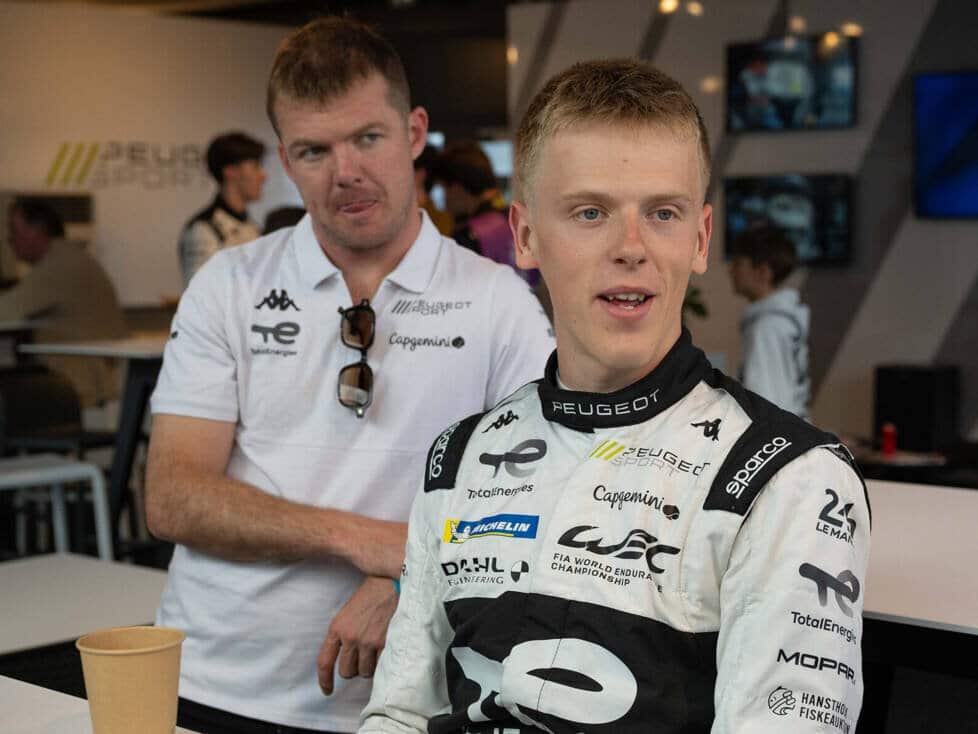
The final practice session ahead of the 2026 24 Hours of Le Mans is complete, and the timesheets tell the same story as qualifying did before: The situation remains serious for the Peugeot 9X8, but factory drivers Malthe Jakobsen (93) are determined and looking for every tiny opportunity the race might offer them.
What happened in Wednesday’s qualifying still has the Peugeot camp scratching their heads. The gap to the competition was larger than expected—and even in the debriefings, no clear cause has emerged. “If it were that simple, we would have solved it,” says Jakobsen matter-of-factly.
“You had two runs in qualifying—you could have seen it on the first one, made an adjustment, and reacted on the second attempt.” The fact that this didn’t happen makes the situation all the more difficult to grasp. Nick Cassidy, who is driving the sister car 93, seems less surprised: “To be honest, I expected it.”
The New Zealander had deliberately logged fewer laps in the first free practice sessions; the focus was on preparing for qualifying and on teammate Paul di Resta, who took many laps. In the third free practice session, Cassidy then got more track time and drew a positive conclusion: “That was a really good session for me. I felt good.”
In the third free practice session, the team tried to gain new insights with a new run plan. The result: The timesheets show a similar picture to before. Qualifying simulations were deliberately not on the agenda. “The focus is now exclusively on the race,” explains Jakobsen.
Tire Strategy as a Key Tool for Peugeot
Since pure pace alone doesn’t provide an advantage, strategy takes center stage. Over the past few days, the team has systematically tested all three tire compounds: Soft on Sunday in the Prologue, Medium in qualifying practice, and Hard in the third free practice session.
“I think we now have a good idea of what each tire is capable of,” says Jakobsen. “Now we have to analyze the data and put together a strong package.” For the race, the outlook is clear: a double stint should be easily feasible, while a triple stint will be necessary at certain points to avoid exceeding the tire allocation.
A four-stint strategy? “From our perspective, that’s very optimistic at the moment,” Jakobsen admits, but he doesn’t rule it out entirely—depending on temperatures and track conditions at night. The choice between tire compounds depends heavily on air and track temperatures. If it gets as warm as expected on Saturday, the hard tires could become more important.
Jakobsen explains the wear behavior: In the first laps of a stint, there is a brief performance peak, after which performance drops slightly—before the decreasing fuel level makes the car faster again toward the end of the stint. The critical point comes when the tires physically reach their limits: “When you start locking up the front tires under cornering, it’s like a snowball effect—it just gets worse and worse.”
Higher temperatures help Peugeot—but only to a limited extent
Will the forecast higher temperatures on race weekend play into Peugeot’s hands? “My gut feeling says no,” says Peugeot driver Jakobsen, dampening hopes. Cooler conditions generate more downforce and would generally suit the 9X8 better.
On the other hand, warmer, rubberized asphalt could benefit all cars, because after all, Le Mans isn’t a regular racetrack where cars run around the clock. Every lap a car completes improves grip.
So what’s left for Peugeot? Jakobsen sums it up: avoid mistakes, drive cleanly, and rely on the unpredictability of a 24-hour race. Changeable weather, traffic with Bronze and Silver drivers of varying skill levels, reliability issues among the competition—all of that can cost or gain positions.
Stepping onto the track for our traditional class picture before the cars reclaim the asphalt tomorrow.
The challenge ahead is massive, but this team is ready. WEC Peugeot9X8 LeMans24 pic.twitter.com/6wrih8FsN8— Peugeot Sport (@peugeotsport) June 9, 2026
“If we stay out of trouble and others make mistakes or have retirements, we could end up with a decent result.” Cassidy is thinking along the same lines, weighing the possibilities. Short refueling or extended stints as a strategic weapon? In the first two WEC races of the season at Imola and Spa, the races were indeed decided by strategy, but Le Mans works differently.
“Pace ultimately wins this race,” says Cassidy. “We’re too far off the pace to really make a difference with an unconventional strategy.” Nevertheless: “Everything is on the table, whether that’s extended or shortened stints. But under normal circumstances, we’re not in the fight.”
When it comes to reliability, however, Cassidy is confident: “The guys have worked really hard on that in this program. It’s looking good.” A clean, error-free race—that’s the benchmark against which both Peugeots want to be measured.
“Of course, it’s always incredible to be part of this event,” says Jakobsen. “I’m still young, the team still has a lot to learn—and we’re taking every opportunity to enjoy the moment, even though we all know we really want to be fighting further up the field.”
As a Dane, he’s delighted by the numerous Danish fans lining the track and his country’s motorsport history, which is intertwined with Le Mans. Both Peugeot 9X8s will start from the back of the grid. Twenty-four hours lie ahead of them. Jakobsen doesn’t seem discouraged as he says, “You never know what will happen.”