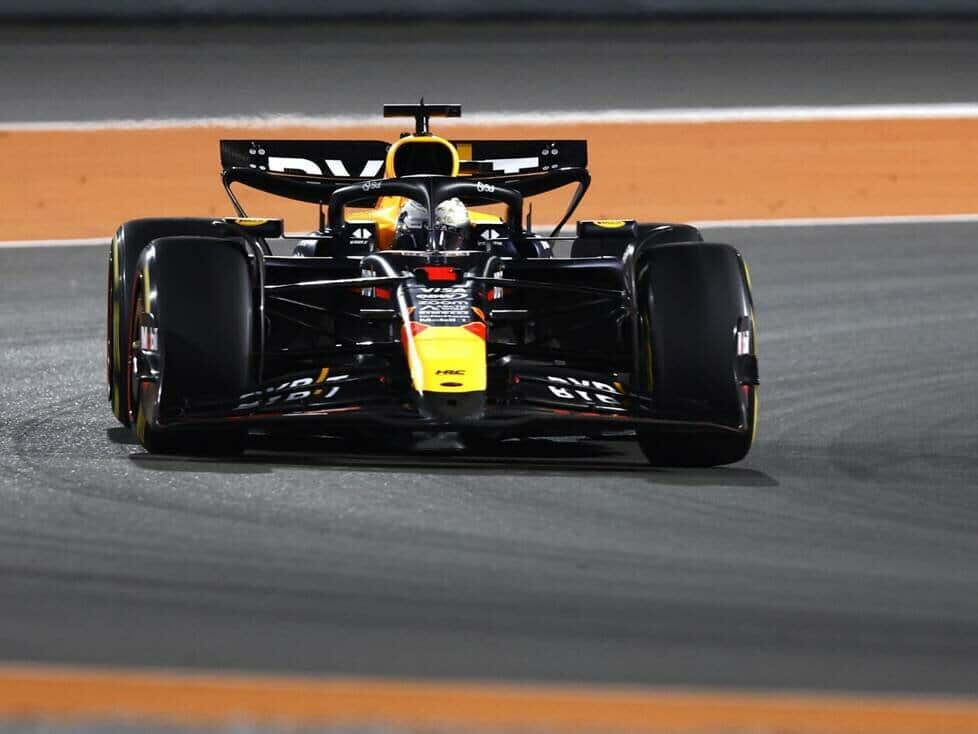
Red Bull team principal Christian Horner would like to have a bigger set-up window for 2025, but technical chief Pierre Wache explains why it doesn’t make sense
At the end of a difficult 2024 Formula One season, Red Bull was still able to make progress. The team brought an upgrade to Austin and was able to celebrate success again after a long dry spell.
Max Verstappen won the sprint at the Circuit of the Americas and followed that up with victories in Qatar and Brazil, thus snatching the world championship title after all.
Although the victory in Brazil was more due to the rain, the weekends after Austin revealed a pattern: Red Bull seemed to be back on the right development track, albeit a tightrope one.
This became particularly clear in Qatar, where Red Bull lacked the pace in the sprint but was able to win on Sunday after making set-up changes.
Wider window or greater potential?
It shows that the RB20’s working window was relatively narrow at the end of the season. Red Bull was competitive when they found the sweet spot with the car, but the performance drop-off was significant when the set-up was outside the acceptable window.
Team principal Christian Horner and motorsport consultant Helmut Marko have made it clear that the RB21 needs a wider set-up window than its predecessor, but according to technical director Pierre Wache, this is somewhat more complex for Formula 1 teams.
“As a dream, you want that, of course, but you know that if you enlarge the window, you also reduce the overall potential,“ he said in an interview with Motorsport.com Netherlands.
”If you look at the other cars and how they drive, they drive incredibly stiffly. You want the fastest car, but it’s not a slower car just because the working window is small.”
According to him, it is more important to find the ideal setups for each track, no matter how small that window is: “You want to make sure you are in the right window for each track, so you want to anticipate that window. If you can achieve that, why would you want to enlarge the window and flatten [the overall potential]?”
“You want to build the fastest car relative to the others, and you’re not going to reduce the overall potential just to help the operation. You would reduce the overall potential to help the drivers utilize the car, but not to help the engineers utilize the car,” Wache said.
Balance between performance and driveability
With this sentence, Wache makes a key point: the technical director would be willing to reduce the overall potential of the car to ensure that the drivers can get the best out of it, but not to make it easier for the engineers.
Red Bull have already gone down this route with their Austin package, as the upgrades have “greatly improved” the balance of the car and correlation, according to Wache – at the expense of overall potential.
“The most important thing is the balance between a car that is faster than the others and a car that is nice to drive so that the drivers can get the most out of it,” he says.
“In 2023, we were proved right in our direction because we were faster than the others. Last season, we were proved wrong. Each time, there is a limit where the balance takes away the advantage compared to the overall potential of the car. We need to change that for this year.”