'/%3E%3Cpath%20fill='%23b2b2b2'%20d='M241%20382q0%2016%2017%2026%2017%2011%2042%2011t42-11q16-11%2017-26V269H241'/%3E%3Cpath%20fill='%239f7e00'%20d='M241%20379q0%2014%208%2023%209%209%2021%209%2014%200%2021-9%209-9%209-23V269h-59'/%3E%3Cpath%20d='M241%20339v-70h59v110q0%2014-9%2023l-6%205v-68h-15v72q-8%200-14-4v-68zm59%2040c0%2022%2015%2032%2029%2032%2021%200%2030-18%2030-32v-40h-59'/%3E%3Cpath%20fill='%239f7e00'%20d='M266%20277v5h2v12h-3v-5h2v-5h-9v5h2v5h-4v9h3v18h-5v10h34v-10h-5v-18h3v-9h-4v-5h2v-5h-9v5h2v5h-3v-12h2v-5zm42%20101q0%2010%206%2017%206%206%2015%207%2010-1%2016-7%206-7%206-17v-29h-43'/%3E%3Ccircle%20fill='%230044ad'%20cx='329.5'%20cy='372'%20r='6'/%3E%3Cellipse%20fill='%230044ad'%20cx='300'%20cy='340'%20rx='16'%20ry='21'/%3E%3C/svg%3E)



The eSports industry in Germany needs to generate more sources of income. Sports that have been around for longer serve as role models. eSports is a million-dollar industry – but how can a financially strong and sustainable ecosystem be created?
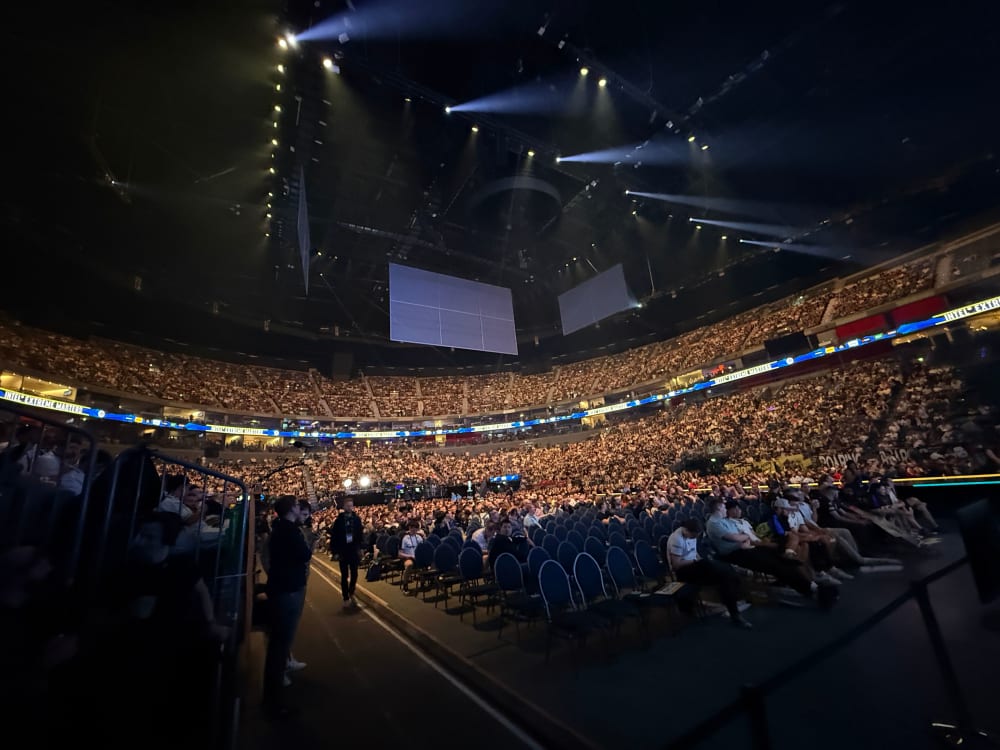
The Intel Extreme Masters are a good example of fan culture in eSports.
Sebastian Weishaar still sees great untapped potential – especially when it comes to new sources of income. “I believe there are three components that are still severely underdeveloped in eSports,” says the eSports president of the ESL FACEIT Group in an interview with eSports.
The first area is fan monetization: “Every soccer club earns a significant portion of its revenue from fans, whether through jerseys, tickets, or other products. In our world, this is still relatively underdeveloped.”
He cites media rights as the second pillar. In many major sports, more than half of revenues come from this area. “Football is the best-known example. Even smaller sports manage to generate significant revenues here. In eSports, however, we have set ourselves up for failure to some extent by offering our content free of charge on Twitch and YouTube from day one,” says Weishaar.
While this has massively increased the reach, it has not enabled direct monetization: “We had to make the sport big before we could start making money from it. I think this will remain the case for many years to come. But at some point, we have to take this step and develop further in this area in order to stand on a healthy and stable footing in the long term.”
The third point for Weishaar is closer cooperation with publishers to create monetization opportunities directly in the game. “A prominent example is the Valve Majors in Counter-Strike. There, the organizer of a Major receives a significant portion of its revenue from sticker sales generated around the event,” he says. Digital fan monetization is a largely untapped field that could play an important role in the future.
“This nut still needs to be cracked.”
Weishaar believes the industry is already well positioned in the sponsorship and partnership area. Nevertheless, he believes that the potential is far from exhausted: “We are currently only at 20 percent of what is possible – certainly not at 80 or 90.”
In his view, attractive offers are needed to get fans more involved: “It’s no use saying, ‘Give me $20 for something you’ve been getting for free for ten years. Instead, we have to create added value that people find so cool that they say, ‘I’m willing to spend money on that.’ I think we as an industry need to invest time in this.” The goal is a win-win situation: fans get exclusive content or experiences, and eSports gains additional funds for events, leagues, and tournaments.
The timeline for this change remains open. “This nut still needs to be cracked. I believe it can be cracked and it will be cracked. Whether it takes two, five, or eight years, I don’t know. But it shouldn’t take longer than ten years,” says Weishaar.