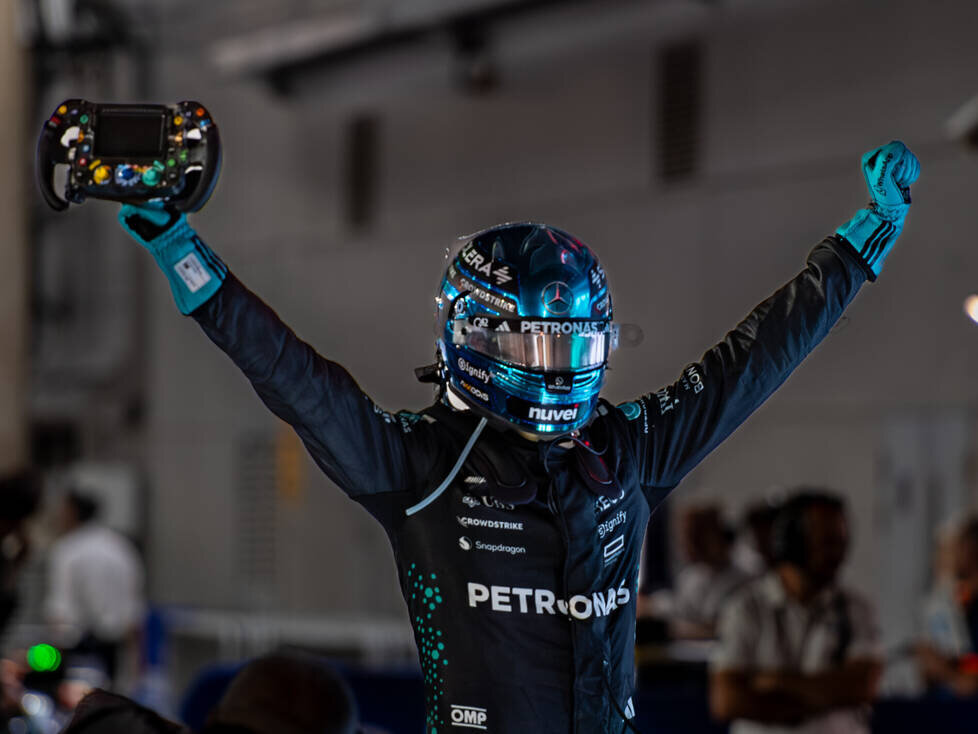
Mercedes experiences an unexpected comeback in Singapore—George Russell wins convincingly, while Toto Wolff himself wonders why everything is suddenly working
Mercedes celebrates a victory in Singapore that hardly anyone would have thought possible—least of all the team itself. George Russell wins confidently on a track that has been anything but favorable for the Silver Arrows in recent years. Team boss Toto Wolff is both proud and amazed after the race.
“Yes, everything really went well today,” he says. “The driver-car combination was almost dominant, I would say. George was in control at all times, pulled away on the medium tires at the start and then simply managed the gap – very well indeed.”
Wolff would not have expected Mercedes to suddenly set the standard on Singapore’s humid night. “If you had told me before the race that we would be so far ahead here, I wouldn’t have believed it,” he says, describing the day as a near-flawless symbiosis of driver, car, and tires.
From problem child to strength: the perfect interplay
The Marina Bay Street Circuit has long been considered a weak point in the Mercedes portfolio. Too bumpy, too slow, too hot—and always a challenge for tire management. But this time, everything just clicked. “From the very first moment, the car, driver, and tires were in harmony and unbeatable,” says Wolff. The secret lies in balance. Mercedes seems to have found the narrow aerodynamic window in which the car performs optimally without overloading the tires. Wolff emphasizes: “These cars are simply a box of surprises. If you ask McLaren why they haven’t been doing well in the last three races, they probably won’t have a clear answer. The same goes for Max, who comes back and then loses performance again, and the same for Ferrari, who fluctuate between success and disappointment.”
The differences at the top are minimal—a few degrees of asphalt temperature, a nuance too much downforce, an inappropriate tire warm-up phase—and the hierarchy is turned upside down. This time, Mercedes hit the sweet spot. The W16 was perfect on the track, and Russell drove calmly, confidently, and flawlessly.
Dirty air, clear air, and the tire puzzle
Sky expert Ralf Schumacher thinks he knows why the race was so clear-cut from the start: “Dirty air was also a big factor today, wasn’t it?” Wolff nods: “It was a factor, yes. You see, it’s just so much easier when you’re driving at the front—especially here.”
In traffic, many drivers struggled with overheating tires and a lack of grip. At the front, in clean air, Russell was able to stay consistently in the ideal range.
What’s more, this year’s Pirelli generation is more sensitive to temperature spikes, but those who hit the “sweet spot” are rewarded—which is exactly what Mercedes achieved this evening. “The trick is to get the maximum mechanical grip without destroying the tires,” explains Wolff.
“And that doesn’t always correlate with what you see in the simulation. What works virtually may not work on the track.” Singapore provides a prime example of how simulation and reality are sometimes worlds apart.
Russell’s analysis: New asphalt mix is the key
George Russell himself is also looking for explanations for the sudden superiority. After 62 laps, he sums up: “I think there was less tire overheating this year than in the past. It used to be a big problem here, but with some corners getting new asphalt, the track is a bit smoother. The tires seem more robust overall.“
The Brit believes that the newly laid asphalt is a key factor in keeping the tires in a more stable temperature range. ”Everything was a bit more in a better range,“ he says, ”but it was still a surprise.”
Ferrari struggles, Mercedes shines
The mood at Ferrari, currently on the wrong side of the surprise bag, is quite different. Team boss Frédéric Vasseur speaks of great frustration. “What’s mega frustrating is that in the last two weekends—Baku and then Singapore—the pace was there at the start, and we didn’t get the best out of the car.”
Ferrari’s current failure is less due to a lack of speed than to a lack of understanding of the intricacies of the SF-25. “We’re struggling throughout the race to get it right,” says Vasseur. “It’s mega frustrating for the team because we invest so much to be there – and then everything just has to come together.”