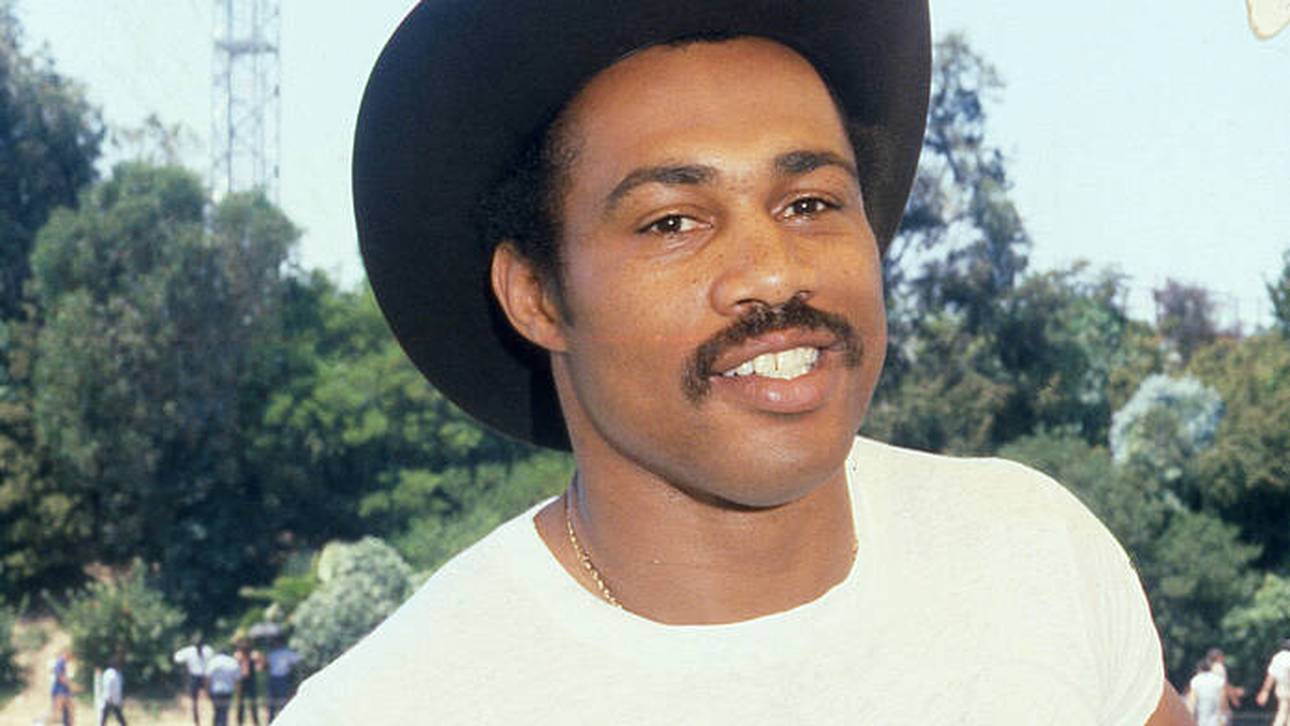
Looking back, Ken Norton’s boxing career is almost reduced to a single fight – in fact, to just a single moment.
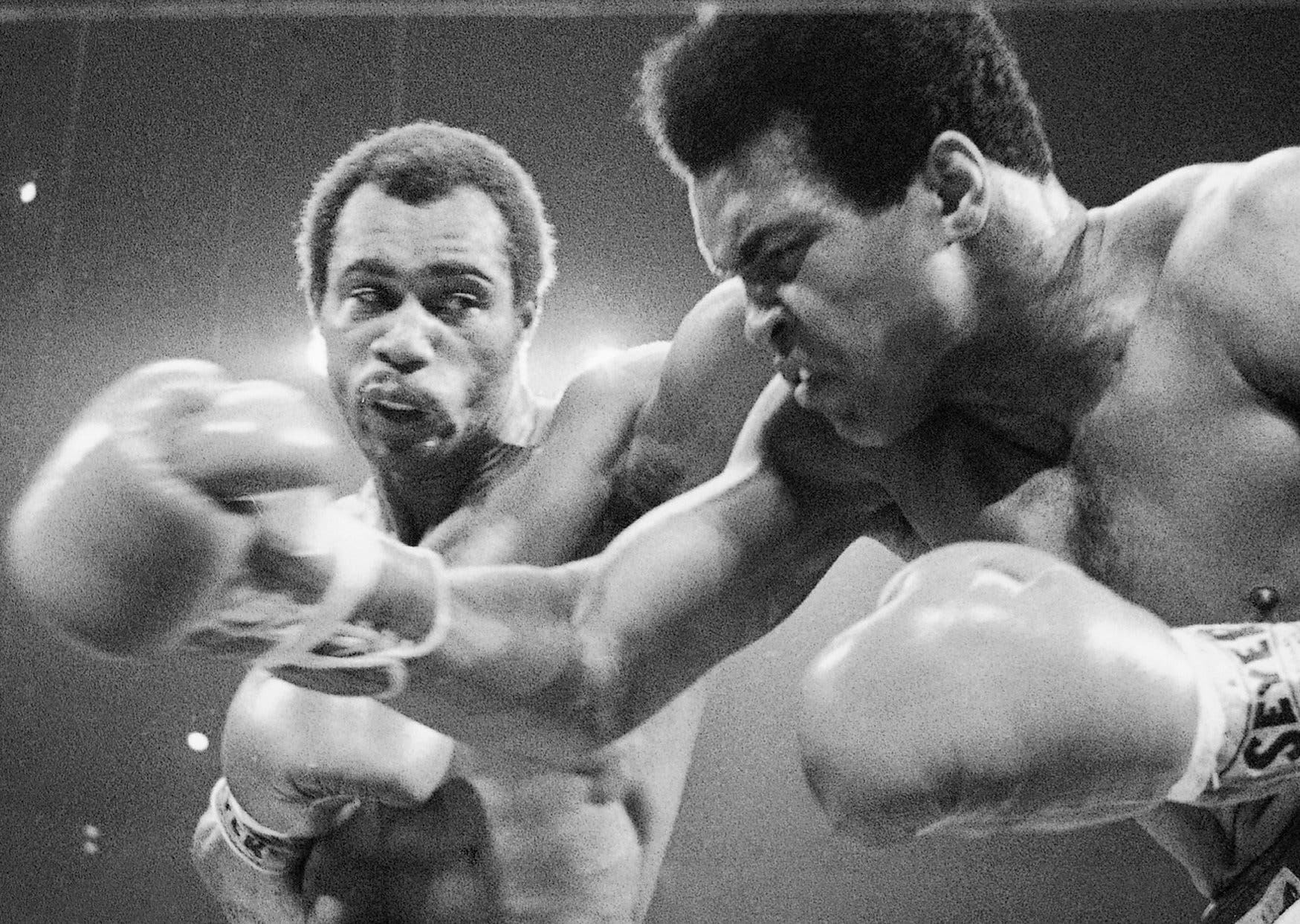
When Norton sent the greatest boxer in history to the canvas and defeated him in a warm-up bout in San Diego on 31 March 1973, the ‘Black Hercules’ became, for all the world and for all time, the ‘Jawbreaker’. The man who broke Muhammad Ali’s jaw.
It was the most famous episode in an eventful sporting life that took a tragic turn after his career following a dramatic accident. Thirteen years ago today, on 18 September 2013, the man who had struck fear into Ali’s heart – and who had become dependent on care at an early age – passed away, three years before his famous rival.
Ken Norton was already causing a stir in school sports
Born on 9 August 1943 in the small town of Jacksonville, Illinois, Norton was an outstanding athlete from an early age, competing at a high level in American football and athletics at secondary school.
At a school competition, he once won events in seven out of the eight disciplines his coach had entered him in – ever since, American schools have had the ‘Ken Norton Rule’, which limits participation to four.
Whilst serving in the US Marine Corps between 1963 and 1967, Norton took up boxing and turned professional after completing his military service. His big breakthrough came on 31 March 1973 in San Diego, when he stunned the great Ali.
Muhammad Ali stunned by Norton’s unorthodox style
Norton surprised Ali at the time with his unorthodox style; in particular, Ali never quite coped with the atypical jabs delivered from below rather than from above. From the second round onwards, ‘The Greatest’ was also hampered by the famous blow that broke his jaw.
With a 2–1 judges’ decision, Norton ultimately became the second opponent, after training partner Joe Frazier, to defeat Ali.
“Ali thought before the fight that it would be easy. But in hospital, Ali said to Ken: ‘I never want to box against you again’,” Ali’s manager George Kilroy later recalled.
In fact, however, “Ali vs. Norton” turned into a spectacular three-part series.
Losing the trilogy against Ali robbed Norton of his self-confidence
Later that same year, Ali took his revenge, first in Los Angeles with another victory by split decision (2–1 majority decision), and then in 1976 with a unanimous victory in a title fight at New York’s Yankee Stadium.
As had been the case after the Los Angeles fight, many experts believed the result of the third bout was a misjudgement; even Ali described his ‘bogeyman’ as the true winner following one of his most controversial victories.
This made it all the harder for Norton to come to terms with his second missed title opportunity following his 1974 defeat to George Foreman in Venezuela. The mental toll of the losing streak against Ali played a part in this, as Norton later acknowledged.
“After New York, I was never the boxer I’d been before,” he said: “I was in the form of my life that evening. I’ve never been able to train as hard or put as much passion into a fight again.”
A brutal classic against Larry Holmes
Norton did eventually become world champion, though not in the way he had envisaged: because Leon Spinks, in 1978, preferred to defend the title he had won from Ali in a rematch rather than against the official challenger Norton, the World Boxing Council (WBC) stripped the reigning champion of his title and installed Norton as the new undisputed world champion.
The first heavyweight champion not to have won the most prestigious belt in professional boxing in the ring did not enjoy his crown for long: Norton was defeated by Larry Holmes in his very first title defence in Las Vegas, following a 15-round battle in the ring that was as brutal as it was high-calibre – by split decision.
Norton never recovered from this bitter defeat. However, he was already in the process of building a new life for himself.
Second career in Hollywood
Even whilst his professional boxing career was still ongoing, Norton embarked on a second career as an actor: he had roles in the cult series ‘Knight Rider’ and ‘The A-Team’ and also appeared in various B-movies. His biggest role was as a slave fighting for his master’s amusement in ‘Mandingo’.
Norton was also originally cast as the loud-mouthed champion Apollo Creed in the first instalment of the Hollywood epic ‘Rocky’. However, he pulled out shortly before filming began, so Carl Weathers took on the iconic role as Sylvester Stallone’s opponent instead.
Away from the screen, Norton – who was married three times – led a fulfilling life as the proud father of four children, including the long-serving NFL linebacker Ken Norton Jr., a three-time Super Bowl champion with the Dallas Cowboys and the San Francisco 49ers.
A serious car accident in 1986
Norton’s family suffered a devastating blow in 1986 when Ken senior was seriously injured – and nearly killed – in a car accident: he fractured his skull and suffered brain damage that impaired his ability to speak from then on. Norton subsequently withdrew largely from public life.
In the final years of his life, Norton struggled with increasing health problems and suffered several heart attacks and strokes. He spent his final years in a care home, where he died of a heart attack on 18 September, a few weeks after his 70th birthday.
Norton’s death came as a shock to his former boxing colleagues, who also held him in high regard as a person: “He was the fairest boxer of our time,” said his rival Foreman: “Ken was a great man.”