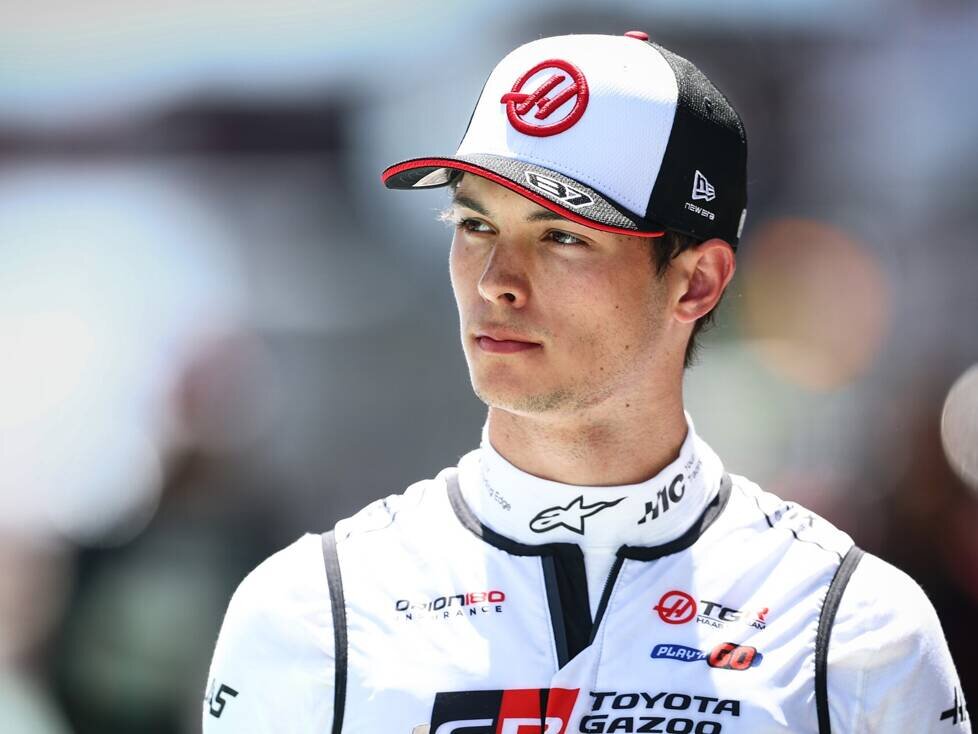
Lack of downforce, high tire wear, and no effective updates: Oliver Bearman candidly explains why Haas is currently “a nightmare”
Oliver Bearman makes no secret of the fact that the U.S. team is currently falling behind in the Formula 1 midfield. In his assessment, while the driver and team have gotten the most out of the car, the VF-26’s limitations are now impossible to ignore.
“There isn’t much to say. It was a very uneventful weekend,” Bearman sums up. “I gave it my all in both qualifying and the race and tried to maximize everything. I really believe I succeeded in doing that.”
A better result simply wasn’t possible under the circumstances. “If you look at where I finished, I don’t think I could have done much better. I drove as fast as I could, managed everything as well as I could, but we just weren’t fast enough this weekend.”
The underlying problem lies with the car
According to Bearman, this is by no means a track-specific problem. Rather, the result reflects the car’s current performance level.” “That’s where we stand right now,” explains the Brit. “The gaps vary depending on the track and the length of the straights. Here we were perhaps a bit further back, but it was similar in Barcelona. It was comparable in Monaco, too. That’s our current pace. Unfortunately, we still have a lot of work to do.”
Bearman cites the lack of downforce, especially at the rear axle, as the biggest weakness. The consequences were clearly noticeable throughout the entire race. “That’s our biggest problem. It’s generally about downforce, but especially at the rear. We have major difficulties during the turn-in phase and therefore have to drive with a very low aero balance just to get by.”
He describes the VF-26’s handling in particularly stark terms: “Traction was a nightmare at the start of the race. Fast corners were a nightmare, and corner exits were a nightmare too. It was really difficult to conserve the tires and maintain the pace.”
“That’s the harsh reality”
For Bearman, it’s clear that neither the drivers nor the engineers could have achieved more this weekend. “When I look at everything that was within our control—and within the engineers’ control—we maximized everything. I’m satisfied with the setup we chose.”
His conclusion is correspondingly sobering: “That’s simply the harsh reality of where we stand right now. There was nothing we could have done to finish any higher up, unless other cars had retired.“
Bearman is particularly clear when comparing the team to the competition. While other teams have visibly improved over the course of the season, Haas has been treading water. ”The other teams have brought more updates—and more effective ones at that. They’ve taken a big step forward, and we haven’t. It’s as simple as that.”
Ocon: “We Know the Problem”
Esteban Ocon also confirms his teammate’s analysis. Haas tried everything this weekend but was unable to mask the car’s fundamental shortcomings.
“It went exactly as we expected. We know there’s a problem with the car. But on the positive side, we gave it our all this weekend. We squeezed out the maximum and tried to change every component we could. Still, we’re still struggling with the same problem.”
Although the Frenchman points to the strong start to the race, which briefly raised hopes, the lack of downforce ultimately caught up with the team once again: “The start was incredible. We worked very hard as a team to get it as good as possible. I passed everyone at the start and was almost in the points on the first lap. I was with the Racing Bulls, but was later lapped. That’s hard to accept.”
Ocon describes the core problem in a similar way to Bearman: “We need to get the car back to a healthy state. That’s the first step. We’re missing a lot of downforce, and that’s why I’m constantly sliding on the tires. I can still control it for the first few laps, but after that, I get overtaken by the other cars.”
Komatsu Sees Development Work as the Key
Team Principal Ayao Komatsu strikes a somewhat more conciliatory tone, but confirms his drivers’ assessment. In terms of operations, Haas delivered a clean weekend, but the real problem area has long been obvious.
“Operationally, we did a good job again today. With support from Banbury and Maranello, everything worked out. That’s the positive aspect. We got the most out of the car on both Saturday and Sunday. Now we need to improve the base performance. That means we need a faster car. We’re working on that and hope to bring the necessary performance to the car as soon as possible.”
The message from the Haas camp is therefore clear. It’s not strategy, setup, or driver error that’s costing them time right now, but the car’s lack of performance. While their direct competitors have made progress with successful updates, Haas is still waiting for that decisive step forward in development.