'/%3E%3Cpath%20fill='%23b2b2b2'%20d='M241%20382q0%2016%2017%2026%2017%2011%2042%2011t42-11q16-11%2017-26V269H241'/%3E%3Cpath%20fill='%239f7e00'%20d='M241%20379q0%2014%208%2023%209%209%2021%209%2014%200%2021-9%209-9%209-23V269h-59'/%3E%3Cpath%20d='M241%20339v-70h59v110q0%2014-9%2023l-6%205v-68h-15v72q-8%200-14-4v-68zm59%2040c0%2022%2015%2032%2029%2032%2021%200%2030-18%2030-32v-40h-59'/%3E%3Cpath%20fill='%239f7e00'%20d='M266%20277v5h2v12h-3v-5h2v-5h-9v5h2v5h-4v9h3v18h-5v10h34v-10h-5v-18h3v-9h-4v-5h2v-5h-9v5h2v5h-3v-12h2v-5zm42%20101q0%2010%206%2017%206%206%2015%207%2010-1%2016-7%206-7%206-17v-29h-43'/%3E%3Ccircle%20fill='%230044ad'%20cx='329.5'%20cy='372'%20r='6'/%3E%3Cellipse%20fill='%230044ad'%20cx='300'%20cy='340'%20rx='16'%20ry='21'/%3E%3C/svg%3E)



Big leads do not guarantee a world championship title: our photo gallery shows spectacular cases in which the frontrunners ended up empty-handed.
Lando Norris and, above all, Max Verstappen are trailing behind Oscar Piastri in the 2025 Formula 1 title race. Despite his retirement from the Azerbaijan Grand Prix in Baku, Piastri still has a clear lead in the drivers’ standings – 25 points ahead of Norris and 69 points ahead of Verstappen.
But Formula 1 history shows that championship leaders have not always managed to maintain their (large) lead to the finish line and become world champions.
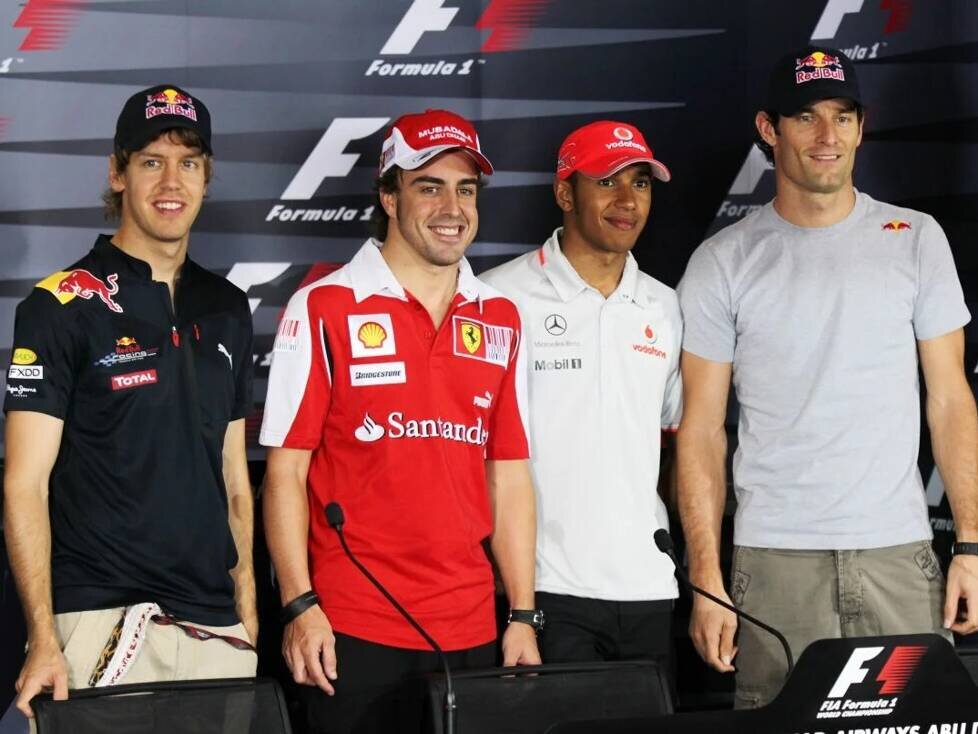
One example: in 2010, Ferrari driver Fernando Alonso led the overall standings ahead of the final race in Abu Dhabi. At the last Grand Prix of the year, his strategy focused on his supposed closest title rival, Mark Webber of Red Bull. In the end, however, Sebastian Vettel, who had been in third place until then, prevailed—without ever having been at the top of the standings in the 2010 season.
The 1976 Formula 1 season is also famous, as immortalized in the film “Rush”: Niki Lauda was close to following up his first world championship title with Ferrari with a second in the summer – until he suffered a serious accident on the Nürburgring Nordschleife. McLaren driver James Hunt then made the title fight exciting again.
The dramatic finale at Fuji in 1976 also became famous: World Championship leader Lauda retired in the pouring rain, but Hunt continued – and became world champion.
Why a driver who was actually leading comfortably ultimately did not win the world championship and why another driver overtook him.