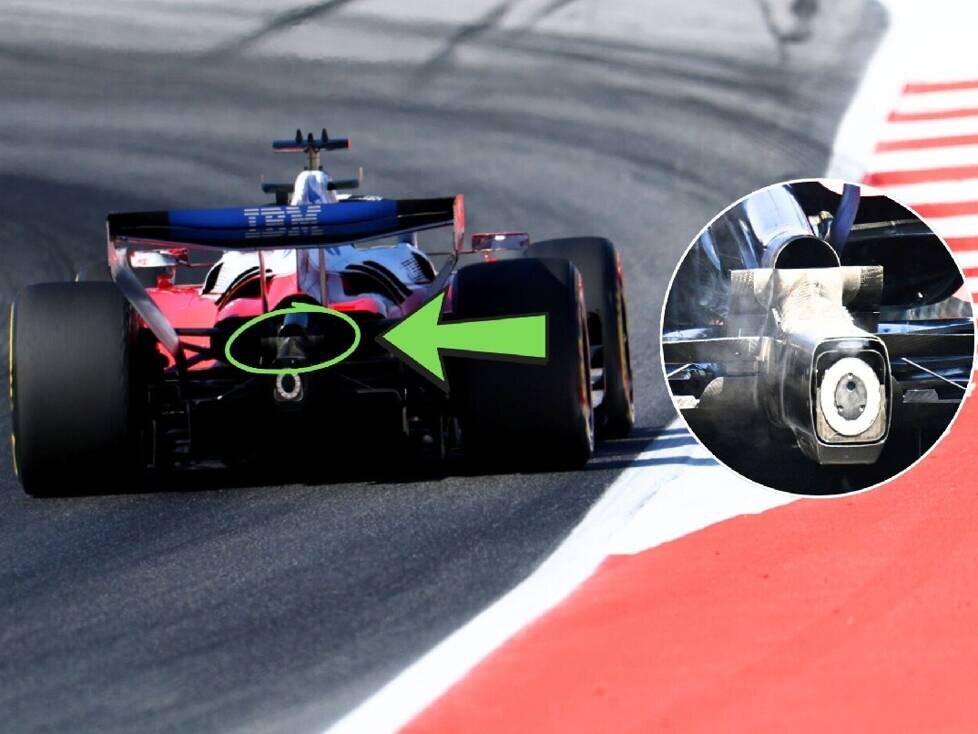
A clever design in the exhaust stream gave Ferrari an advantage in the 2026 Formula 1 season, but the FIA wants to prevent a costly arms race
A small winglet positioned directly behind the exhaust tailpipe caused a stir during the 2026 Formula 1 winter tests in Bahrain. This unique Ferrari innovation—known internally as “FTM”—quickly inspired imitators. But that will soon come to an end: The Fédération Internationale de l’Automobile (FIA) is banning such designs. This is evident from the latest version of the Technical Regulations for 2027. As a result, the exhaust winglet will only be permitted until the end of 2026.
The reason for the impending ban is the FIA’s concern that the exhaust winglet could lead to uncontrolled development—a costly arms race in a specific area that was considered a “gray area” from the very beginning.
What exactly does this FTM component do? It is mounted directly behind the exhaust pipe and is thus positioned directly in the exhaust flow. The design therefore uses exhaust gases to generate additional downforce.
The current Formula 1 rules are actually intended to prevent such solutions, but Ferrari managed to circumvent the strict regulations with the SF-26: The historic Italian team moved the differential in the gearbox housing as far back as possible, thereby creating the conditions to install the winglet in compliance with the rules.
However, because the SF-26 was designed with this in mind from the start, the competition struggled to copy the FTM element. In the meantime, though, several teams have implemented similar solutions, including Mercedes with a winglet on the exhaust tailpipe mount. This solution builds on the Ferrari concept but is slightly less effective—and will also be banned starting in 2027, as another rule change indicates.
Ferrari appeared to be anticipating the FTM ban as early as the free practice sessions for the 2026 Austrian Grand Prix in Spielberg by having Friday driver Dino Beganovich drive without the winglet in the first session. Ferrari’s regular driver, Lewis Hamilton, on the other hand, drove with it as usual during the same session. However, the decision to omit the winglet may have simply been a strategic move in anticipation of races like Monza, where cars are driven with particularly low downforce.