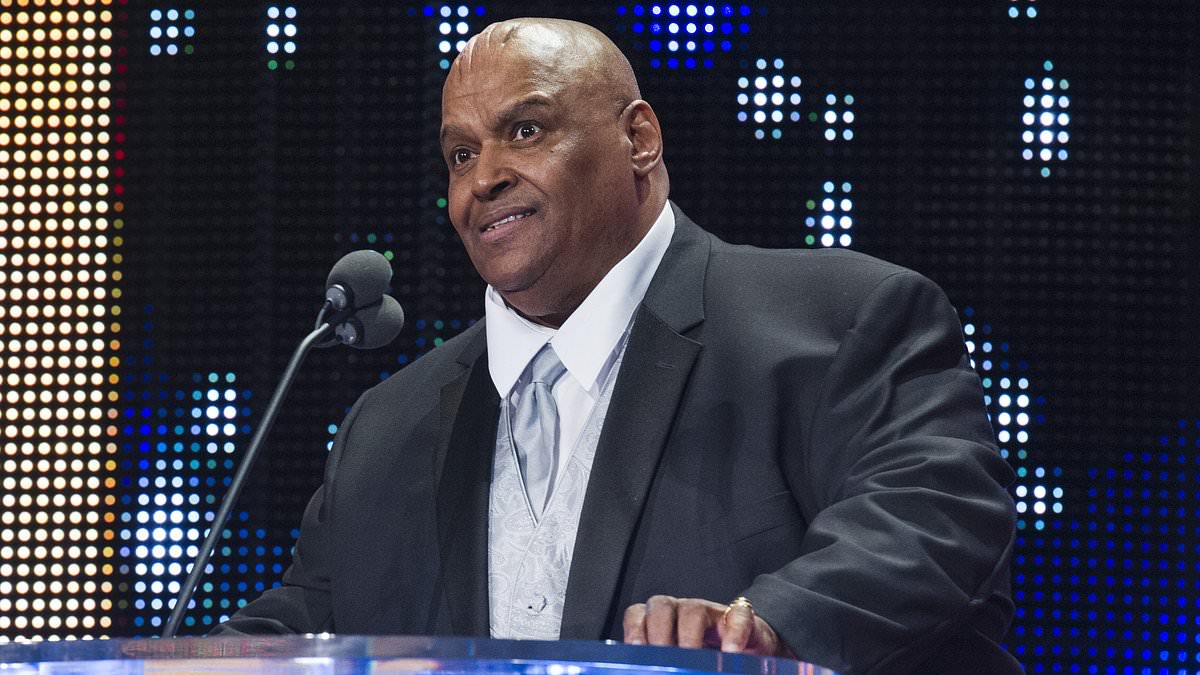
He is one of the last legends of a bygone era: Abdullah the Butcher, known for his brutal ring battles against countless stars of yesteryear, is in hospital with “serious” problems.
There is great concern for one of the last mythical figures of a bygone wrestling era: According to reports from those close to him, WWE Hall of Famer Abdullah the Butcher is in hospital. The 84-year-old’s condition is said to be critical. The “Wild Man from the Sudan” is battling “serious health problems,” booking agent Steve Stasiak announced on social media, without giving further details: “Send prayers, love and strength his way tonight. “
Abdullah the Butcher: Legend of a bygone era
Lawrence Shreve, as Abdullah is actually called, is one of the most famous icons of ”hardcore wrestling,” renowned for his many brutal and bloody battles with legends from numerous generations over the course of his 50-year career.
Shreve is originally from Canada and grew up in extreme poverty before making his ring debut in 1958 and becoming a show fighting star. In his homeland, Shreve developed the role of an unpredictable Arab villain who supposedly spoke no English and could only express himself through brute force.
In the days before WWE rose to become the national and global market leader in the 1980s, Abdullah was an attraction in the territorial system that was common at the time: He moved from region to region in North America and was staged everywhere as a monstrous threat to the local stars, accompanied by changing managers who did the talking for him—among them legends such as the “Grand Wizard” Ernie Roth, Paul Jones, Gary Hart, and J.J. Dillon.
Abdullah is also a popular phenomenon in other wrestling strongholds such as Puerto Rico and Japan, where he transcends cultural boundaries. In Japan, there are even several manga and anime characters modeled after him.
Rivalries with numerous icons
Among Abdullah’s most famous rivalries were his feuds with other famous, now deceased hardcore legends such as the Original Sheik (Edward Farhat, uncle and role model of Sabu, who died this year), Bruiser Brody, and Terry Funk. Abdullah also faced countless other legends from different eras and countries in major matches in the ring: Harley Race, Jack Brisco, Giant Baba, Jumbo Tsuruta, Antonio Inoki, Carlos Colon, Dusty Rhodes, Stan Hansen, Andre the Giant, Hulk Hogan (in Japan), Kenta Kobashi – it’s a who’s who of the industry.
Abdullah liked to use a fork as a special weapon and was famous for his penchant for bloodbaths. According to Hall of Fame colleague and companion Mick Foley (Mankind, Cactus Jack), Abdullah could insert large coins into the characteristic scars on his forehead, which he had inflicted on himself through “blading” – deliberately cutting himself with razor blades to create a blood effect in the ring.
Abdullah became world famous in the scene, even though he was hardly ever active in a major national league. The only exception was a rather unsuccessful interlude for the heavyweight with former WWE competitor WCW in the early nineties, where he competed in matches against Sting and Foley. This was followed by occasional guest appearances in Paul Heyman’s cult league ECW and, even at over 60, in Ring of Honor, the style-defining independent promotion of the 2000s.
Abdullah did not end his active career until 2010, at almost 70 years of age.
WWE honored his legacy in 2011
Abdullah’s legend is not without blemish: in 2014, he was convicted of negligent bodily injury in Canada for infecting a fellow wrestler with hepatitis C during one of his typical blood matches. “Hannibal” Devon Nicholson was awarded millions in damages because the illness caused a concrete engagement with WWE to fall through.
Abdullah’s legacy is also controversial within the scene: when he was inducted into the WWE Hall of Fame in 2011, former champion “Superstar” Billy Graham threatened to withdraw from the Hall of Fame, saying he did not want to stand alongside a “bloodthirsty animal.”
The very thing that some despised about him was precisely what gave Abdullah iconic status in the scene. WWE sums up the special status of the legend in its Hall of Fame biography: “A champion was not a champion until he stood in the ring with Abdullah the Butcher.”