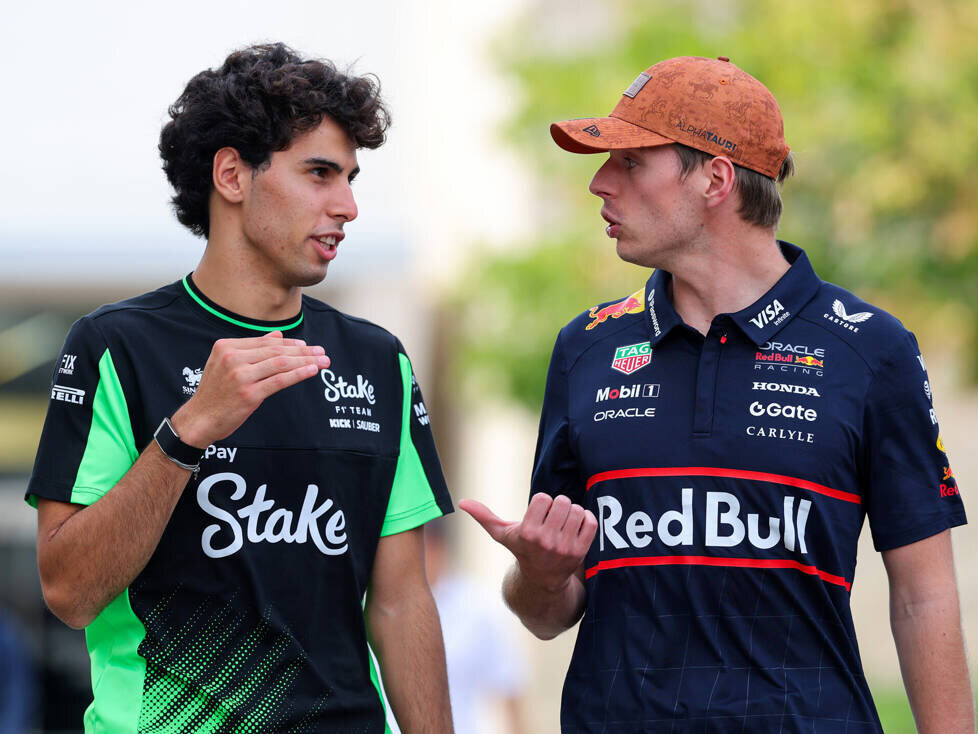
Max Verstappen takes Gabriel Bortoleto under his wing – the world champion gave the rookie a crucial tip for dealing with mistakes
Gabriel Bortoleto has a prominent advocate and advisor at his side in his still young career: Max Verstappen. The four-time Formula 1 world champion is not only a friend to the young driver, but also his mentor.
Especially in a rookie season, where the pressure is enormous, one piece of advice from the Dutchman was particularly valuable to Bortoleto – namely, how to deal with the inevitable setbacks.
“He gave me a lot of advice. It’s hard to pick just one piece,” says Bortoleto when asked about the most unexpected tip he received this season. “But I’ll take one that I heard from him recently.”
It was mainly about the mental approach to mistakes. “The point is that I was in my rookie season and had already achieved a lot. And that I shouldn’t worry too much if mistakes happen,” explains Bortoleto.
Verstappen’s advice: See mistakes as learning opportunities
The philosophy that Verstappen imparted to the youngster is simple but effective: perfection is not possible right away, and mistakes are part of the growth process. “Mistakes are the moments when you learn the most,” Bortoleto quotes his mentor. “And they will happen to everyone.”
Particularly important for Bortoleto was the message not to beat himself up after a mishap. “I shouldn’t beat myself up just because I’ve made a mistake once or twice,” the Brazilian continued. “They’re bound to happen at some point. I just have to learn from them and move on.”
Although this wisdom sounds like a standard saying in motorsport, for Bortoleto, it’s who said it that makes the difference: “It’s a simple thing that many people say. But when you hear it from someone who has achieved so much in the sport, I think it means a lot more.”
No excuses based on past successes
For a perfectionist like Bortoleto, however, putting this advice into practice is not always easy. After a solid season overall, it could be tempting to dismiss poorer weekends by pointing to the good performances. But that’s exactly the kind of thinking he rejects.
“I’ve always been like that, ever since I was very young,” he explains. “I don’t really care about what happened in the past. I know how the season went and I’m proud of it. But I’m very focused on where I am right now.”
Even if he can look back on some great races, that doesn’t serve as an excuse for a slip-up. “When you have a difficult race, I don’t say to myself, ‘Okay, I had a difficult race, but I had 18 others that were fantastic. So I’ll just forget about this one,’“ Bortoleto clarifies. Instead, he demands a harsh analysis of himself: ”I think I should see my mistakes and try to learn from them to do better next time.” He doesn’t want to accept or justify his mistakes just because he has “done better things” in the past. “Every race should be considered a race in its own right. I’ll learn from it and just move on. And hopefully I’ll do better next time,” Bortoleto concludes.