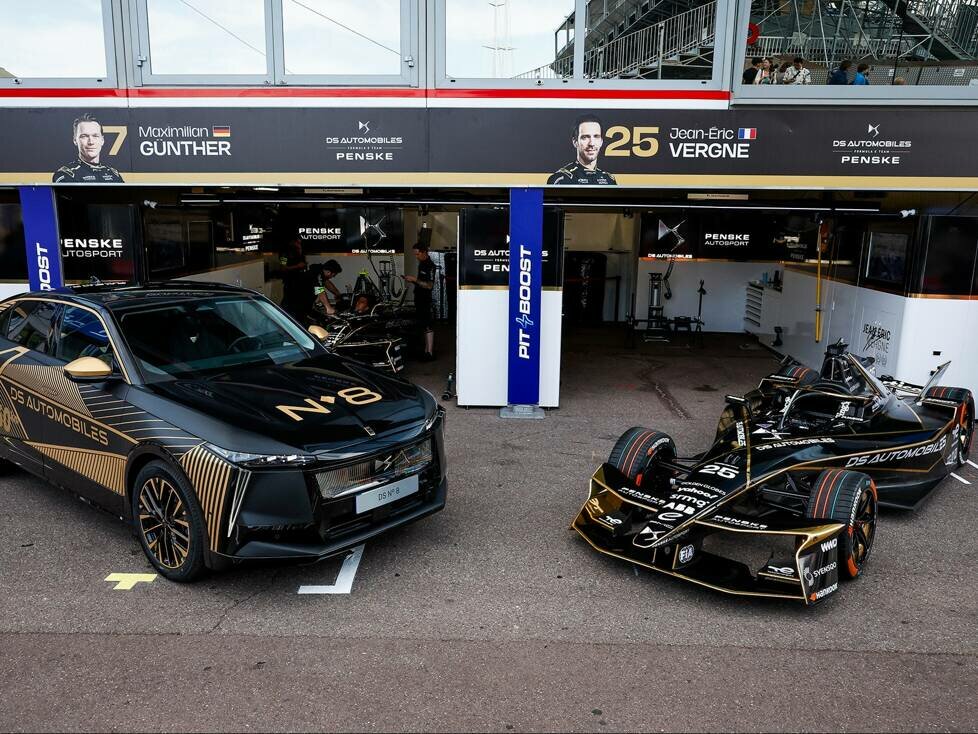
Since its founding in 2014, DS Automobiles has made the “avant-garde spirit” its trademark and uses motorsport as a technology laboratory
Racing is a kind of development accelerator: an extreme environment in which materials, components, and processes can be tested, perfected, and validated under real conditions, which are then incorporated into the brand’s road models with the appropriate adjustments.
A concrete example is the commitment to the FIA Formula E World Championship, which has already earned DS Automobiles four titles (two drivers and two teams) in ten seasons. This commitment goes far beyond advertising and has become a real driver of technical development, especially for the French manufacturer’s hybrid and electric vehicles.
A clear link between the racetrack and the road
DS Automobiles’ involvement in Formula E goes far beyond a simple marketing platform. While it strengthens the brand’s global communication efforts, it also serves as impressive proof of the relevance of its innovations. In competition, the demands on performance, reliability, and energy management are pushed to the limit, and no simulator can fully replicate reality. It is an ideal setting for testing solutions that will also be used on the road.
The latest example of this synergy is the new DS N°8, the brand’s electric flagship, which draws directly on concepts and technologies developed in racing. Thanks to the advanced integration of hardware and software, this sedan with its elegant and aerodynamic lines achieves a record range of 750 kilometers in the WLTP cycle.
“By renewing our commitment to Formula E over the last decade, we are leveraging this experience to further develop our electrified models,” explains Xavier Peugeot, CEO of DS Automobiles. “Our DS N°8 embodies this vision with an exceptional range that would not have been possible without the expertise acquired on the racetrack.
State-of-the-art technologies
The secret of the DS N°8’s range lies not only in its battery capacity or aerodynamic efficiency, but also in its advanced regenerative braking system, which has been perfected through experience in Formula E. This system captures kinetic energy during braking and returns it to the battery in the form of a charge, significantly increasing the number of kilometers that can be driven.
In electric single-seaters, energy recovery is crucial: it accounts for up to 30% of the energy required for a lap, and without it, the cars would not be able to cross the finish line. Its optimization is therefore one of the technological priorities of the competition, with a direct impact on series production.