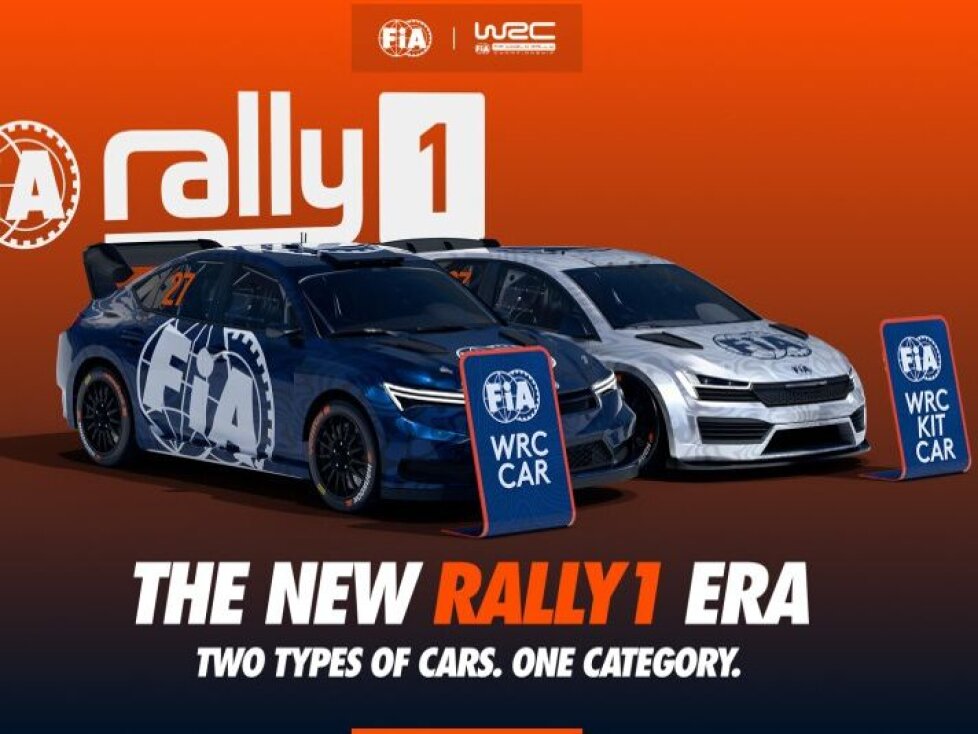
New WRC regulations for 2027 confirmed: The top class will feature two vehicle concepts, whilst the new Rally6 category is designed to promote grassroots sport.
At its most recent meeting of the World Motor Sport Council, the FIA set out a decisive sporting direction for the 2027 World Rally Championship (WRC). The new regulations bring comprehensive changes to the premier class, in which, from next season onwards, completely newly developed WRC27 cars and upgraded Rally2 cars will compete side by side for victory.
The top class will retain the designation Rally1, but will in future be divided into two vehicle categories: WRC Cars and WRC Kit Cars. Both concepts are based on different sets of regulations, but are intended to be brought to a similar level of performance in sporting terms.
Manufacturers such as Toyota, as well as the motorsport teams Project Rally One and RMC Motorsport, are opting for standalone WRC Cars, which are built entirely in accordance with the original WRC27 regulations.
Manufacturers of Rally2 vehicles, on the other hand, can fit their cars with an upgrade package costing around 7,500 euros, as specified by the FIA. This package comprises modified front wings, a new front apron and adapted rear aerodynamics. Vehicles upgraded in this way will compete as WRC Kit Cars.
M-Sport is the only team so far to have committed to developing this kit and has already completed tests with the revised Ford Fiesta Rally2 in Spain.
Both vehicle variants will in future compete with an enlarged air restrictor measuring 33 millimetres. This represents an increase of around 15 PS compared with the previous Rally2 cars, which are fitted with a 32-millimetre restrictor.
Due to the entry of new teams, the World Rally Championship (WRC) has renamed the previous Manufacturers’ World Championship to the Constructors’ World Championship. All Rally1 manufacturers can take part in this championship across the full 15 rounds of the season.
In addition, a new WRC team classification is being introduced, which is open to all Rally1 entrants. Under this format, teams will select seven specific events, including at least one overseas round and the season finale.
This format is particularly suited to teams such as Project Rally One and RMC Motorsport, as both teams have already announced that they do not expect to contest the full season.
The class standings for WRC2, WRC3 and the WRC Masters Cup will remain unchanged for the 2027 season. Furthermore, the federation has adopted the technical regulations and homologation criteria for the new entry-level Rally6 class, which forms the foundation of the rally pyramid.
The Rally6 category is closely modelled on the FR6 regulations of the French Motorsport Federation. With estimated vehicle costs of between 35,000 and 47,000 euros, the class is intended to significantly reduce the financial outlay required to enter rallying and provide young drivers on a tighter budget with affordable access to the sport.
The new front-wheel-drive cars are based on four-seater production models and are powered either by a 1.6-litre turbocharged engine or a 2.0-litre naturally aspirated engine. To keep purchase and running costs low, production components such as standard brakes and off-the-shelf tyres are used extensively.
In addition, the cars use a conventional H-pattern manual gearbox and non-adjustable racing shock absorbers, whilst safety standards are on a par with those of previous Rally5 kit cars.