Thursday, March 26, 2026
spot_img
Home Blog

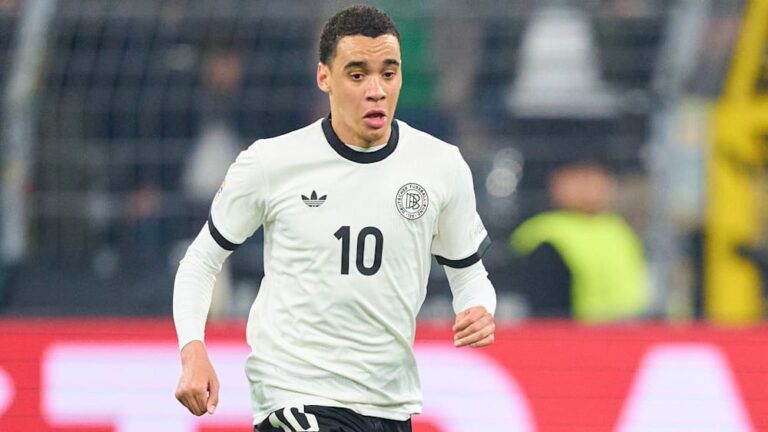
DFB assigns all numbers from 1 to 26 – except 10

0

The DFB announced the shirt numbers for the national team’s two upcoming international matches on Wednesday. One central number was not allocated.

Jamal Musiala is missing with an injury, but the FC Bayern playmaker is still firmly in the plans of national coach Julian Nagelsmann for the World Cup in the summer – this is underlined not least by the allocation of shirt numbers for the start of the World Cup year.

Musiala’s shirt number 10 will not be allocated for the international matches in Basel against Switzerland on Friday (8.45 pm/RTL) and three days later in Stuttgart against Ghana (8.45 pm/ARD) – the game is now sold out with around 53,000 fans, as is the following home game against Finland on May 31 in Mainz (approx. 25,500).

The legendary number is the only one between 1 and 26 to be withheld for the test match double-header. Musiala, from Munich, is still missing due to a pain reaction following his serious injury last summer. Nagelsmann revealed that he would have “loved to have had” the 23-year-old in the squad, but opted not to include the attacking player out of consideration for his health and the crucial phase of the season at Bayern, who are chasing several titles.

Baumann as expected – Karl with the 25

Goalkeeper Oliver Baumann will line up in Basel and Stuttgart with the number 1 on his back, as expected. In the absence of the injured Marc-André ter Stegen, the Hoffenheim man is the regular in the German goal.

Captain Joshua Kimmich retains his number 6, even if he is still scheduled as a right-back with a view to the World Cup. Winger Kevin Schade is given the number 9 at center forward. Newcomer Lennart Karl is to recommend himself for a place in the squad for the finals in the USA, Mexico and Canada with the 25.

Africa Cup dispute: CAS issues first statement – and sets up arbitration tribunal

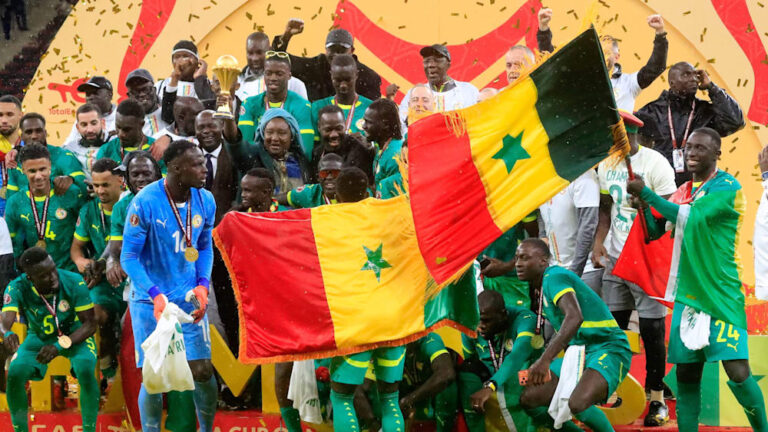
Who is the winner of the Africa Cup 2025/26? This case is now before the Court of Arbitration for Sport (CAS), which issued an initial statement on Wednesday – and announced its intention to set up an arbitration tribunal.

Last Wednesday, the Senegalese Football Association announced its intention to take the case for the Africa Cup title to CAS. A week later, the Court of Arbitration for Sport has now confirmed the appeal against the ruling of the African Football Confederation (CAF).

A CAF appeals committee had awarded Morocco victory at the Africa Cup 2025/26 at the green table last week, although Senegal had won the final in Rabat in mid-January 1-0 after extra time. Because several Senegalese players had left the field in protest against two refereeing decisions in injury time of regular time, Morocco lodged a protest against the match classification – and after an initial defeat, were ultimately upheld by an appeals committee.

“The appeal lodged with CAS on March 25, 2026 aims to have the CAF’s decision overturned and Senegal declared the winner of the Africa Cup,” read the statement published on Wednesday afternoon. Senegal has also requested that the deadline for filing the notice of appeal be suspended until the full reasons for CAF’s decision are available. Normally, a plaintiff only has 20 days after filing the appeal to submit his legal arguments in a notice of appeal. So far, however, the CAF has only provided the judgment of the Appeals Commission.

For this reason too, the CAS writes that it is currently not possible to estimate how long the proceedings will take. “We are aware that the teams and fans want to know the final decision as soon as possible and we will ensure that the arbitration proceedings are conducted as swiftly as possible, while respecting the right of all parties to a fair trial,” CAS Director General Matthieu Reeb is quoted as saying.

In a first step, the Court now wants to appoint an arbitration tribunal to decide on the matter. A calendar of proceedings will then be drawn up. “Thanks to its specialized and independent arbitrators, the CAS is ideally equipped to resolve this type of dispute,” writes Reeb.

ÖFB lures with double salary: Rangnick rejects first offer

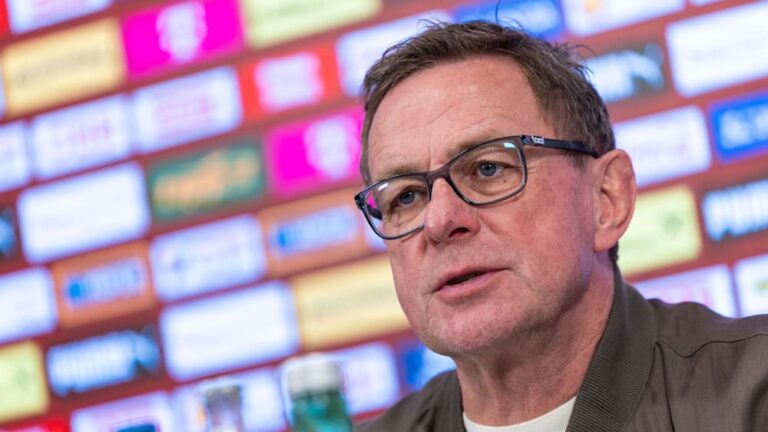
The contract of Austria team boss Ralf Rangnick expires after the 2026 World Cup. The German has rejected the first offer for an extension – despite the prospect of a salary increase.

Austria and team manager Ralf Rangnick are taking the first steps towards the 2026 World Cup in Marbella these days. Whether the 67-year-old will still be coach of the national team after the finals in North America remains to be seen. Although sporting director Peter Schöttel has recently expressed his optimism regarding a contract extension, an agreement between Rangnick and the ÖFB is not yet in sight. According to a report in the Salzburger Nachrichten, the German is said to have rejected the first offer from the association.

According to the report, Rangnick was “not completely in agreement” with the offer. According to SN, this is not due to financial reasons, as the ÖFB is prepared to double the salary to two million euros per year. This would be made possible by four sponsors – including Raiffeisen, Uniqa and IMMOunited – who would cover half of Rangnick’s salary with special financing. The ÖFB is aiming for an extension until the 2028 European Championships.

Rangnick decision to be made before the World Cup

ÖFB supervisory board chairman Josef Pröll confirmed the SN report to ORF on Wednesday. “Ralf Rangnick and I are in good talks. But it still needs time. We are working on a complete package. As long as that doesn’t exist, nothing is fixed,” said Austria’s former vice-chancellor. According to APA information, the Supervisory Board has authorized Pröll to offer the improved remuneration.

However, several members of the supervisory board are also said to have demanded a performance clause in the form of reaching the knockout phase at the World Cup. This could still become a bargaining chip. The money is no longer a problem, according to reports from Rangnick’s circle on Wednesday.

Rangnick insists on a professional working environment

In addition to the sporting development of the team, Rangnick is primarily concerned with making processes within the association more efficient and breaking up outdated structures. The 67-year-old already enjoys a high standing with the players. Thanks to his many years of persuasion, he recently succeeded in winning Paul Wanner and Carney Chukwuemeka for the red-white-red national team.

Rangnick had recently stated that he felt “no undue time pressure” with regard to a contract extension. Nevertheless, the decision on the future of the German, who has been in office since mid-2022, is to be made before the World Cup. At the earliest, this will be in April after the international matches against Ghana (Friday, 6pm) and South Korea.

Even Nagelsmann wonders: Will Howe survive his biggest crisis at Newcastle?

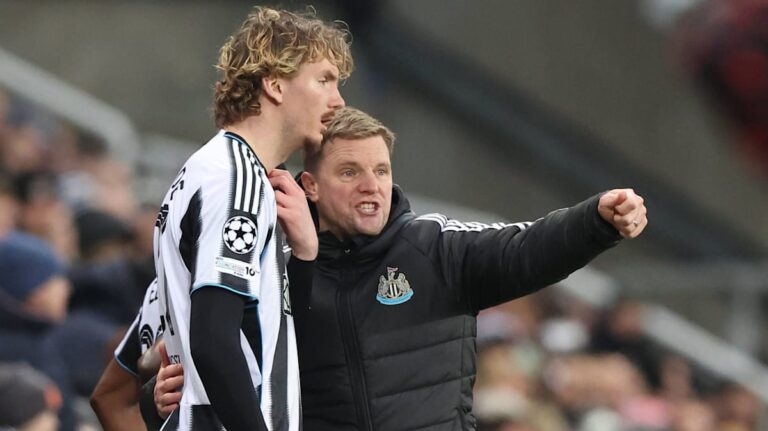
Debacle in Barcelona, defeats against arch-rivals and a tip from Julian Nagelsmann: Eddie Howe is going through his worst crisis as Newcastle coach – with an open outcome.

Newcastle United went into the international break with a defeat that will resonate, and not just because of the unusual fixture list. The 2-1 defeat to arch-rivals AFC Sunderland was so devastating for the Magpies that even their ever-sober coach left the criticism scale open afterwards.

“You can use any words you want, I’m not going to dispute it,” sighed Eddie Howe at his press conference on Sunday. “There’s no excuse for not delivering.” And because this is not the first time this has happened to his team, big questions are being asked in Newcastle that will require an answer in the summer at the latest.

The fact that Howe’s team did not simply fail to beat FC Barcelona in the Champions League quarter-finals, but were dismantled 7-2 at the Camp Nou, is causing just as much alarm as the two derby defeats against promoted Sunderland this season and the table picture after 31 match days: 12th place, behind the Black Cats, already a good distance away from the European Cup places.

Howe’s project has stalled – two line-ups speak volumes

In four and a half years, Howe, supported by the new millions from Saudi Arabia, has turned a Premier League 19th into a two-time Champions League participant and brought the traditional club a title again after 70 years with the League Cup triumph in 2025. The Englishman, who has been seen as a potential national coach for years, is the most successful coach in the club’s recent history – but the whole project has stalled.

Last summer, Newcastle painfully learned on the transfer market that they are still not one of England’s top clubs, with the Premier League’s financial rules further restricting their seemingly endless financial possibilities. And Howe, unlike before, has not managed to make the most of what he has this year.

This is most obvious when you compare the line-ups for the first and last competitive games of the season: Anthony Gordon started as a center forward in both cases, although he is not actually one. The only difference is that Newcastle had not yet spent around €135 million on two new attackers in the 0-0 draw against Aston Villa at the start of the season. But against Sunderland, Nick Woltemade once again started in a more defensive role, Yoane Wissa not at all.

Woltemade is the face of the downturn, but Wissa is the real disappointment

Even after seven months, Howe is still looking for the ideal position for Woltemade in his system. The ex-Stuttgarter, who last scored in the Premier League in December and was not asked to play a minute against Barca, is one of the faces of the downturn in recent months. “He has often played very deep, and when he defends as a six-man, it’s a long way to goal,” national coach Julian Nagelsmann said last week, followed by a sentence that could be interpreted as a slight dig at Howe’s experiments: “I can promise that he won’t be 80 meters away from goal with us.”

At least Woltemade is playing semi-regularly again. Wissa, who scored 19 times for Brentford last season, has so far been a €58 million flop, even though he seemed to be a better fit for Howe’s raid soccer. He is the real disappointment, not Woltemade, but the interim conclusion is that Newcastle have failed to make up for Alexander Isak’s strike departure.

The Magpies need a late show of strength to somehow salvage the season by qualifying for the European Cup, but that is precisely not their strength: they have already squandered 22 points after taking the lead, which also does not reflect well on Howe’s work. Why does his team consistently run out of steam? “We lost control after the break,” he was only forced to admit again against Sunderland.

Unrest looms again in the summer, even if Howe stays

A change of manager before the end of the season is out of the question and the sporting management should continue to fully back Howe. However, Howe still has a few arguments to put forward before the Saudi owners take the next steps in the summer. It is already clear that even without Howe’s replacement, things are likely to become unsettled again. Key players such as Sandro Tonali, Bruno Guimaraes, Valentino Livramento and Gordon may want to move due to a lack of prospects, and may even have to due to financial constraints.

The three-week break offers a good opportunity to tighten things up in sporting and strategic terms. But things don’t even run smoothly when the ball isn’t rolling: Newcastle had to cancel their planned training camp in Dubai due to the Middle East war.

Green light for Seattle and Vegas: NBA teams vote in favor of expansion plans

0

The NBA’s expansion plans in the USA continue to take shape. As reported by ESPN, the Board of Governors has voted in favor of obtaining initial bids.

The NBA expansion to 32 teams has cleared another hurdle. As ESPN reporter Shams Charania writes, the current 30 teams have agreed in principle to an expansion.

In the next step, the league will hold talks with interested locations and the investors behind them. As already practiced in the past, entry into the NBA requires the payment of an entry fee.

Initial estimates range from seven to ten billion dollars. That would scratch the previous record price of a franchise. Last year, the Los Angeles Lakers went over the counter for around eleven billion dollars.

Expansion to 32 teams already very likely

The big favorites for a franchise are Las Vegas and Seattle. Both are no strangers to the NBA universe. The casino paradise of Las Vegas already hosts the final tournament of the NBA Cup. Seattle, on the other hand, hosted the SuperSonics for decades before the franchise moved to Oklahoma City (now OKC Thunder) in 2008.

Once bids for the expansion have been received, the 30 current teams will be asked to vote again. A three-quarters majority (at least 23 of 30 teams in favor) is required for the bid to be accepted. However, according to ESPN, it is assumed in internal circles that the expansion to 32 teams is only a matter of time and no longer a question of “if”.

“Fortnite magic” fades: Epic Games lays off more than 1,000 employees

0

With Fortnite now in its second year of decline, Epic Games has cut a number of jobs. The developer is facing the “most extreme market conditions” in a long time.

Ahead of all the explanations, categorizations and justifications is an apology: “Today we are laying off more than 1,000 employees. I am sorry that we have reached this point again,” wrote CEO Tim Sweeney in a message to the Epic Games workforce.

The video game company had already parted ways with 830 employees in the fall of 2023. Sweeney had already announced at the time that Epic Games was spending more money than it was earning. This has probably not changed – because the latest explanations read similarly.

500 million in additional savings

“The decline in user activity in Fortnite that began in 2025 means that we are spending significantly more than we are earning. We have to make significant cuts to keep the company financially afloat,” Sweeney explains.

In addition to the layoffs, Epic Games is also cutting costs by over 500 million US dollars in contracting, marketing and by eliminating vacant positions. It is important for Sweeney to emphasize that the measures are not related to the expansion of AI.

The CEO cites challenges affecting the entire industry: slower growth, lower consumer spending and higher costs. The current generation of consoles is selling worse than the previous one, and entertainment competition is becoming increasingly fierce.

“The current market conditions are the most extreme we’ve seen in a very long time,” says Sweeney: “With massive upheaval in the industry that comes with huge opportunities for the companies that emerge as winners from this phase.”

Epic Games wants to be one of these ‘winners’ – “for our players”.

Hopeful mobile comeback

In order to do this, the developer must first stabilize its biggest games drawcard: “Although Fortnite is still one of the most successful games in the world, we’ve struggled to deliver the usual Fortnite magic every season,” Sweeney admits.

Energy management to aerodynamics: How Ferrari wants to catch up with Mercedes

Ferrari is continuing its efforts to close the gap on Mercedes: the Scuderia has therefore planned some further developments for the Japanese Grand Prix

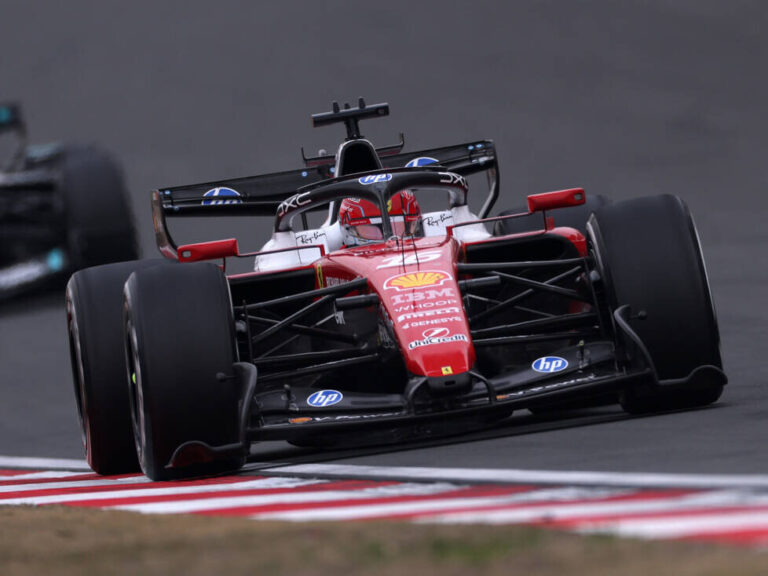
Ferrari was the only team at the first Formula 1 races in Australia and China that was at least able to keep up with Mercedes. To keep it that way, or perhaps even narrow the gap to the Silver Arrows, the Scuderia has planned some further developments for the Japanese Grand Prix.

The Suzuka circuit represents a third track type and is likely to be a particular challenge for energy recovery, even if it is not as demanding as Melbourne. In addition, there is the resurfacing of the track and the weather (here is the current forecast) – factors that represent unknown variables.

After analyzing the data from the first two races, considerable work has nevertheless been done at the factory in Maranello to better exploit the potential of the SF-26, and so far the simulations for the Japanese Grand Prix appear to be giving positive signals.

It’s no secret that Ferrari is competitive in technical, twisty sections, while the SF-26 is currently struggling on the long straights. Here, Mercedes can use the higher peak power of the combustion engine to charge the battery.

The Silver Arrows burn fuel to charge the battery, accepting a loss of speed through so-called “super-clipping”, but this is less than that of the competition. Even without taking into account the advantages that a compression ratio of over 16:1 could bring at operating temperature, the Mercedes drive is clearly superior.

Ferrari wants to optimize energy management in Japan

Ferrari is, however, convinced that it can improve energy distribution over the course of a lap. This is not primarily about chasing the current strengths of the W17 from Mercedes, but rather pushing its own concepts to the maximum and fully exploiting the potential of the smaller turbocharger.

The Scuderia is aiming to maximize energy recovery in slower sections of the track and transitional situations, possibly by using a lower gear to keep the revs of the combustion engine high.

The engine department headed by Enrico Gualtieri is still working on optimizing the qualities of the Ferrari engine, knowing full well that the fine-tuning for full power delivery has not yet been found.

And although no complaints have yet been voiced by the Scuderia’s sporting management, it is legitimate to ask whether Shell has developed a fuel good enough to compete with the Petronas fuel used by the four Mercedes teams.

Why the “Macarena” wing is still causing problems

Furthermore, Ferrari is very busy in the area of aerodynamics: Tests with the “Macarena” wing continued at the factory between races. The rotating wing has so far only been used during the one practice session in China, and it is highly likely that it will be used again in Japan, albeit not in the race.

Why is there so much hesitation about a solution that promises higher top speeds? In Shanghai, the drivers complained about instability in the car’s balance when closing the folding wing, which made the already tricky braking phase more difficult. Various options were therefore tested in Maranello to find the most effective set-up and ensure balance on a demanding track like Suzuka.

The experiments were not limited to the timing of the opening and closing of the Macarena wing, but also included possible adjustments to the front wing to optimize the overall balance. These parameters cannot be measured in the wind tunnel, especially because reliability is also still being assessed.

The aerodynamic advantages are clearly recognizable with the wing open, while improvements are still possible with the wing closed. The advantages must outweigh the disadvantages: Two actuators on the side plates replace the central actuator, which creates additional drag but leads to an increase in weight.

Halo winglet could celebrate its return

The SF-26 has to undergo a weight reduction program anyway in order to lose six to seven kilograms of excess weight. What has been shown so far is only a first development stage of the Macarena wing; a more advanced concept is being worked on, which could potentially allow different closing times depending on the corner.

The teams are only at the beginning of the development phase in the new Formula 1 era, and people will get used to the cars changing visually as the season progresses. It is also likely that the small winglet on the halo, which was seen in China until the sprint race, will return.

Because its function was originally declared as wind protection, there were doubts that the profile could impair the drivers’ visibility. A revised, possibly more transparent version could be introduced in Japan to address concerns from the FIA and competitors, who were even prepared to lodge a protest.

“The biggest pile of shit”: Lance Stroll’s rant in China qualifying

0

Specific words from Lance Stroll: The Aston Martin driver complained about his AMR26 in China qualifying, ranting on the team radio about “the biggest pile of shit”

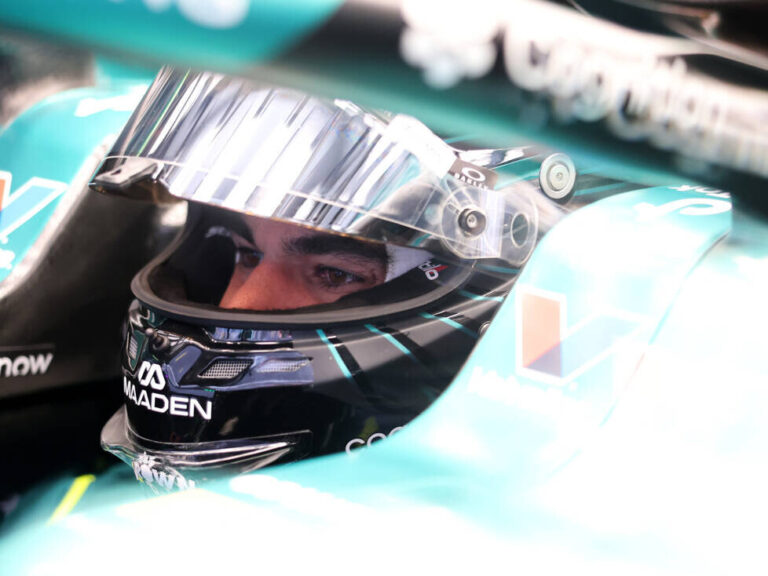
In view of the current situation at Aston Martin and the problems that appear to be caused primarily by the Honda drive unit, it is clear that neither Fernando Alonso nor Lance Stroll are really happy at the moment. This also became clear in qualifying for the Chinese Grand Prix.

After his final attempt in Q1, which was ultimately not enough to progress, Stroll vented his frustration and complained loudly to his race engineer Gary Gannon. “This is the biggest pile of shit I’ve ever driven in my fucking life,” the Canadian grumbled on the team radio.

These were clear words from the Aston Martin driver, which came out of pure emotion immediately after crossing the finish line, but they were not an isolated incident: Because Stroll had already complained about an “undriveable” car during his first attempt, which was also clear from the onboard perspective.

The 27-year-old struggled with massive oversteer and grumbled about “bloody wheel lock”, which race engineer Gannon attributed primarily to temperatures being too low. A faster outlap was supposed to bring improvement on the second flying lap, but ultimately had little success.

In the end, Stroll missed out on Q2 by almost two seconds and was also around eight tenths of a second slower than team-mate Alonso. The Canadian’s frustration was huge afterwards, which was also evident in the interviews after the session.

In contrast to in the car, where Stroll openly expressed his opinion of the AMR26 in conversation with his race engineer, he was much more reserved without his helmet: he answered the journalists’ questions with a total of just eight words.

The situation is likely to be similar at the Japanese Grand Prix. Although engine partner Honda was able to make initial progress in terms of battery reliability in China, the exact cause of the vibrations, which even led to Alonso’s voluntary retirement, is still unclear.

March 25, 1984: The day Ayrton Senna made his Formula 1 debut in Rio

On March 25, 1984, Ayrton Senna made his Formula 1 debut in Brazil: it was not a good start due to a retirement, but the first signs of his talent were evident

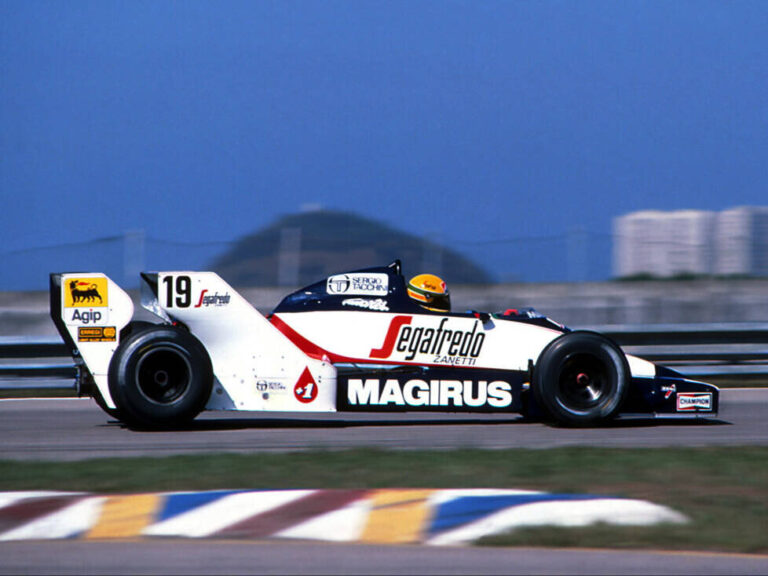
On March 25, 1984, a Formula 1 career began on the Jacarepagua circuit in Rio de Janeiro that would develop into one of the most iconic and unforgettable biographies in history: 24-year-old Ayrton Senna started his first Grand Prix at the wheel of the modest Toleman team.

What began as a special moment for the Brazilian fans – a home driver making his debut in front of a home crowd – ended in disappointment. The newcomer had already caused a stir beforehand, as Senna had made a name for himself in the junior classes, particularly with strong performances in British Formula 3.

There was a lot of interest in the young talent. Several teams had him on their radar and he was considered a “prodigy”. A cockpit at Brabham seemed the most likely option, but ultimately the seat went to the brothers Corrado and Teo Fabi, who shared the car after sponsor Parmalat insisted on an Italian driver.

According to Bernie Ecclestone, Nelson Piquet, the leading Brazilian driver at the time, also played a role. He is said to have spoken out against signing his compatriot. However, those close to Senna gave a more nuanced account, stating that Piquet simply did not actively support the move.

Ayrton Senna opts for Toleman

Instead, Ecclestone offered Senna an interim position at ATS in 1984, with the prospect of bringing him to Brabham a year later. However, Senna deliberately opted for Toleman because he was convinced that he would have a better basis there to build his career and prove himself at his own pace.

In retrospect, this decision proved to be the right one, even if the start was unspectacular: On his debut, Senna qualified 17th on the grid, a solid result considering the limited competitiveness of his Toleman TG183B.

At a track known for its high failure rate, a surprise was in the air, but it didn’t happen: Senna had to park his car after just eight laps. A defect in the turbo of the Hart engine meant an early retirement, making it the first retirement of the season. In the end, only eight drivers even saw the chequered flag.

Ayrton Senna proves his potential

Alain Prost secured victory at the Brazilian Grand Prix ahead of Keke Rosberg and Elio de Angelis. Strategy and reliability played a key role, also due to the strict fuel limits and high temperatures in Rio. The race was long over for Senna at this point, but his name was still present in Formula 1 for the first time.

No points were scored on his debut, but Senna left no doubt about his potential in the races that followed. In South Africa and Belgium, he scored his first world championship points with two sixth places, despite physical complaints and a technically inferior car. These were the first signs of what he was capable of.

What was not yet visible on that day in March 1984 became apparent a little later: Senna drove to a spectacular second place in the rain race in Monaco and was suddenly thrust into the limelight. His Formula 1 debut on March 25, 1984 was just the beginning of an extraordinary career that would have a lasting impact on the premier class.

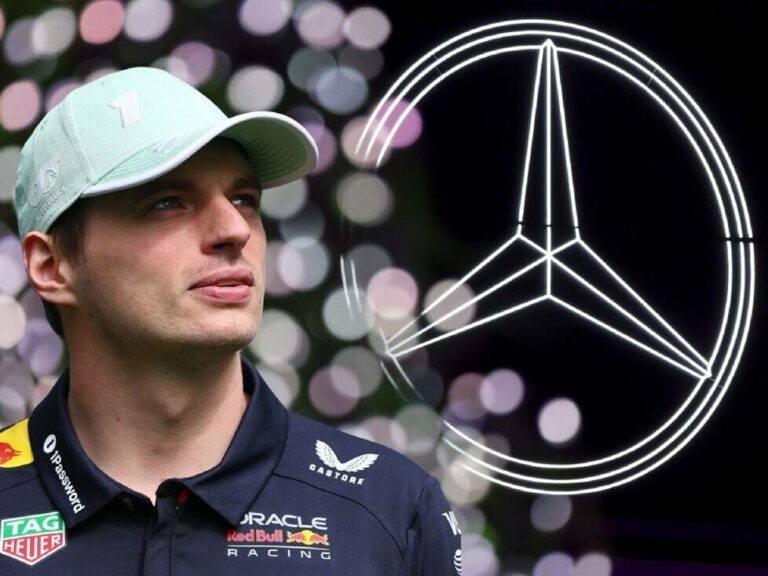
The future of Max Verstappen: Toto Wolff speaks plainly

0

Team boss Toto Wolff rejects Max Verstappen’s move to Mercedes – expert Ralf Schumacher also sees many reasons against it

With Red Bull lagging behind at the start of the 2026 Formula 1 season, rumors that Max Verstappen could leave the team for Mercedes have picked up speed again. However, Mercedes team boss Toto Wolff does not want to know anything about it.

“The astonishing thing is that these stupid rumors are already coming out in March,” he says in an interview with oe24 and emphasizes: “Stupid enough that you normally have to talk about it in July. I don’t know who brought this up again now.“

Among others, expert Jolyon Palmer recently announced on the F1 Nation podcast that a conversation between Verstappen and Wolff ”will take place”. “He will be looking for a way to get into that Mercedes because they have the best car,” said Palmer.

Other experts have also recently expressed similar views. But according to Wolff, there are no plans at Mercedes to change anything about the current driver pairing. “We have two drivers with whom we have long-term, multi-year contracts. I couldn’t be happier and happier with both of them,“ said Wolff.

”Both are top performers,” he said of George Russell and Kimi Antonelli. There is therefore “absolutely no reason”, says Wolff, “to even think about other drivers. I say that with the greatest respect to Max,” emphasizes the Austrian.

Why Schumacher does not believe in a change

The rumors that Verstappen could be drawn to Mercedes are nothing new. In recent years, such speculation has arisen time and again – although the four-time world champion actually still has a contract with Red Bull until the end of 2028.

However, it is an open secret that there are performance-related exit clauses in Verstappen’s contract that could allow him to leave the team early. Nevertheless, expert Ralf Schumacher does not believe in a move to Mercedes either.

“He now has two good drivers,” said Schumacher on Sky’s Backstage Boxengasse podcast about Toto Wolff, suggesting that both drivers together cost Mercedes “not even a quarter of what Max Verstappen earns at Red Bull.”

“He now has two drivers who can win races. That means, as long as the car is top, you don’t need [Verstappen] at all,“ says Schumacher, who also emphasizes: ”Kimi Antonelli will not send Toto Wolff away. And I can’t imagine that George Russell only has a one-year contract either.”

And on the other hand, Verstappen probably doesn’t want to leave Red Bull at a low point, according to Schumacher. He therefore does not expect the Dutchman to move. “But anything is possible,” says the six-time Grand Prix winner.