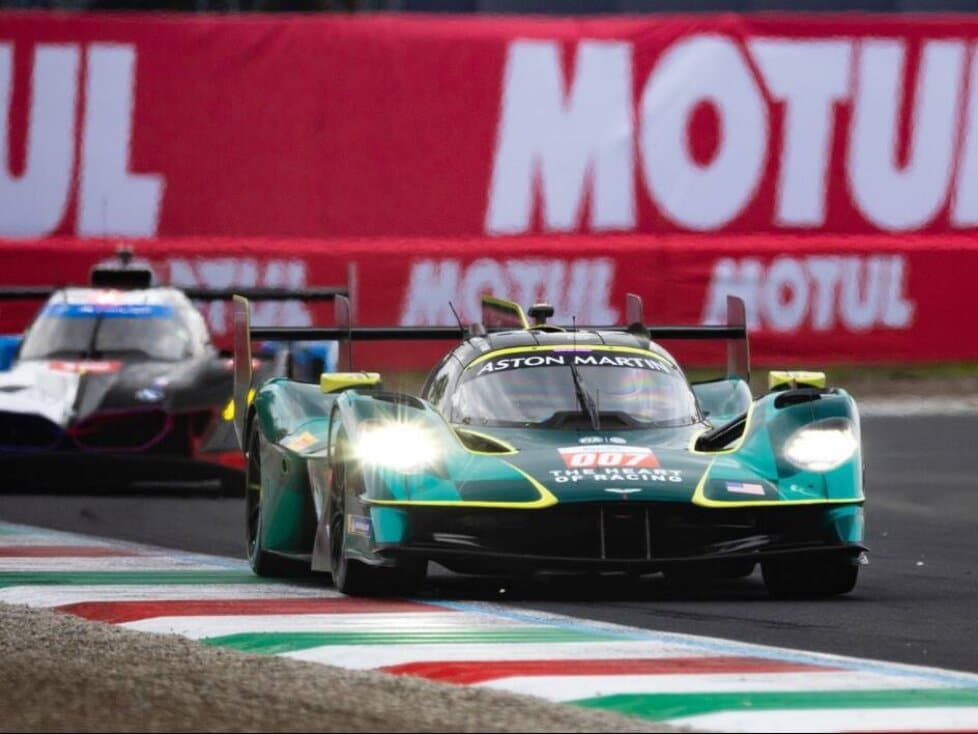
Tom Gamble’s decision not to conserve fuel would almost have paid off even without the FCY or the safety car – in the end, three seconds made all the difference
Naturally, there was no shortage of puns when, of all people, Tom Gamble went ‘gambling’ – that is, took a gamble – in the final race of the 2026 WEC season. Like all Hypercars, the Aston Martin Valkyrie had too little fuel after the final pit stop to make it to the finish line at full throttle.
However, Gamble and The Heart of Racing (THOR) team decided not to bother saving fuel. Instead, the Briton went full throttle and fought his way up from ninth to third place. It was clear that the fuel wouldn’t last until the finish, but in the end it was closer than expected.
At first, it looked as though the race would end under yellow after Alex Lynn’s serious crash. But it didn’t, which led to fierce criticism of the race organisers from some drivers after the race. Yet even without a neutralisation, it was an extremely close call in the end.
“I was told that the race winner crossed the finish line with about three seconds left on the clock. So it was a bloody close call,” says Gamble. “Of course, it’s not their fault. But our decision meant that we wouldn’t have made it to the finish without shortening the race distance by one lap.”
The winning #38 Cadillac (Bamber/Bourdais/Aitken) recorded a race time of 6:01:33.199 hours, with an approximate lap time of 1:36 minutes on used tyres. Due to the crash and the debris, lap times were significantly slower on the final laps; nevertheless, a 191st lap was attempted by the skin of their teeth.
However, even if they’d had enough fuel, Gamble and his team-mate Harry Tincknell would still have lost their podium place due to a second penalty of over 20 seconds for low tyre pressure.
The #007 car received a total time penalty of 145 seconds for the energy infringement, consisting of a 100-second penalty plus a drive-through penalty as an equivalent. Added to this were the 20 seconds for the tyre pressure. All the penalties combined also resulted in a lap deduction and dropped the Aston back to P12.
” “Of course, we had to conserve an enormous amount of energy just to stand a chance, and that naturally caused the tyre pressure to drop,” explains Gamble regarding the reasons for the second penalty.
Previous strategic experiments also went wrong
Throughout the race, THOR attempted a risky tactic, but it repeatedly backfired – ironically due to safety car periods that would have been so crucial in the end. Gamble admits that, starting from ninth on the grid, the team didn’t have much to lose anyway.
” We’ve been close to the podium several times this season, and it’s important for us to finally take that step. As we started so far back, we thought: ‘Why not take a bit of a gamble?’” he says.
“So we took a few risks, especially at the start, and none of them paid off. Pretty much everything we didn’t want to see happened, which is incredibly frustrating.”
Despite the disappointing end to the weekend and the early setbacks – including losing a lap before the comeback under the Virtual Safety Car – Gamble draws a positive conclusion from the Aston Martin Hypercar’s second season.
“I think the team can be extremely proud of the work that’s been done this year,” Gamble sums up. “The standard here is incredibly high, and we’re getting closer to the front with every race.”
Nevertheless, Aston Martin failed to achieve its goal of securing a podium finish. On the contrary, following a number of updates by the competition in 2026, the Valkyrie actually appeared weaker than it had at the end of its thoroughly encouraging debut season in 2025. But now Aston Martin is following suit with updates of its own; Monza was the last race for the Valkyrie in its original LMH version.