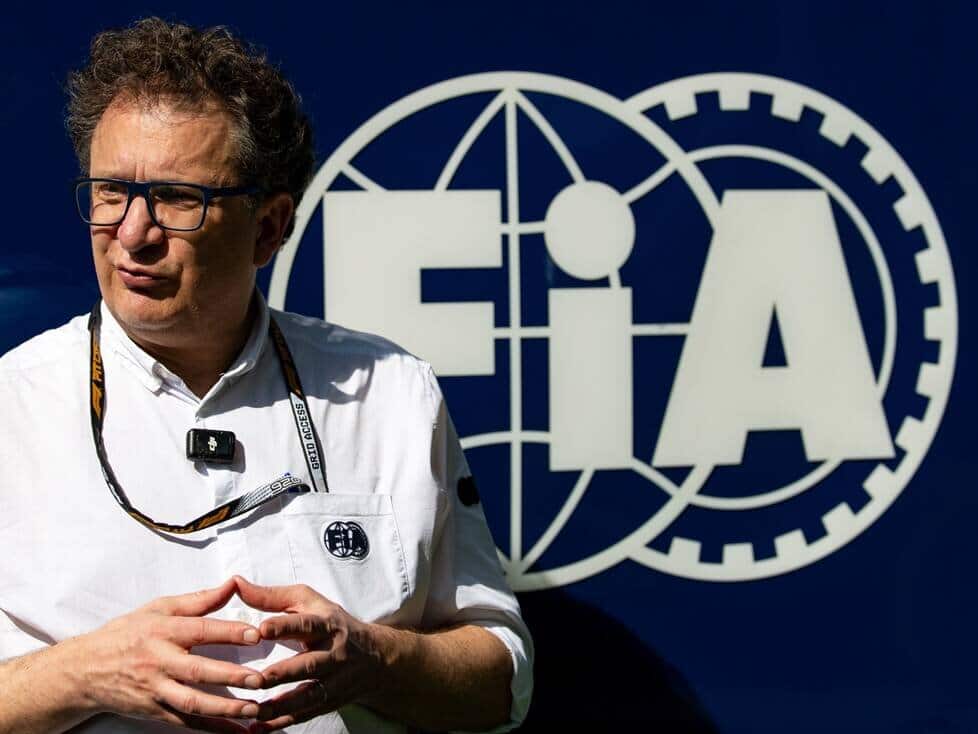
The FIA has admitted to a mistake during the Sprint qualifying session in Singapore: despite unequal conditions, the result stood – Sainz voices criticism
A “human error” during the Formula 1 Sprint Qualifying session at the 2026 Singapore Grand Prix meant that overtaking mode was not consistently available during the SQ1 segment. As a result, there was a lack of a level playing field for a few moments, which particularly angered the Aston Martin and Williams teams – but also concerned the Fédération Internationale de l’Automobile (FIA).
Speaking to Sky, FIA Formula One Director Nikolas Tombazis described it as “quite a mess” and said: “For us at the FIA, this is probably the worst thing that can happen in a way, because safety and fairness are always our top priorities.”
However, this fairness was not upheld in SQ1. And this is how it happened: following the crash involving Cadillac driver Sergio Perez, race control interrupted the Sprint qualifying session with a red flag, and overtaking mode was deactivated. However, once the session was resumed, it was not initially reactivated – it was eventually reactivated, but only briefly.
This is how FIA Formula Sport Director Tombazis explains the incident
Tombazis explained: “Unfortunately, many things happen simultaneously in race control. Unfortunately, a pop-up window appeared on one person’s computer, and we didn’t react to it quickly enough or at the right time. Under time pressure and the general pressure of the situation, this was then unfortunately overlooked.”
Because some drivers complained over the radio about a lack of engine power, the FIA launched a “fairly intensive” investigation. “We then realised where the problem lay,” said Tombazis – and admitted to a mistake: “At that point, the wrong decision was made for a brief moment to reactivate overtaking mode.”
“However, in the interests of fairness, that wasn’t the right decision. That’s why it was subsequently deactivated again,” explained Tombazis. The back-and-forth lasted 27 seconds – a period during which some drivers were able to benefit from overtaking mode, whilst others were not.
“Some drivers may have been on a section of the track where overtaking mode would have given them an advantage. Others may have already finished their lap and were therefore either not affected at all or, conversely, more severely affected,” said Tombazis. He added: “We are not satisfied with this.”
FIA admits to procedural error
It wasn’t just Aston Martin and Williams who thought the competition had been distorted: “[Auch] we had the impression that this problem had influenced the result,” said Tombazis. “A situation in which a result has not been achieved fairly or correctly is, of course, not good for us.”
However, the FIA Stewards refused to allow all SQ1 participants to take part in SQ2 as a form of “compensation”. This explains the frustration of Williams driver Carlos Sainz, who was one of six drivers forced to retire after SQ1.
Carlos Sainz says he is “astonished” by the FIA’s decision
Sainz said that Tombazis had apologised to him personally. “He admitted that there had been a human error, but also that the decision made between SQ1 and SQ2 was wrong. Because that amounted to an admission that there had been a sporting disadvantage, and something like that should never have happened.”
He was “very confused and astonished” by the FIA’s handling of the matter, said Sainz. “They were aware of this sporting disadvantage and yet decided to sweep it under the carpet and pretend nothing had happened. I’m particularly surprised at how differently this was handled compared to Malaysia, where something very similar happened.”
That is why he could not understand the FIA’s decision – or only partly, said Sainz: “We’re not fighting for the World Championship. We’re not even fighting for points. That’s probably why it wasn’t that important to them.”
However, Tombazis pledged improvement on behalf of the world governing body: “It’s a complicated task, and people make mistakes. We have to take that into account. But when we make mistakes, we must also analyse them and ensure they don’t happen again. That is exactly what we are doing now.” Tombazis did not go into further detail.