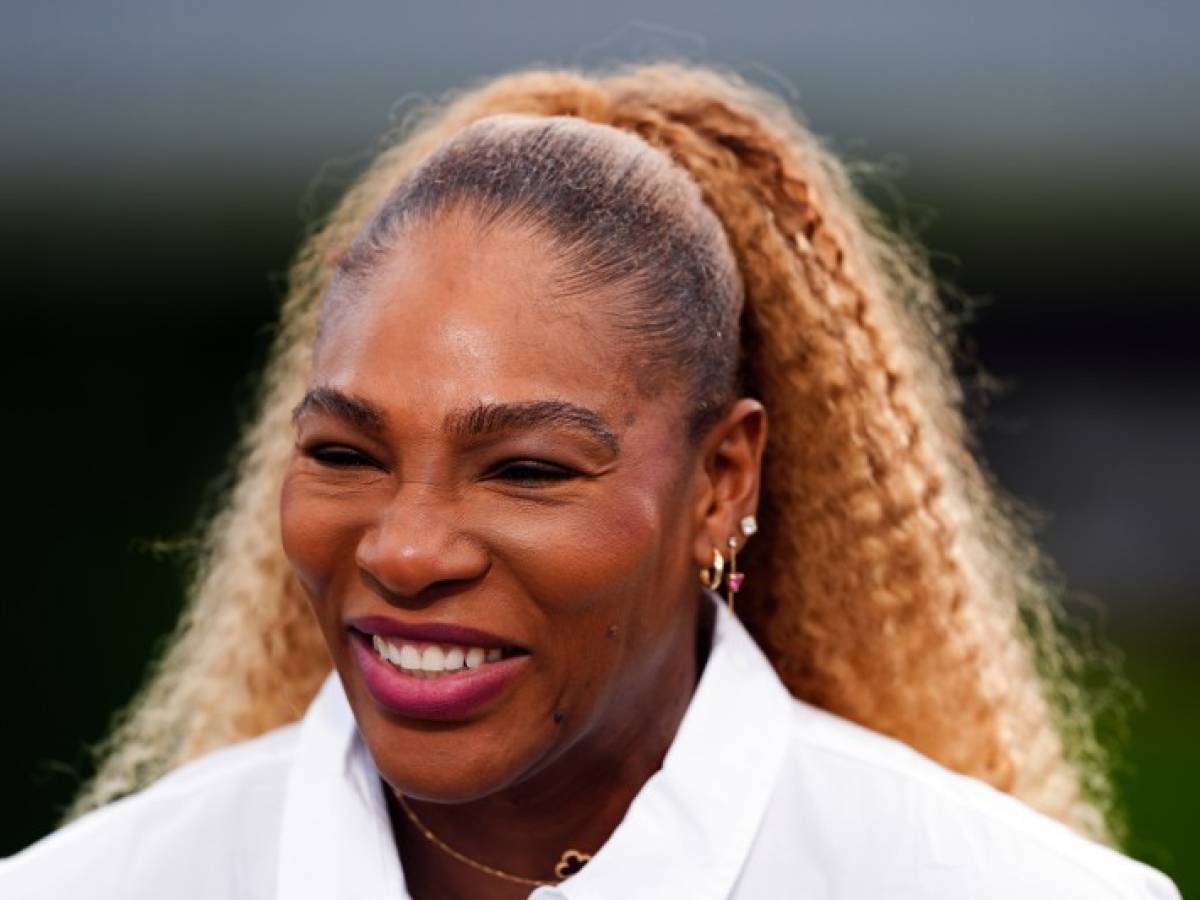
The 44-year-old showed for long stretches of her match against Maya Joint that she didn’t return to the professional tour just for fun. The fans are thrilled.
The Queen’s comeback wasn’t crowned with success, and yet the tennis world bowed to Serena Williams: On her return from retirement, the former star player showed flashes of her old brilliance more than once on Wimbledon’s Center Court, fought tenaciously for her chance, and was ultimately defeated by the Australian Maya Joint—24 years her junior—3-6, 7-6 (8-6), 3-6 after 2 hours and 22 minutes.
Nevertheless, the fans celebrated the 44-year-old for her courage in returning to singles competition after a four-year hiatus; they cheered every point scored by the former champion from the U.S. and spurred her on when she was trailing. Ultimately, it was in vain.
Still, Williams will return to the grass courts in doubles alongside her sister Venus (46), and spectators are already looking forward to the next show.
Critical Voices Ahead of Wimbledon Comeback
As early as Tuesday evening, the tension in the inner sanctum of tennis was palpable—the fans in the stands, the opponents on the court, the experts at the microphones—everyone wanted to know: Is the living legend even competitive at one of her favorite venues, or is she tarnishing her own legacy? Serena provided the answer quickly: She won her first service game to love and swept away some doubts.
Those doubts had accompanied her return just as much as some critical voices. Among others, Michael Stich had voiced his concerns. “I just can’t wrap my head around it,” said the 1991 Wimbledon champion on Prime. For the other players, he argued, it was “nothing positive, because it takes attention away from them.” Moreover, Williams “wouldn’t have the slightest chance of winning Wimbledon.”
Stich turned out to be right, and yet Williams delivered a convincing performance. At times, it even seemed as if she hadn’t been away for years, even though she had played her last match at Wimbledon in 2022. Over the past four years, she gave birth to her second daughter and ran the investment firm “Serena Ventures,” but she clearly missed the thrill of being on the court.
Williams’ aura is unmistakable
She felt it under the closed roof of Center Court. In any case, Williams hadn’t come just for fun; she cheered herself on after successful shots, and even if not everything in her game looked fluid, her aura was unmistakable, her serve was at times nearly unreturnable, and her footwork held up surprisingly well for a long time.
In Williams’ box, her daughters Alexis Olympia and Adira snuggled up to their dad, Alexis Ohanian; the whole family seemed to be enjoying the match—including the most successful player in modern tennis history down on the court. But Maya Joint, born in 2006—when Williams had already won two of her seven Wimbledon titles—played her way into the match. Australian tennis great Sam Stosur had prepared her exceptionally well.
But Williams wouldn’t be Williams if she’d given up. She came back from a break down twice in the second set, saved a match point in the tiebreak, and was suddenly right back in the match, which wasn’t always top-tier. But Joint, ranked No. 87 in the world, stepped up her game again and put an end to the first part of Williams’ miraculous comeback.