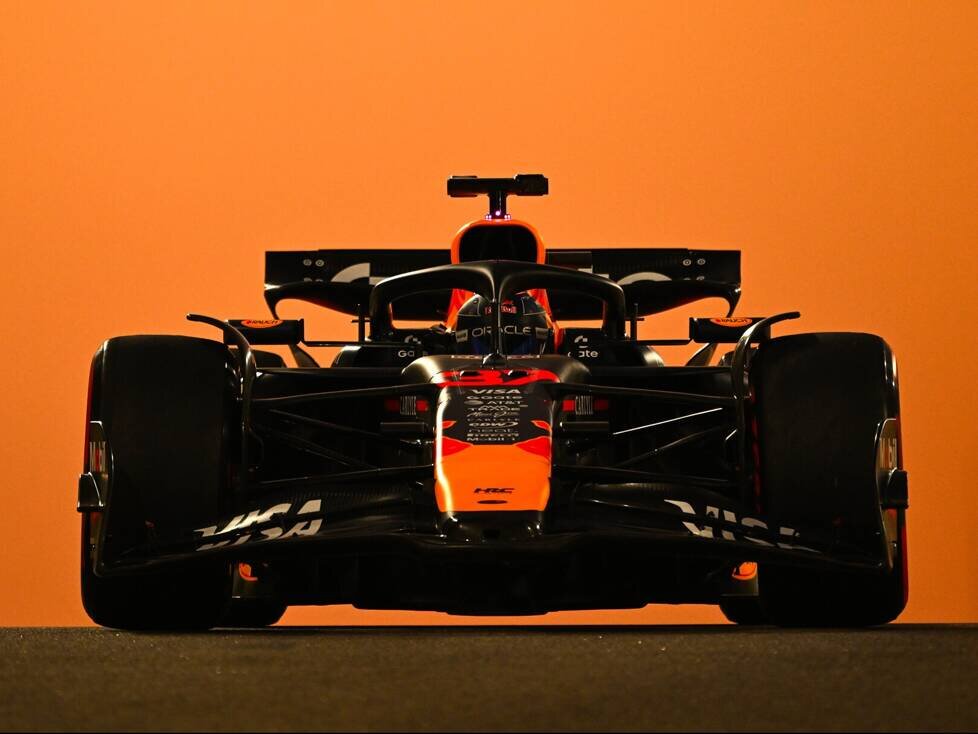
No world championship title, but clear progress: Why continued technical development in 2025 made Red Bull structurally stronger ahead of the 2026 season.
The 2025 season did not bring Red Bull another world championship title, but it will nevertheless be remembered as a remarkable comeback. Max Verstappen said in Abu Dhabi that he felt even better than he did twelve months earlier. That may come as a surprise, given that the Dutchman was world champion at the time – and not this year.
However, Verstappen had already sensed in 2024 that problems were brewing at Red Bull. This trend was confirmed in the first half of the 2025 season. Even during winter testing in Bahrain, it became clear to him that the RB21 still had major weaknesses.
It was only after the summer break that Red Bull managed to turn things around. This was also due to the fact that the 2025 race car underwent longer development than most of its rivals. In an end-of-season interview with selected media outlets, including Motorsport.com, Laurent Mekies made it clear that continuing development was the only right decision.
Will Red Bull pay the price for 2025 in 2026?
Yes, the continued work on the RB21 cost time for the 2026 project. But given the team’s situation, there was no better alternative.
“I think it became pretty clear to us that we didn’t want to just turn the page and fall into wishful thinking that everything would be okay in 2026, even though the 2025 car wasn’t at the level needed to fight for the title. We didn’t want to go down that road,” said Mekies.
“We wanted to get to the bottom of the problems with the 2025 project first. We had to understand why the car wasn’t delivering the desired performance, because basically we’ll be working with the same tools, the same processes, and the same methods next year.”
This decision came at a price, but from the French team boss’s point of view, it was the right one regardless: “We may have lost some time, but we didn’t want to go down an unrealistic path. So was it a difficult decision? No. We were convinced of that very, very early on.”
According to Mekies, the 2025 turnaround is valuable for the coming season in several ways – because it has brought with it an “enormous amount of insight.” Mekies explains: “What does it take to make the car faster, and how do you deal with the given restrictions?” The correlation between the different areas of development is also crucial, “even with completely different rules.”
Important confidence boost for the technical department
In addition, the comeback was also of great mental importance, especially for the technical department. “It certainly brought the group even closer together,” said Mekies. “It gives us the right approach, the right feeling, and the right energy for 2026. But does it make us more confident about whether the car will be faster or slower than the competition? No, honestly, it doesn’t.”
“But as a group—in the way we work, how we approach tasks, and move forward—it helps. It clearly confirms the quality of our people and our approach,“ explained Mekies. This is especially true for the technical team led by Pierre Wache. Red Bull struggled from mid-2024 to September 2025. According to the team boss, bringing about the turnaround is ”a huge boost—and that gives people confidence.”
“We already had this basic trust in our people because we believe we have the best talent. But it strengthens confidence in the methods, the tools, the metrics you use. And we believe that was the most important aspect of 2025.”