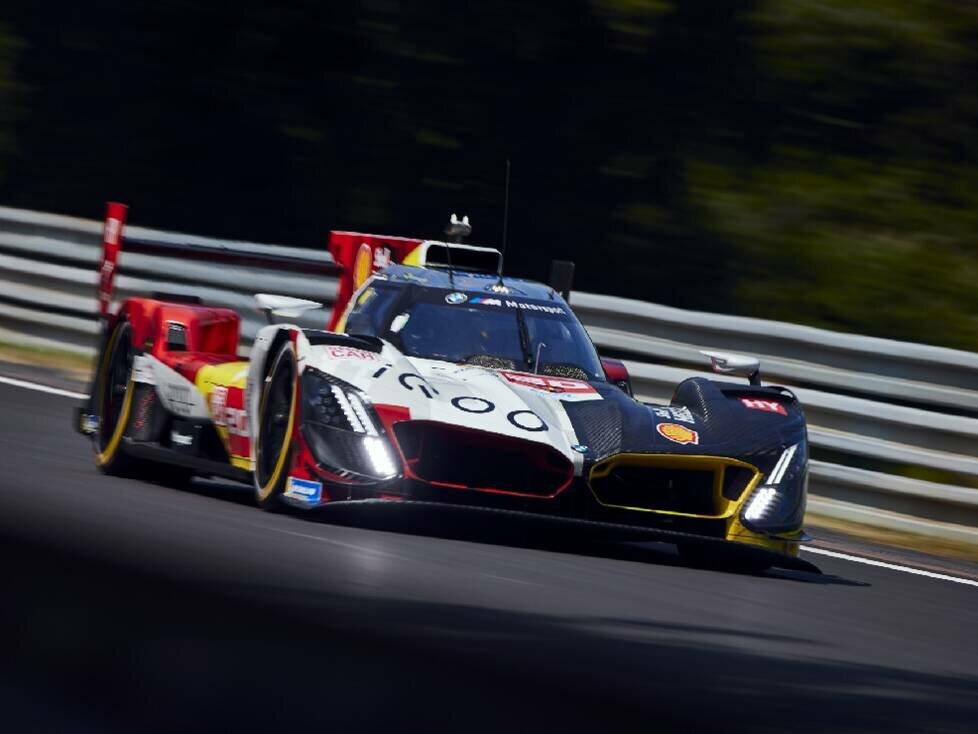
How Rene Rast compares the DTM races in the BMW M4 GT3 Evo with the hypercar program and how he responds to the decisive question
After his victory at Zandvoort in the DTM with the Schubert team’s BMW M4 GT3 Evo, the Le Mans weekend did not go as planned for Rene Rast: The 38-year-old retired with the BMW M Hybrid V8. Nevertheless, Rast also secured his first WEC podium this year in Imola with BMW’s LMDh car. So how does the three-time DTM champion compare his two main programs, and where does he feel more at home?
“They are two completely different cars,” “The DTM car is based on the road car, is much heavier, has less power and less aerodynamics.”
The Le Mans prototype, on the other hand, is “a thoroughbred race car, like the Class 1 DTM cars back in the day. Purebred, lots of aerodynamics, more power, less weight, more speed. Just much more agile.”
GT3 cars and hypercars compared
This is also reflected in the raw data: The BMW M V8 Hybrid has a minimum curb weight of 1,030 kilograms due to the regulations, while the BMW M4 GT3 Evo weighs around 1,300 kilograms depending on the balance of performance. In addition, the prototype has more power.
While the GT3 car delivers a maximum of 590 hp (usually slightly over 500 hp due to the BoP), the hybrid prototype delivers 640 hp from the combustion engine alone. Added to this is 68 hp from the electric drive. The prototype is also significantly more aggressive during braking: the carbon brakes allow much later braking points compared to the steel brakes of the GT3 car.
In addition, the prototype requires a feel for the brakes, as the vehicle is not equipped with ABS. However, both cars have traction control on board. In general, the production-based GT3 cars are much simpler and more cumbersome than the LMDh vehicles.
With the M4 GT3 Evo in the DTM or with the M Hybrid V8 at Le Mans?
This is also evident from the lap time comparison at Le Mans: while the BMW prototype was able to achieve lap times of 3:26 at the Sarthe, the M4 GT3 Evo clocked in at 3:56, making it 30 seconds slower over the 13.626 kilometers.