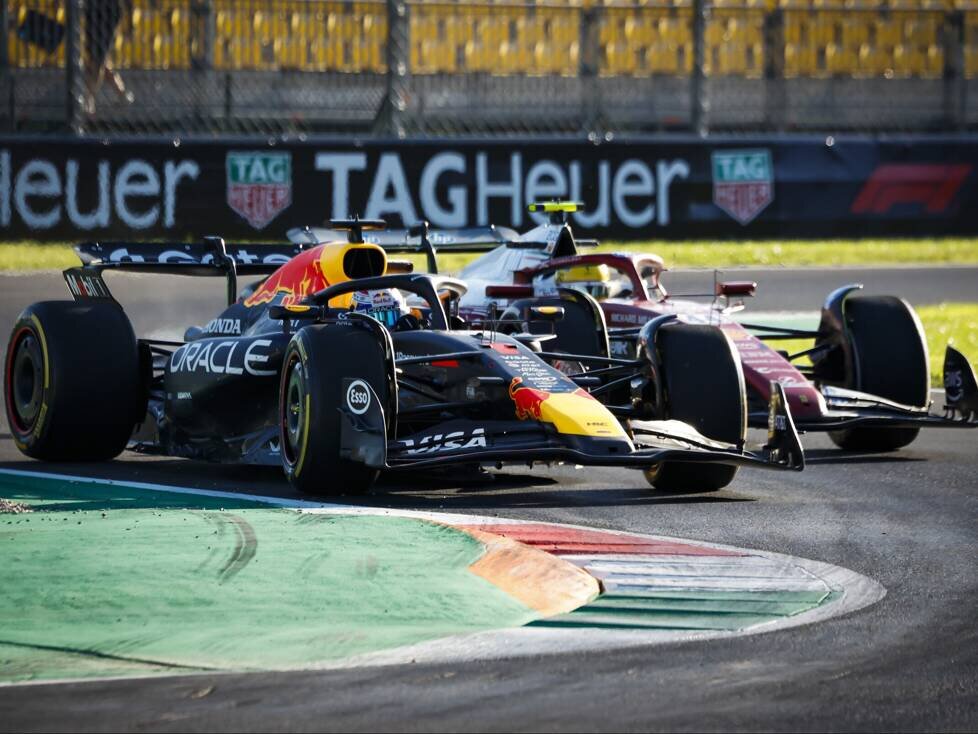
Ralf Schumacher expects some Formula 1 drivers to have to adjust their driving style in the new season – who he thinks will be able to do so and who might have problems
When the rules in Formula 1 change significantly, there are regularly shifts in the field. While the focus is usually on the cars, the drivers also play a role that should not be underestimated.
This is because new cars often mean that some drivers have to adapt their driving style – and in doing so, they may lose some of their strengths. Expert Ralf Schumacher believes that this will also be the case in 2026. “Every driver deals with it differently,” he explains in Sky’s Backstage Boxengasse podcast. He recalls his own Formula 1 career and explains: “When we switched from slicks to these grooved tires [in 1998], it was basically to make the cars slower. And that meant you had to completely change your cornering style.”
“You really had to look at where to push and where to take the load off the front wheel so as not to break the edges of these grooved tires. You had to change your driving style—and that wasn’t everyone’s cup of tea,” Schumacher reports.
While he himself fortunately coped well with this, other drivers had significantly greater problems. And the expert emphasizes that even top drivers like Max Verstappen are not immune to such challenges.
Schumacher fears more problems for Hamilton
Verstappen is basically fast in any car, according to Schumacher, but: “If a car suddenly generates brutal understeer, […] then Max will have to change his driving style. If he doesn’t, he’ll overwork the front tires and then he won’t stand a chance.”
But while Verstappen and Fernando Alonso, for example, are at least adaptable drivers, Schumacher fears that Lewis Hamilton could face greater difficulties if the new cars don’t suit his style again.
If the new cars don’t suit Hamilton, “then he’ll have a bigger problem changing his driving style,” Schumacher said of the record world champion, who never really warmed to the ground-effect cars between 2022 and 2025.
“You hear that from the team, too, that he’s always chasing after things he used to know and somehow isn’t really ready to change his style,” Schumacher said of the now 41-year-old Ferrari driver.
On the other hand, he expects fewer adjustment difficulties among the significantly younger drivers in the field, “because younger drivers have generally learned to do exactly what they are told and what the engineers tell them to do,” he explains. That could be an advantage in 2026.