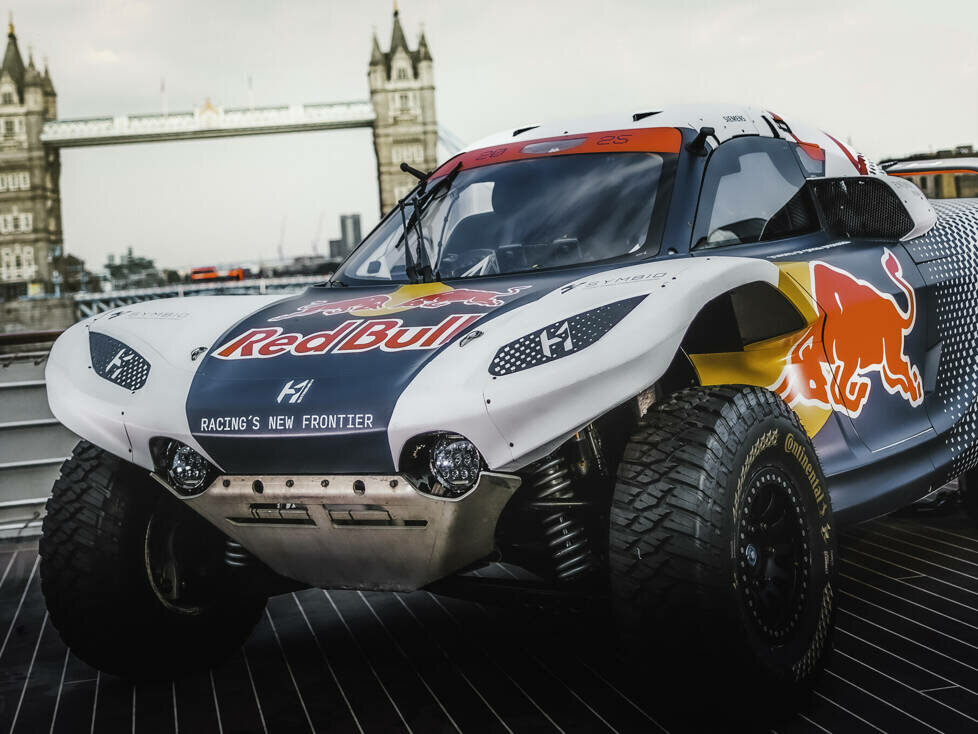
Extreme H aims to bring hydrogen to motorsport – but the series’ comeback will start in Saudi Arabia in 2025, initially without World Championship status
The International Automobile Federation (FIA) and Extreme H have signed a multi-year agreement to launch the world’s first hydrogen racing series with international status. However, the series does not have FIA World Championship status, but will operate as the FIA Extreme H World Cup.
The decision marks a surprising comeback, as Extreme H had largely disappeared from the spotlight after an uncertain future and delays in planning. It was supposed to succeed Extreme E with electric cars. Now it is making a comeback.
Hydrogen as a “game changer”?
Extreme H is intended to be the next step in the evolution of Extreme E, which has been using hydrogen fuel cells to charge its vehicles since its first season. According to its own figures, the series covered up to 80 percent of its event operations with hydrogen in later seasons. With Extreme H, not only the vehicles themselves, but also the entire event—from the paddock to TV production—will now rely on this technology. FIA President Mohammed bin Sulayem spoke of an “important step for sustainability, innovation, and equality.” Series founder Alejandro Agag described the agreement as a “milestone” for the future of motorsports.
Focus on equality: concept adopted from Extreme E
As in Extreme E, teams must compete with one female and one male driver. According to the FIA, this makes Extreme H only the second international motor racing series to pursue such a concept. The aim is to give more women access to top-level motorsport.
The only thing that is certain so far is that the first edition of the FIA Extreme H World Cup is to take place in Saudi Arabia in 2025. The exact venue is to be announced in September. The format is intended to test the limits of what is possible in off-road sport and at the same time serve as a showcase for hydrogen technology.
Does the series have a future?
With this move, the FIA is venturing into new energy sources – but without the prestige of an official world championship title. It remains to be seen whether the concept will be well received by manufacturers, teams, and fans.
Extreme E has recently struggled with declining interest and limited media coverage. The hydrogen offshoot is now intended to bring fresh momentum, but the series must first prove that it is not just an image project, but also viable in sporting and economic terms.