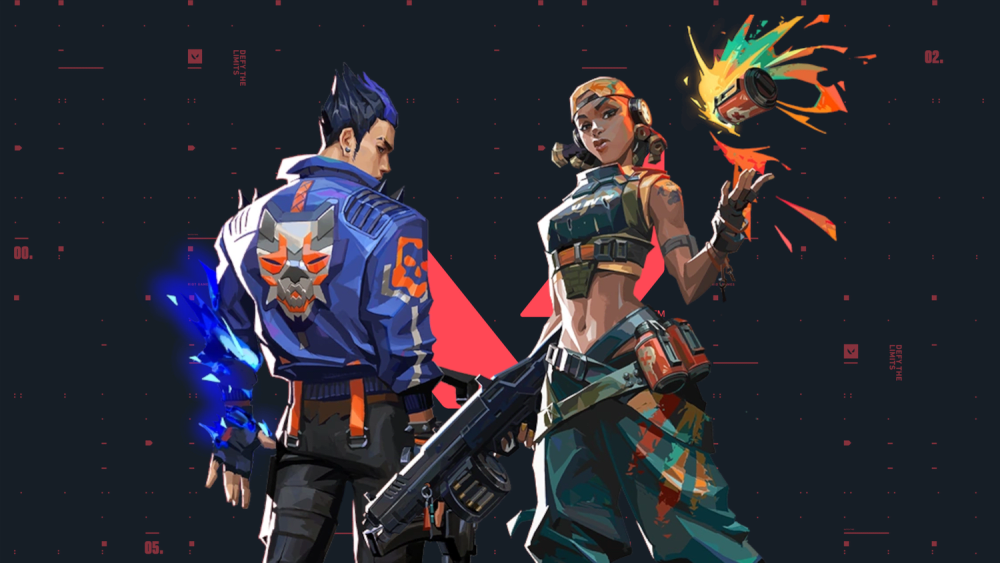
Duelists in Valorant aren’t supposed to shine, they’re supposed to create space. If you don’t take that to heart, you’ll lose in the end. Here’s how to use Jett, Reyna, and co. correctly.
In Valorant, the duelist divides every agent choice: Reyna is selected immediately – or the whole team wants to play Jett. But very few know how to handle these agents. Far too often, the focus is on your own KDA instead of supporting the team. Yet that is the strength of duelists.
Top fragger or first to the ground
As a duelist, you should create distractions, gather information about the position of your opponents, and capture rooms for your team. “Capturing rooms” means that you advance as a team or individually into areas that you previously had no information about and where enemies may be located. Duelists form the spearhead for this.
This is particularly evident in bottlenecks. To reach a site, you often have to pass through archways, doors, or narrow corridors. A duelist can use their skills to threaten the enemy from a different angle.
As Jett, you can use “Backwind” to fly forward and place a smoke directly below you. Now your opponent has to watch the bottleneck and make sure you don’t push out of the smoke to take them by surprise. Your teammates can follow you and support you.
Communication and self-confidence
It’s not always about being the top fragger. Former pro and streamer Tyson ‘TenZ’ Ngo says, “You’re going to have good games and bad games. But one thing you can do consistently is make your teammates’ lives easier by creating space for them.” As a duelist, you need the confidence to run into danger in front of your team. Survival is actually optional.
But that only works if you and your team act together. So communicate early on what you’re planning and what support you need – after all, you’re the first one in unfamiliar territory. Your team’s support, such as information from a Sova dart or cover from an Omen Smoke, will help in the ensuing firefights.
Your own abilities also make duels easier or allow you to escape quickly afterwards – duelists have absolute playmaker potential. Direct your team to get yourself into the perfect starting position. And thank your colleagues by opening up space for them.
Common mistakes: scaredy-cats and daredevils
The biggest mistake you can make as a duelist is to be afraid. If you don’t dare to enter the site first, your KDA will look better in the end. But you’ll win fewer rounds. Duelists excel in duels – these duels should always help the team.
On the other side, overconfidence is also not good for a duelist: Your goal is to capture a site and place the spike. Once you’ve created a numerical advantage, it makes no sense to take further risks.
Adaptation and duo queue
Have you internalized the basics of being a duelist? Now it’s time to bring adaptation into your game. Pay attention to the enemy composition and how it can be dangerous to you. If you’re playing against a Cypher, for example, you’ll probably have to jump over his tripwires or remove them before he executes. Against Deadlock, you should try to outsmart their sound-activated abilities – or avoid them altogether.
To adapt effectively, you also need to know what your agent is capable of. You can learn the flight paths of your abilities and test their limits in the range or in a private game.
To get the most out of a duelist, you should also know their synergies with initiators: Neon and Breach, for example, work perfectly together. Neon can use her speed to exploit Breach’s “tear line.” If you have a partner, this combination is ideal for the leaderboards – as are many others.