Friday, October 24, 2025
Home Blog

Billups and Rozier initially released

0

A scandal involving illegal sports betting and fraud has rocked the NBA. A coach and an active professional player have been provisionally arrested. They maintain their innocence and have made accusations of their own.

Following their sensational arrests on charges including betting fraud and alleged mafia connections, NBA coach Chauncey Billups and Miami Heat pro Terry Rozier are back on the loose. The two maintain their innocence in two parallel cases in which a total of 34 people were arrested, including some with links to organized crime. FBI chief Kash Patel spoke of an “inconceivable fraud.”

Billups is the coach of the Portland Trail Blazers and was previously a star player—the 2004 champion with the Detroit Pistons is a member of the elite basketball league’s Hall of Fame. Anyone who believes the prosecution also believes that Billups “would risk his legacy as a Hall of Fame player, his reputation, and his freedom,” said his lawyer, Chris Heywood. “He wouldn’t put all that on the line, especially not for a card game.”

Lawyer: Arrests were a public show

The 49-year-old and 30 other people are accused of fraudulent poker involving the Mafia. Other players who, according to investigators, unsuspectingly participated in specially organized celebrity card games with Billups or former Cleveland Cavaliers pro Damon Jones, who is also charged, are said to have been cheated out of at least $7 million.

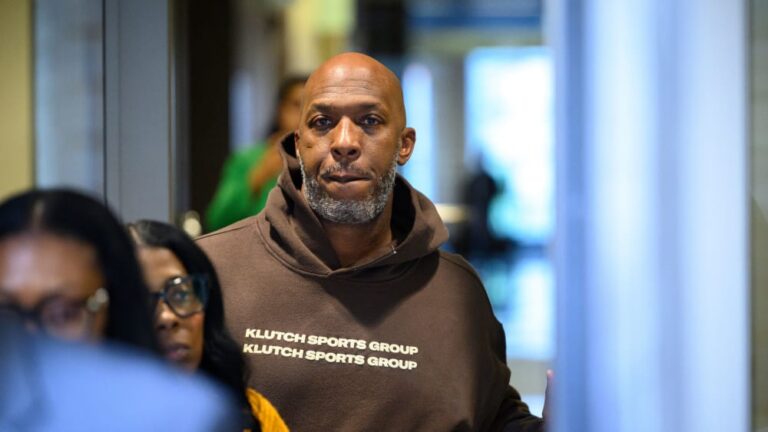
While the temporarily suspended coach appeared before a judge in Portland, Rozier was taken to federal court in Orlando, Florida. Both were released on bail. Rozier’s lawyer, Jim Trusty, said his client was not a gambler. He criticized the authorities for the arrest, saying they wanted to publicly humiliate the player. Rozier appeared in court wearing a shirt from his former team, the Charlotte Hornets, handcuffs, and shackles.

Rozier already under scrutiny for betting manipulation

The 31-year-old and other defendants are charged with insider betting. Among other things, internal team information was allegedly leaked to people who then placed bets. Players also allegedly deliberately manipulated their performance on the court to generate high betting profits.

Rozier had already been investigated by the league in March 2023 for suspicious bets placed by other individuals on the number of points, rebounds, and assists he was expected to achieve in a game. Rozier had left the game in question early, citing injury as the reason. He was not charged with any wrongdoing at the time.


Cyber shock for FIA: Hackers discover access to Verstappen’s passport data

0

Three Formula 1 fans hacked into the International Automobile Federation (FIA) and found a serious vulnerability in the federation’s licensing system.

The FIA has confirmed that hackers briefly gained access to data in the organization’s driver license portal, including Max Verstappen’s passport. The security breach has since been closed in collaboration with the hackers.

The incident occurred in the summer when three hackers—Gal Nagli, Sam Curry, and Ian Carroll—breached the FIA’s Driver Categorization Portal. Although the successful access took place several months ago, the hackers only made their discovery public this week via social media.

The group, all of whom are Formula 1 fans, emphasized that they had no malicious intent. Their goal was to uncover vulnerabilities in the FIA’s IT infrastructure in order to make the “entire ecosystem more secure.”

Access to driver classification system

The area affected was the system used by the FIA to manage driver classifications. While Formula 1 drivers require a super license, classification as gold, silver, or bronze is crucial for other racing series, especially in endurance racing.

The FIA manages these classifications via the portal, where drivers can also submit requests for a status change – for example, from gold to silver, which can be advantageous in series with mandatory silver drivers.

Increased admin rights enabled data access

The hackers first created a profile on the FIA portal and used JavaScript to determine that they could change their user role. The system distinguished between drivers, FIA employees, and administrators—the latter with the highest privileges.

Through a special request, they successfully managed to increase their access rights to admin level. After logging in again, a completely different user interface opened up for them, including the internal FIA dashboard for driver classification.

To verify access, they downloaded a single driver profile as a test. This showed them the password, email address, phone number, passport details, and internal communications between the FIA and the driver.

All Formula 1 drivers were also listed in the system. The hackers noticed that Max Verstappen’s passport details would have been accessible in principle. However, they emphasized that they ended their tests at this point and did not view or store any sensitive information.

FIA responded immediately

After discovering the vulnerability on June 3, the hackers immediately notified the FIA. The association took the site offline on the same day and worked with the group to find a sustainable solution. On June 10, the FIA confirmed that the error had been fixed.

An FIA spokesperson told Motorsport.com in Mexico: “The FIA became aware of a cyber incident involving the driver classification website during the summer. Immediate action was taken to secure the drivers’ data.”

“The FIA reported the incident to the relevant data protection authorities in accordance with its obligations and informed the few drivers affected. Other FIA digital platforms were not affected.”

It went on to say: “The FIA has invested significantly in cybersecurity and resilience measures. It has state-of-the-art data security precautions in place to protect all stakeholders and pursues a consistent security-by-design strategy for new digital projects.”

The case underscores how important IT security measures have become, even for large sports associations such as the FIA.

Column: Lando Norris is doing everything right at the moment

0

Lando Norris has been almost unrecognizable since his retirement at Zandvoort—while Oscar Piastri is showing nerves, Norris is doing everything right, according to Oleg Karpow.

Lando Norris has faced a lot of criticism this season for dropping points and failing to capitalize on his rivals’ mistakes.

Canada immediately springs to mind, where a misjudgment led to a collision with Oscar Piastri and a retirement – as does the sprint qualifying in China, where a mistake on his final attempt cost him dearly.

Recently, however, Norris has been showing himself to be stronger than ever. In Baku, he didn’t make much progress against Piastri, but one could argue that it was wise not to take any unnecessary risks.

An overzealous maneuver in the battle against his teammate could easily have ended in another retirement; playing it safe was probably the right decision.

Since his retirement at the Dutch Grand Prix, he has clearly been the stronger McLaren driver—and has scored more points than his teammate, who just a few weeks ago was considered the only serious title rival.

After a disappointing qualifying session in Singapore, he made the most of the race and seized the only realistic opportunity on the first lap when he overtook Piastri – a maneuver that deserved applause rather than discussions about “consequences.” That’s exactly what you want to see from a title contender – and it’s absurd that he now appears to be being punished for it.

It was the same story in Austin: McLaren was a little too cautious with its strategy and started on medium tires instead of softs. Nevertheless, Norris got almost the maximum out of the situation.

Turning point in Zandvoort: The old Norris is back

Some say he should have attacked Charles Leclerc more aggressively at the start, but his risk management in this duel was almost perfect. Racing against someone who has less to lose is tricky. Norris did well and seized his chance when it presented itself.

Perhaps that is precisely the key that he has been missing so far: a little more margin for error, which he could have used in China and Canada.

Norris is currently 14 points behind Piastri in the overall standings. With five races remaining, the recipe is simple: keep going. Verstappen is breathing down his neck, but he too needs a near-perfect run until the end of the season—and McLaren should be stronger on some of the upcoming tracks.

Ironically, the retirement at Zandvoort may even have helped Norris refocus, while Piastri, with a large points cushion, has seemed less confident since then. Both remain serious title contenders, but recent impressions suggest that Norris knows exactly what he is doing.

Chevrolet sends factory-supported Corvette to the 2026 Bathurst 12 Hour

0

Muscle car power for Mount Panorama: Corvette will be represented at the Bathurst 12 Hour for the first time since 2013 – new manufacturer for IGTC 2026?

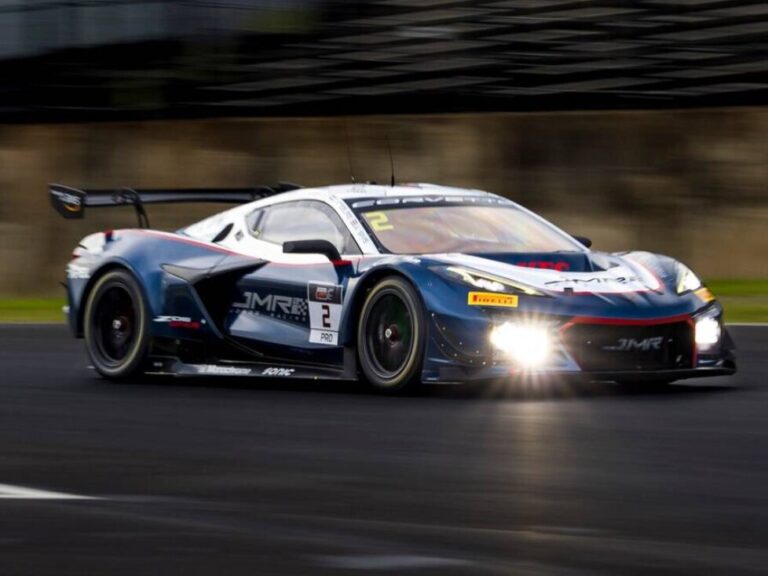
The Chevrolet Corvette is returning to Australia: a factory-supported Corvette Z06 GT3.R will compete in the Bathurst 12 Hour at Mount Panorama Circuit. This marks Corvette’s first official GT3 involvement in the Australian endurance classic in over a decade.

“It’s incredibly exciting to bring the Corvette Z06 GT3.R here to Australia,” said Jess Bala, Managing Director of General Motors Australia and New Zealand. “Corvette is a key part of our GM Specialty Vehicles portfolio, and our fans will love seeing this ultimate version live on the track at Bathurst.”

Jessica Dane, Corvette Racing Director, is also excited about the premiere: “Bathurst is one of the most prestigious GT races in the world. The GT3 platform allows us to compete in regions where we have not previously been represented. I’m excited to present the Z06 GT3.R to our Australian and New Zealand fans for the first time—at one of my favorite races ever.“

Shane Rudzis, Event Director of the Bathurst 12 Hour, adds: ”Fans have been eagerly waiting to see the Corvette here. The competition with the European manufacturers promises an exciting race in February.”

The commitment is also positive news for the Intercontinental GT Challenge (IGTC), which can hope to welcome another manufacturer for the new season.

A factory-supported Corvette from the Malaysian team Johor Motorsport JMR, which is also active in the GT World Challenge (GTWC) Asia, already competed in the 2025 Suzuka 1000 km race. Factory drivers Alexander Sims, Scott McLaughlin, and Nick Catsburg took third place in mid-September.

Although details about teams and drivers have not yet been officially announced, there is much to suggest that the Malaysian team will be the partner for the Corvette. Further information about drivers and teams will be announced in the coming weeks.

What Formula 1 history reveals about Max Verstappen’s title chances

0

After catching up 64 points, Max Verstappen is back in the World Championship race – Formula 1 history shows how such comebacks work

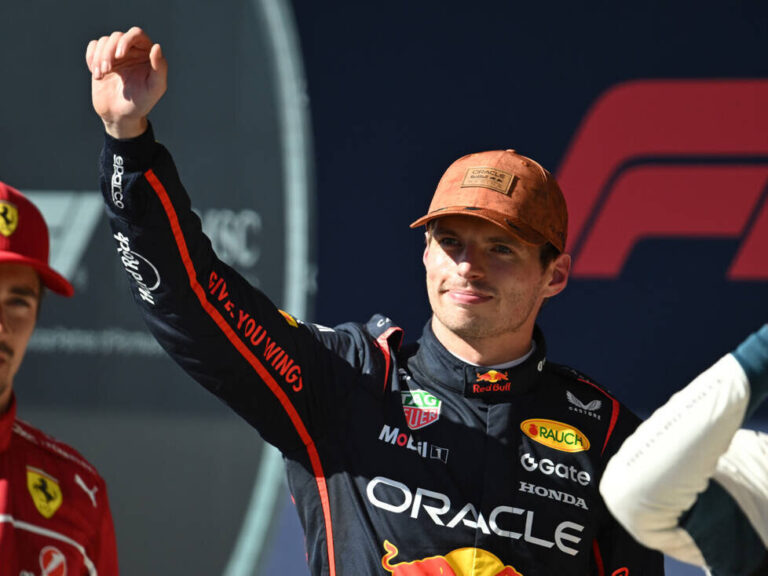
Max Verstappen has made up a whopping 64 points on the World Championship leader in the last four races and is now back within striking distance in the World Championship battle. According to the Dutchman, “the opportunity is there. We have to deliver weekends like this until the end of the season.” He knows: “We have to be perfect until the end to have a chance.” While this shift in the balance of power seems spectacular, it is by no means unique in Formula 1 history.

Back in 1979, Alan Jones celebrated a late comeback. At that point, he was still 25 points behind, but with three wins in a row, he moved to within ten points of the lead. Or in 1991, when Nigel Mansell suddenly found himself at the front of the pack despite trailing by 33 points during the season. And in 2012, Sebastian Vettel turned a 39-point deficit into a 13-point lead – a perfect finale.

But despite these examples, Verstappen was by no means sitting pretty: he soberly emphasizes: “The gaps are very small. Every mistake can cost you everything.”

Historical role model: Alan Jones in 1979

The 1979 season is a prime example of how a team and driver can rise from under the radar to become title contenders. At the time, Jones was competing for Williams Grand Prix Engineering, which had just entered Formula 1 with its own car. In the first half of the season, Jones scored just seven points and was virtually out of contention, trailing by 25 points. But with his car, the FW07, he won three races in a row, reduced the gap to ten points and secured at least third place in the overall standings. Verstappen also senses this momentum: “We understood our car better and made upgrades that worked perfectly.” It doesn’t just sound like a comeback—it’s almost reminiscent of history.

Mansell in 1991 and Hakkinen in 2000: deficits as reality

It was not uncommon for major title fights to start with deficits. In 1991, Mansell was still in seventh place with only seven points with seven races to go. But with the new FW14, he won race after race and was suddenly in contention for the title—even though he was still 24 points behind Senna at the end. The situation was similar in 2000, when Mika Häkkinen suddenly took the lead after technical setbacks—until Ferrari struck back with Michael Schumacher at the end.

One of the most iconic comebacks was delivered by Sebastian Vettel in 2012. After trailing by 39 points, he scored four consecutive victories and ended up three points ahead of Fernando Alonso. At the time, strategy, consistency, and a car that was there when it mattered most helped him achieve this feat.

What does that mean for 2025?

With five races remaining, the battle is more open than ever. Verstappen is only 40 points behind Oscar Piastri – and has stated his intention to “avoid every mistake.” He says: “We’ve made up a lot of ground, but the gaps are very small.”

His team at Red Bull Racing is convinced: Helmut Marko believes that in this form, “it could still get really exciting” – and that with a three-point gap or eight points, nothing has been won yet. But he also knows: “If Max has the equipment, he is a very serious contender.”

History teaches us that deficits in Formula 1 are not the end – but often the beginning of a big final sprint. Whether Jones, Mansell, Häkkinen or Vettel – they have all shown that a strong car, a perfect weekend and mental strength can make all the difference.

Max Verstappen is now at exactly this point: 64 points caught up, close to Piastri—and with the will to deliver perfection every weekend. He says: “We’ve found a good way with the car… Now it’s about getting the maximum out of it week after week.”

Sinner teaches Altmaier a lesson

The world number two makes short work of the player from Kempen.

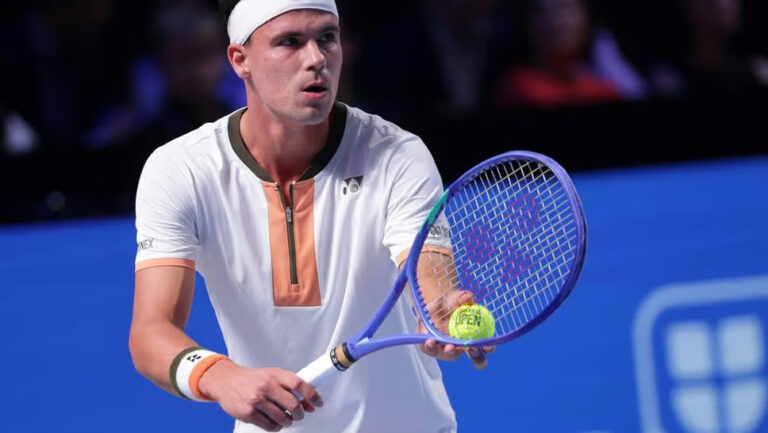
A class difference at the Wiener Stadthalle: professional tennis player Daniel Altmaier was defeated by tournament favorite Jannik Sinner right at the start of the ATP tournament in Austria’s capital. The player from Kempen lost to the world number two from Italy on Wednesday without a chance, 0-6, 2-6.

Altmaier had no answer to Sinner, who was on a roll from the start: the South Tyrolean took a 3-0 lead within ten minutes after a double break and closed out the first set after 22 minutes. Altmaier fought back visibly, winning his own serve at the start of the second set. But it wasn’t enough to seriously challenge Sinner in the end.

For the 27-year-old, currently ranked 51st in the world, it was his second defeat to Sinner in October. He had already lost in two sets (3-6, 3-6) at the Masters in Shanghai.

Alexander Zverev is now the last remaining German player in the 500 tournament in Vienna. Zverev struggled to overcome Scottish qualifier Jacob Fearnley in his opening match on Tuesday. Zverev will face Italian Matteo Arnaldi in the round of 16 on Thursday.

A legendary giant from Bavaria

0

⁠Sixty-one years ago today, Regensburg bus driver Hans Huber almost snatched boxing legend Joe Frazier’s first major triumph—and sent fans in his homeland into ecstasy with his Olympic fairy tale.

Had Hans Huber known about Joe Frazier’s thumb, everything might have turned out differently.

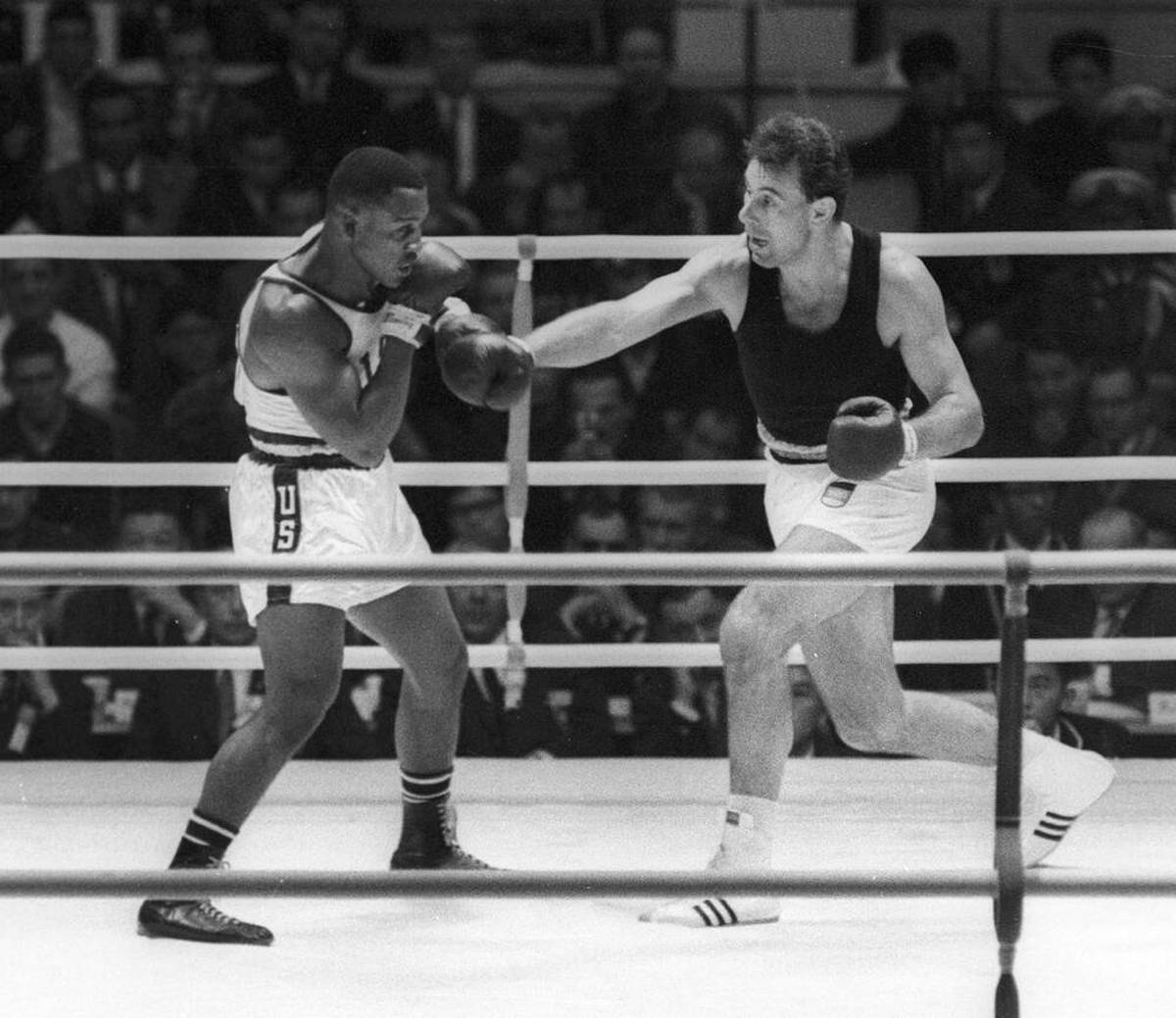
It was the biggest fight in the life of the Bavarian amateur boxer – and in retrospect, it has become even bigger due to the iconic status that his opponent later achieved. And it didn’t take much for the legend of Hans Huber from Wenzenbach near Regensburg to become even greater in the Olympic final in Tokyo.

Hans Huber boxed against Joe Frazier at the Olympics

Wednesday marks the 60th anniversary of October 23, 1964, a big day for a German athlete whose story was already special before that.

Born on January 1, 1934, Huber lived a simple life that fatefully brought him to the Olympic stage: Huber was originally a baker’s apprentice and a young soccer goalkeeper at the local SV Wenzenbach club, but retraining as a bus driver paved his way into martial arts, rather by chance.

Huber’s driving instructor recommended that the 1.92-meter giant try his hand at wrestling at Regensburger Turnerschaft e.V. Huber did so with great success, becoming German heavyweight runner-up in 1958 and 1960 – beaten only by the legendary Wilfried Dietrich, the mythical “Crane of Schifferstadt.”

The realization that Dietrich was unbeatable prompted Huber to switch to boxing, where he reached the European Championship quarterfinals in 1963 and won the German Championship and Olympic qualification the following year.

Thousands of people gathered around their radios

Huber flew to the Japanese capital without high expectations, but surprised both himself and the boxing public with victories over Pakistan’s Abdul Rehman and Italy’s Giuseppe Ros in the heavyweight tournament.

A wave of euphoria broke out around the German boxing fairy tale, especially in his home region, with thousands tuning in to their radios at 3:30 p.m. German time to follow the final fight.

Huber’s opponent was a 20-year-old American who had not actually qualified for the Olympics, but was nominated after an injury to his compatriot and sparring partner Buster Mathis: Joseph William “Joe” Frazier – ten centimeters shorter than Huber, but already a formidable all-rounder with a dangerous left hook – or so it seemed.

Hans Huber lost on points to Joe Frazier in Tokyo

Frazier went into the fight with a handicap

What Huber didn’t know was that Frazier had broken his thumb in the semi-final against USSR starter Vadim Yemelyanov, effectively neutralizing his best weapon.

The duel between Huber and Frazier went the full distance, with two judges scoring it in Huber’s favor and three in Frazier’s. Years later, boxing experts were still wondering what would have happened if Huber had exploited Frazier’s handicap more aggressively: “Had he known how much pain Frazier was in with every left hook, Huber might not have been so cautious in dodging him, and the judges’ decision could well have been different,” wrote the New York Times in 1970. After his Olympic victory, Frazier turned professional, became world champion, and was the great rival of the iconic Muhammad Ali. Hans Huber disappeared from the limelight – voluntarily.

Huber preferred Frazier to Ali

The silver medalist from Tokyo decided against a professional career; at 30, he felt too old and no longer wanted to take on the hardships that would have awaited him.

Huber was satisfied with his big performance in Tokyo, which he felt had rewarded him richly despite his initial disappointment at missing out on the gold medal. Huber received congratulatory telegrams from Chancellor Konrad Adenauer and opposition leader Willy Brandt. When he returned home to Regensburg, 50,000 people welcomed him at the train station.
“That made up for it,” the Mittelbayerische Zeitung quotes from a late interview with Huber. After the Olympics, Huber worked at the Regensburg Sports Office, and there were two reunions with Frazier in 1971 at an Adidas gala and on a TV show in Los Angeles.

Huber also appreciated “Smokin’ Joe,” who died in 2011, on a personal level: “Joe was always a really nice guy. He never acted like a big show-off,” he said in an interview with the BZ. Huber criticized his great opponent Ali, however, for sometimes ridiculing his opponents (“That’s not what a great athlete does”). Hans Huber, the man who almost snatched the first major triumph away from the great Joe Frazier, died on January 12, 2024, shortly after his 90th birthday.

Kompany urges Karl and is delighted that his request has been granted

Munich’s winning streak continues unabated. Even on the third match day of the Champions League, FC Bayern was unstoppable, beating Club Brugge 4-0. Meanwhile, the coach was particularly pleased about something else.
“It was a good home game, we could have scored more goals,” Vincent Kompany told DAZN after the match. “We saw some young players who will have to help us as the season progresses,” said the Munich head coach, referring not only to Lennart Karl’s historic performance.

When asked how he would compare himself as a player at the same age as Karl, Kompany said with a grin: “I played in the Champions League, was a national team player, a regular starter. But joking aside, that’s not normal at this level. He’ll continue to get the chance to do so, but he’ll also need some rest. It was important that he showed it today in such a big game. But I also told him that he has to do the same at 30. Because Harry does that too.“

Kompany on contract extension: ”I wanted it just as much”

Kompany had already preached restraint when asked another question that concerned him personally – his contract extension until 2029: “It feels like the extension was a month ago because the preparation for the game was so intense. My biggest request to the club was that it not become a big issue in the public eye now that we have momentum,” Kompany said.

He was ultimately completely satisfied with how it was handled. “The club did a very good job, and I’m very grateful,” said the Belgian, who emphasized once again that signing a new contract was “really nothing special” for him. “I’ve been in the professional game for over 25 years now. We had an important game today, so I didn’t want it to be a distraction. That’s exactly how I wanted it.”

Dreesens double joy with Kompany

Jan-Christian Dreesen was delighted not only about the contract extension with Kompany himself, but also about the circumstances: “Normally, we’re as full of holes as Swiss cheese when it comes to things like this. Given that this was perhaps the most important extension for the club at the moment, I was particularly pleased,” said the Munich club’s CEO, who also added the following explanation: “Both sides want to build something together for the long term. This idea was deeply rooted in both sides. And that’s why it was really okay how the negotiations went.”

How VfB plans to crack Fener

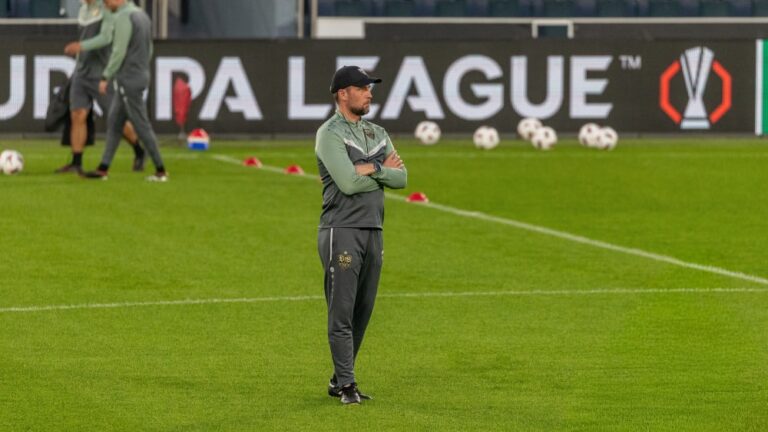
Fenerbahce and VfB Stuttgart are two teams that are currently on a roll. Sebastian Hoeneß wants to score points on the Bosporus with the usual style elements.

“We have ideas. We want to try to get the ball into our ranks quickly,“ said the VfB Stuttgart coach ahead of Thursday evening’s away game at Fenerbahce. Sebastian Hoeneß’s recipe: beat the opponents at their own game, because: ”This is a team that likes to have the ball and doesn’t like to defend. That’s exactly the situation we want to put them in.”

“It’s relatively clear how he will play. And so are we.”

The fact that he has a full squad to choose from is, of course, an advantage. With the exception of Ermedi Demirovic (foot injury) and Jamie Leweling (muscle problems), none of the regulars are unavailable. Hoeneß already has a clear idea of which players he will send onto the field, as his words at the matchday press conference on Wednesday evening suggest. With regard to his counterpart Domenico Tedesco, who took over the traditional Istanbul club in September and has a good interim record with four wins, three draws, and one defeat, he explained: ” Like us, he has two or three personnel decisions to make. Otherwise, it’s relatively clear how he will play. And so will we.”

Given the hosts’ attacking qualities, a formation with three central defenders, as seen in the recent 3-0 win at VfL Wolfsburg, would offer certain options to allow high pressing with many players in the build-up to run into space and then switch quickly. The fact that Bilal El-Khannouss, who sets the pace and provides ideas in the final third, and Angelo Stiller, who sets the tempo and is the man for the killer passes, are currently in top form should certainly not be detrimental.

VfB is the Bundesliga’s second-half leader

It is striking that Fenerbahce is struggling under Tedesco, especially in the final stages of games, as Kerem Aktürkoglu, Sebastian Szymanski, Talisca & Co. are not (yet) used to the German’s intense style. When asked about this, Hoeneß was cautious: “I can’t say whether that’s a weakness, but I want to talk more about us. We want to impress them with our intensity, our style of play.” However, should it be a close final phase, VfB can go into it with confidence despite the expected heated atmosphere: in a table that only takes into account the results of the second half of the season, the Swabians would be in first place in the Bundesliga with 18 points. That speaks for their physicality and mentality.

Kramaric overtakes Ibisevic and Hoeneß

With his goal in the 3-0 win at St. Pauli, Andrej Kramaric has also moved up the Bundesliga’s all-time scoring charts. And he has completed a special collection.

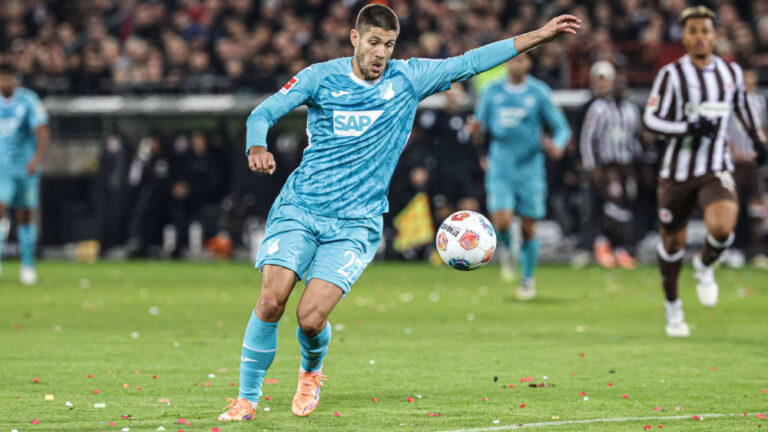
Andrej Kramaric crowned his outstanding performance at St. Pauli on Sunday with his goal to make it 2-0, and after Bazoumana Touré’s debut goal to give his side the lead, the game was as good as over. It was only the Hoffenheim striker’s second goal of the season in his seventh game, but it was remarkable in two respects.

It was his first against St. Pauli. The 34-year-old has now completed his personal “collection” and scored against all current Bundesliga teams, with the Hanseatic club being the only one missing.

He “only” scored against Fürth in the cup

But that’s not all. Kramaric has been hunting goals for TSG in the Bundesliga since winter 2016. During this period, the striker, who was signed from Leicester at the time, has faced a total of 28 different opponents with Hoffenheim in the top flight. He was successful as a goalscorer against 27 of them. Only SpVgg Greuther Fürth slipped through the striker’s fingers. The Fürth team had only been able to enjoy top-flight status for one year during Kramaric’s tenure, but Kramaric came away empty-handed in the spectacular 6-3 win in Fürth, and there were no goals at all in the return match in Sinsheim. And yet Kramaric was also successful against Fürth, not in the league, but two years earlier in the cup, when he scored the 1-0 for TSG in a narrow 7-6 victory on penalties (2-2).

With Sunday’s 2-0 win, however, Kramaric was able to overtake two renowned strikers in the all-time scoring list. With his 128th goal in the top flight, he surpassed Dieter Hoeneß and former Hoffenheim player Vedad Ibisevic.

27th place in the all-time scoring charts

Kramaric is now hot on the heels of Karl Allgöwer (129) and has his sights set on the top 25. Michael Zorc (131) currently ranks there behind Rudi Völler (132) and Giovane Elber (133). With Kramaric, that could happen very quickly. And since Hoffenheim’s star regularly scores in double digits, Horst Hrubesch (136) and Uwe Seeler (137) are also well within reach by the end of the season. However, the absolute elite remains out of reach for the 34-year-old.
To break into the top 10, Kramaric would have to add another 50 goals to overtake Dieter Müller and Klaus Allofs, who are tied for 10th place. And the giant Gerd Müller towers above them all, with 365 goals to his name, more than the two of them combined.