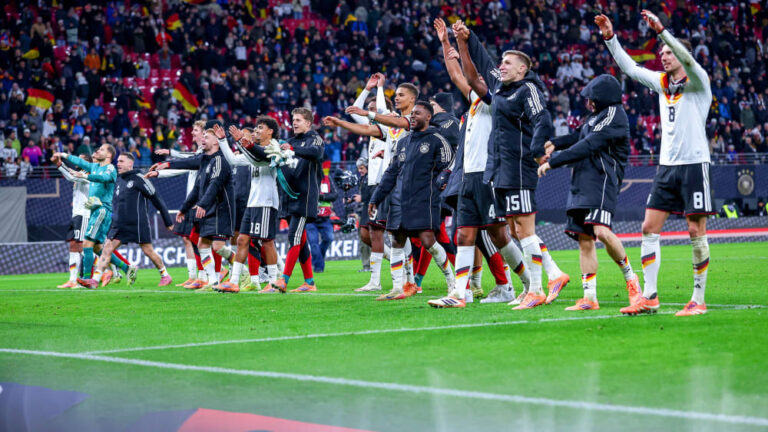
The German national team has not only qualified for the 2026 World Cup, but is also seeded in the draw. This means that some possible – and some excluded – group opponents have already been determined.
With a 6-0 victory over Slovakia on Monday, the German national team achieved both of its stated goals: it qualified for the 2026 World Cup and will be one of twelve seeded teams in the draw on December 5 in Washington, D.C.
In the new FIFA world rankings, which will be published on Wednesday, Germany will once again be among the top nine nations. Like the three hosts, the USA, Mexico, and Canada, these nations will each form a group head – and will therefore avoid each other in the World Cup preliminary round.
Pot 1 is complete
This means that eleven nations are already ruled out as Germany’s group opponents: the USA, Mexico, Canada, Spain, Argentina, France, England, Brazil, Portugal, the Netherlands, and Belgium. They will all be in Pot 1 for the draw and will only be possible opponents for Germany in the round of 32 of the XXL World Cup at the earliest.
The teams that will definitely be in Pot 2 and could therefore face Germany in the preliminary round include Croatia, Morocco, Colombia, Japan, Uruguay, Senegal, Iran, and South Korea. Italy could also be a potential Pot 2 opponent if the Squadra Azzurra qualifies for the World Cup via the play-offs and FIFA does not place all of the placeholders for the six teams still missing from the draw in Pot 4, but instead ranks them according to who has the highest world ranking points in each play-off path.
Pot 3 will include Norway with Erling Haaland, Egypt, Scotland, Paraguay, and Ivory Coast, while Pot 4 will include New Zealand, Ghana, Haiti, and World Cup newcomers Cape Verde, Curacao, and Jordan. FIFA is expected to announce the exact pot allocation and final details of the draw later this week.
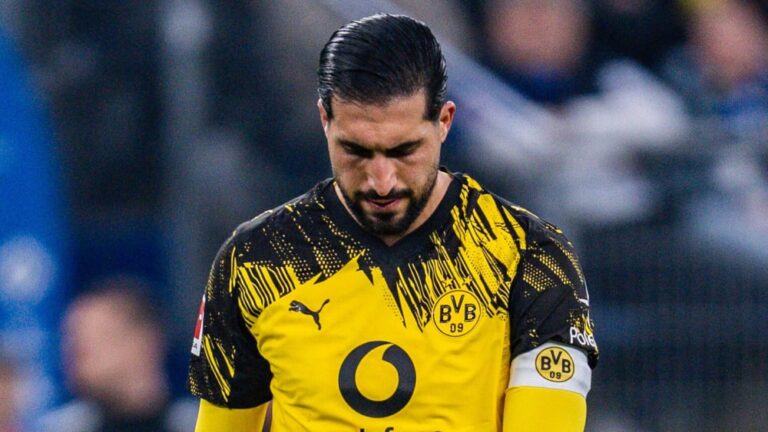
Emre Can is back. After a long period of suffering, the Borussia Dortmund captain has now spoken about his injury, his rehabilitation, and his hopes of winning a title.
Just over half an hour in the game against Manchester City, 90 minutes against Hamburger SV, and one thing is clear: Emre Can is back. As the middle man in the back three, he immediately stabilized the defense in both games—it wasn’t his fault that Borussia Dortmund failed to win either time. During the international break, the veteran looked back on the months since April, when he repeatedly struggled with adductor problems, in an interview with BVB club media. “It was very, very complicated,” said Can. “I had a few setbacks during my rehab: I was already very far along, and then I felt it again and had to start from scratch. And then I was ready again, and I felt it again.”
In the end, between his last start for TSG Hoffenheim at the end of April and the 90 minutes in Hamburg, there were almost six months of constant pain and a lot of work behind the scenes: “It wasn’t an easy time. It wasn’t nice, maybe the most difficult phase of my career.” But now he is “positive again.”
It started in Barcelona
The suffering began after the 4-0 defeat to FC Barcelona in the Champions League quarter-finals at the beginning of April. “That’s when I started having problems, and I had them the whole time. The coach knew that, I trained and played very little, I was almost always on the bench,” he recalls: “It would no longer have been possible to play for 90 minutes. The coach asked me if I could push through it, and for me it was clear: I’m going to do it.“
Especially since Nico Schlotterbeck was also out for a long time at that time due to his torn meniscus. ”I played through the pain until the end of the season, and after the last game I started rehab,” Can reports. He then missed the Club World Cup and the start of the new season: “I quickly realized that I wouldn’t be able to play in the US, but the plan was for me to come back after that. However, my body threw a spanner in the works and it simply took much longer than I had imagined.”
“Holding something in my hands at the end”
Now it’s time for the long-awaited comeback. “It’s not so easy to play soccer again after such a long time,” Can admits: “I felt that after the game. But now I’m feeling better again, and I was just happy to be back on the pitch. To be honest, the break came at just the right time, because I’m not yet able to play every three days. “Now he needs to ”get back into the rhythm and regain confidence in my body.“
But then the season, at the end of which his contract expires, should still be a good one. His goals: ”I want to stay healthy and for us to be successful as a team.“ Preferably with a quantifiable success: ”I hope to have something to show for it at the end.”
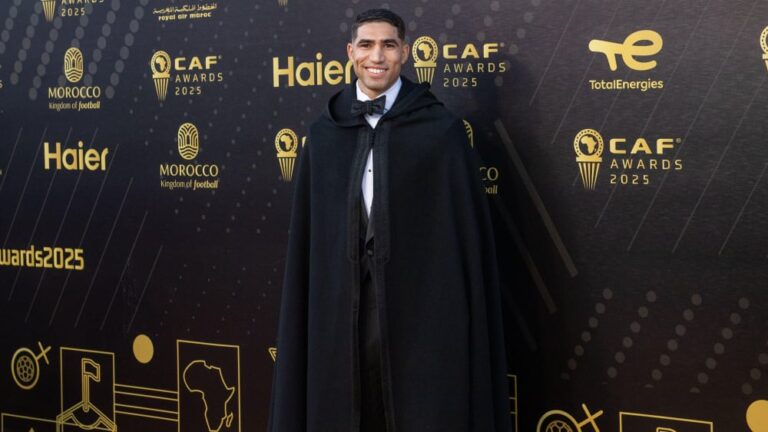
Achraf Hakimi is Africa’s Footballer of the Year. The Paris St. Germain player, who is currently injured, beat big names such as Mohamed Salah and Victor Osimhen.
Achraf Hakimi is currently sidelined with an unspecified ankle injury, which he sustained in the Champions League during the 1-2 defeat to FC Bayern as a result of a foul by Luis Diaz. The Moroccan can now console himself with the title of African Footballer of the Year.
The former Bundesliga pro (54 Bundesliga games for Borussia Dortmund) relegated big names such as the two star strikers Mohamed Salah of Liverpool FC, who won in 2017 and 2018, and Victor Osimhen of Galatasaray, title holder in 2023, to second and third place. Hakimi had finished third in each of the past two years and was therefore considered a hot candidate, especially since Salah (Premier League) and Osimhen (Turkish SüperLig) had “only” won national titles.
“It is a great honor to be here today, and I am proud to win such a prestigious trophy,” said Hakimi, who won both the French championship and the Champions League with Paris last season. The 27-year-old succeeds Ademola Lookman (Atalanta Bergamo).
The full-back is currently injured but hopes to make a comeback soon, as he wants to be fit again for the start of the Africa Cup of Nations on December 21—especially since the tournament is being held in Morocco.
Incredible triumph for Morocco
After more than 52 years, a defender has once again been named African Footballer of the Year, with Bwanga Tshimen last receiving this honor in 1973. At the time, he represented Zaire, now known as the Democratic Republic of Congo. Hakimi is also the first Moroccan to receive this award since Mustapha Hadji in 1998.
Incidentally, it was a double triumph for Morocco: Hakimi’s compatriot Ghizlane Chebbak won the African Footballer of the Year award. The 35-year-old midfielder plays for Al-Hilal in Saudi Arabia. And it wasn’t the only award for the North Africans.
The U-20 team, which sensationally won the U-20 World Cup (2-0 against Argentina), is Team of the Year, Bono (Al-Hilal) is Goalkeeper of the Year, while Othmane Maamma (Watford FC) and Doha El Madani were named Best Young Player and Best Young Player respectively.
Meanwhile, the Moroccans came away empty-handed in the Coach of the Year category, with Bubista prevailing after sensationally leading Cape Verde to the 2026 World Cup in Mexico, Canada, and the USA.
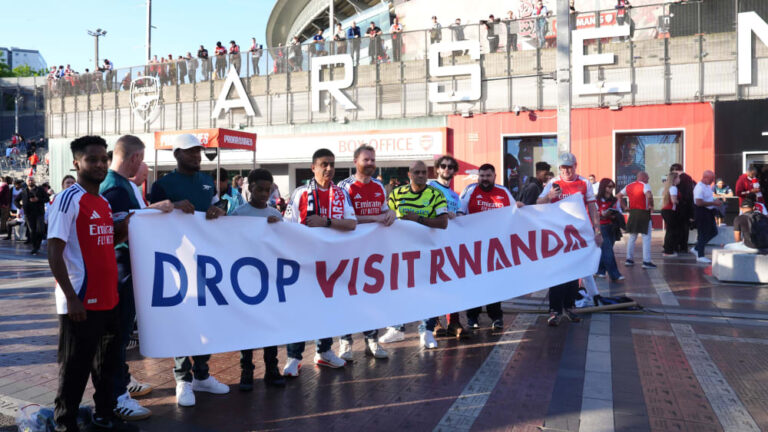
Arsenal FC is ending its controversial partnership with Rwanda at the end of the season. Fans had also recently mobilized against it.
According to CEO Richard Garlick, Arsenal FC owes its current success in part to a highly controversial partner. Since 2018, the Gunners have been promoting the Central African country of Rwanda as part of the “Visit Rwanda” tourism campaign, for which they are being paid handsomely. But that will soon come to an end.
On Wednesday, the Premier League leaders announced that they had “amicably” agreed with the Rwanda Development Board to end the partnership at the end of the season. “Visit Rwanda” was the first sleeve sponsor on Arsenal’s jerseys and remains so today. However, the partnership, which was the subject of much debate from the outset, had recently come under even greater criticism.
Bayern also reacted in the summer
The Rwandan government is accused of human rights violations and supporting the M23 rebel group, which is fighting government forces in the neighboring Democratic Republic of Congo in an escalating border conflict. In February, the DR Congo called on Arsenal and other clubs advertising with the slogan “Visit Rwanda” to end the “blood-stained” partnership.
At the time, FC Bayern was one of those clubs, having joined forces with the Rwandan Development Board in 2023 for an initial period of five years. Last August, however, the record champions announced that they would be converting the commercial part of the agreement, and thus the “Visit Rwanda” sponsorship, into a pure sponsorship agreement for youth soccer.
Champions League winner Paris Saint-Germain, on the other hand, extended its contract in April until 2028, while Rwanda’s tourism authority gained another top European club as a partner in Atletico Madrid.
Arsenal sees cooperation goals “exceeded”
During this time, protests by Arsenal fans against the partnership had reached a new peak. Among other things, the group “Gunners for Peace” distributed armbands to supporters at a home game to cover up the lettering on the sleeves. Their ironic “Visit Tottenham” campaign attracted even more attention. Now they are delighted that their club has actually responded. “We all know that money rules the world, but when fans come together and raise their voices, you have to listen to them,” Gunners for Peace wrote on Instagram. Arsenal announced on Wednesday that the original goals of the collaboration had been “exceeded.” These were to “promote nature conservation and sustainable tourism, inspire millions of fans to discover the country, and create a lasting foundation for tourism growth.” “Visit Rwanda has helped the club invest in our long-term vision of winning major trophies in a financially sustainable way,” explains CEO Garlick. Arsenal is said to have pocketed around eleven million euros annually from the deal.
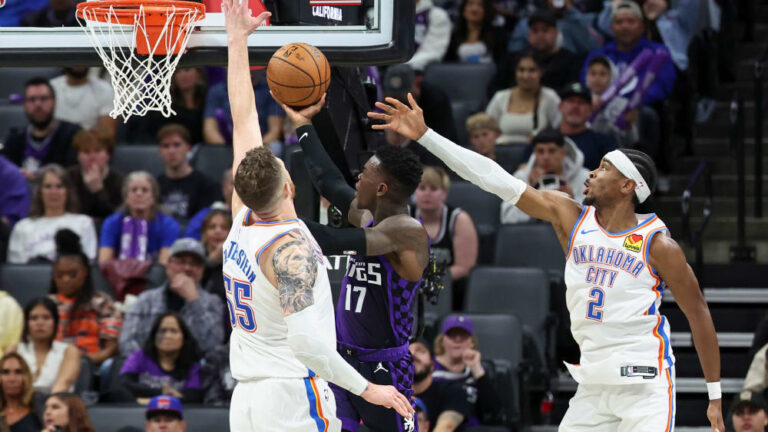
Dennis Schröder and Isaiah Hartenstein were the focus of attention in the clash between the Sacramento Kings and the Oklahoma City Thunder. In the end, the reigning champions prevailed, led by an outstanding Shai Gilgeous-Alexander.
The Thunder continued their strong early form in Oklahoma City and prevailed against the Kings with another commanding performance. Shai Gilgeous-Alexander scored 33 points and set the tone offensively, while Chet Holmgren contributed 21 points. Isaiah Hartenstein delivered a solid performance in the paint: the center had four points, 12 rebounds and two blocks, stabilizing the defending champions’ defense as they celebrated their seventh consecutive victory and extended their record to 15-1. Dennis Schröder kept Sacramento in the game for long stretches and took on a lot of responsibility in the backcourt. The German guard scored 21 points (Kings’ top scorer), DeMar DeRozan added 17 points, but without the injured Domantas Sabonis, the Kings lacked presence under the baskets. OKC pulled away in the third quarter in particular, when Gilgeous-Alexander extended the lead with several and-ones and the Thunder went into the final quarter with a double-digit cushion.
In the final quarter, the home team sealed the deal: Lu Dort scored 11 of his 14 points in the final quarter and prevented any serious comeback by the visitors. Sacramento thus remained in its losing streak, suffering its seventh defeat in a row, while Oklahoma City recorded another clear victory in a series of recent convincing wins.
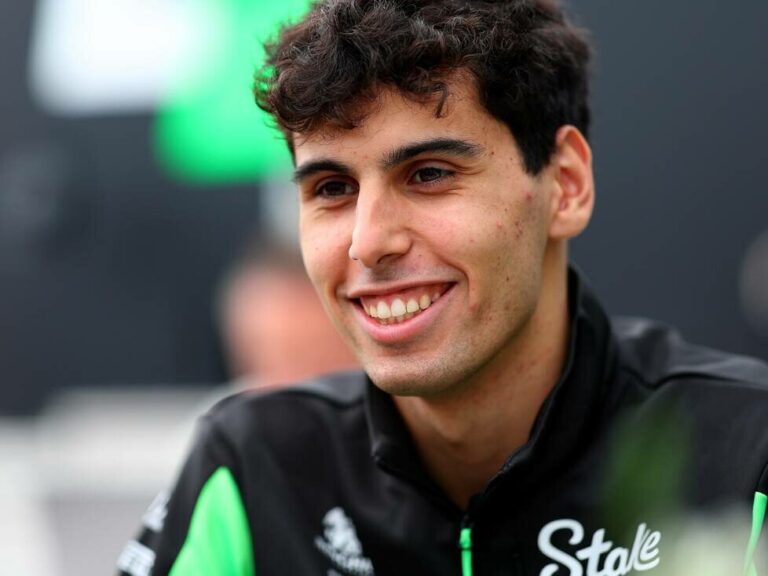
The road to Formula 1 is a balancing act between family devotion and the driver’s iron will—Gabriel Bortoleto moved to Europe alone as a child.
Gabriel Bortoleto is a prime example of the sacrifices a young motorsports athlete must make to realize their Formula 1 dream. His story, from his beginnings in go-karting in Sao Paulo to moving to Europe at the age of eleven, shows that talent alone is not enough. The road to the top is a balancing act between family devotion and the driver’s iron will. Bortoleto owes his passion for racing to his family. His father, who himself came from a poor background and had no money for his own races, was a passionate fan who loved Ayrton Senna. He even worked once at the Sao Paulo Grand Prix to “help the rich people get out of helicopters.”
The initial spark came from his grandmother. She sat him on a wall and let him spend hours analyzing the cars passing by on the street—he had to name the car and the type of engine. This early influence and his mother’s love of the sport reinforced his passion. Formula 1 was always the goal
His father successfully built up a business because he knew he would need money to finance Bortoleto’s career. He did not rely on sponsors, as it was very difficult to find them in Brazil, and worked incredibly hard to be able to pay for the races.
For the young Bortoleto, this family effort became a deeply rooted motivation: “I had a very clear idea that the reason my father worked so hard and wasn’t around the family much during my early childhood was because my brother and I were racing.” Formula 1 became his goal and his duty, he says in the F1 Beyond the Grid podcast: “This is the minimum I can achieve to compensate for everything he has done for us.”
At the age of just six, Bortoleto started karting in Aldeia da Serra in Sao Paulo. At the age of eleven, he took the big, lonely step of moving to Europe.
Alone in Europe
This early departure was emotionally demanding. Bortoleto moved to Desenzano, near the Lonato racetrack, with only his Brazilian driving coach Francesco. “It was hard in the sense that I was far away from my family.” He, who was used to sleeping at home with his parents and brother every night and spending the whole day with them, suddenly didn’t see them for three or four months.
But his focus was stronger than his homesickness: “My dream of getting into Formula 1 was so big, and I was so convinced of what I wanted that I never really realized it.” He never thought about wanting to return home. The daily FaceTime calls with his family were a great help.
Hardly any time for school
Francesco and his wife, who joined him later, became a kind of second set of parents, raising him in their own way. They took a similar approach to his parents, as they were honest and Francesco himself had a son who raced stock cars.
When asked about his education, Bortoleto laughs: ” Well, that’s a question you shouldn’t ask a race car driver.” He attended school in Brazil until he was eleven years old and then switched to online distance learning in Europe. He freely admits that online school was not ideal before the COVID era and that he did not learn much. Although he graduated from school through programs for athletes, he insists: “I was on the road so much. I learned so many different languages.” He speaks Italian, Portuguese, and English fluently and understands Spanish completely, even if he has difficulty speaking it. His story is the best proof that the path to the top in professional motorsport is a university of life, where the racing suit takes precedence over the school uniform.
Between cost limits, hybrid technology, and a possible shake-up in 2028, Audi’s F1 project is faced with the question of how much stability the “premier class” really allows.
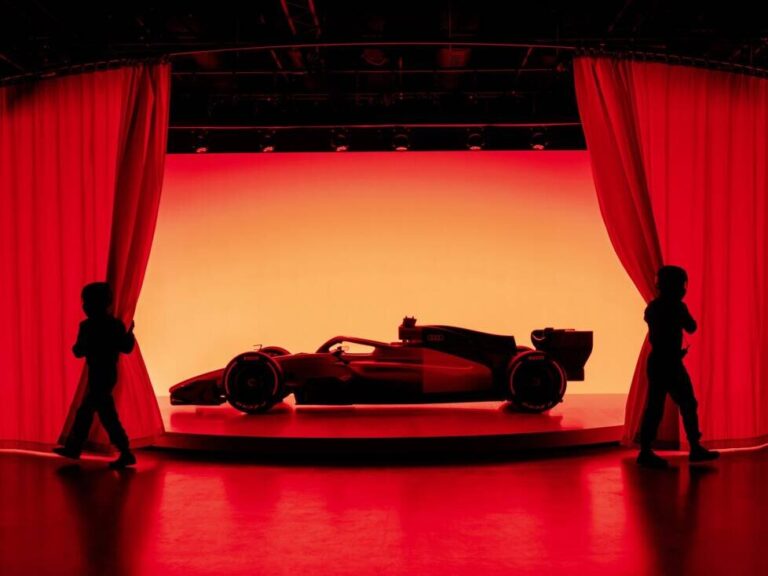
At its Formula 1 presentation in Munich, newcomer Audi unveiled its ambitious roadmap for the coming years: According to CEO Gernot Döllner, the brand wants to “compete for the world championship from 2030.” But what if Formula 1 introduces new technical rules then, or even before?
Such a scenario cannot be completely ruled out: FIA President Mohammed bin Sulayem himself has spoken several times about possible rule changes for the 2028 season. If that were to happen, the new regulations for 2026 would have been in place for three years.
What would Audi’s position be? Döllner explained: “We have clearly communicated that we are very satisfied with the regulations from 2026 onwards and need stability over several years. A fundamental rule change within a period of two years would not be economically feasible – not only for us, but for all teams.“
”If there is to be a next set of regulations, then it must be further in the future, around 2029 or 2030, and not earlier. Anything else would not make economic sense.”
The 2026 regulations attracted Audi in the first place
This is because Audi and all other Formula 1 manufacturers have made significant investments to develop the new generation of turbo hybrid powertrains for 2026. If new powertrains—possibly without hybrid components—were to be mandated in 2028 or in the years thereafter, much of the development and investment would be largely devalued.
And Döllner emphasized: The regulations that will apply from 2026 were a “decisive factor in our decision to enter Formula 1. Equally important are the budget cap and the leveling of the playing field between the teams. That is key.“
Formula 1 boss Domenicali and the ”new era” with Audi
Formula 1 boss Stefano Domenicali is aware of this. He does not want to upset Audi – on the contrary: On the sidelines of the presentation in Munich, he spoke of a “new era with important companies like Audi at our side” and of “the relationship with Audi being long-term.” “I don’t want to define an end date because this project is just beginning,” said Domenicali.
But Formula 1 must continually reanswer the “question of relevance.” Frequent rule changes are part of this: “With such a profound change in regulations—it affects not only the power unit, but also energy management, a completely new car, and a new way of driving—many questions arise. And that’s a good thing, because Formula 1 has always thrived on shortening development cycles.”
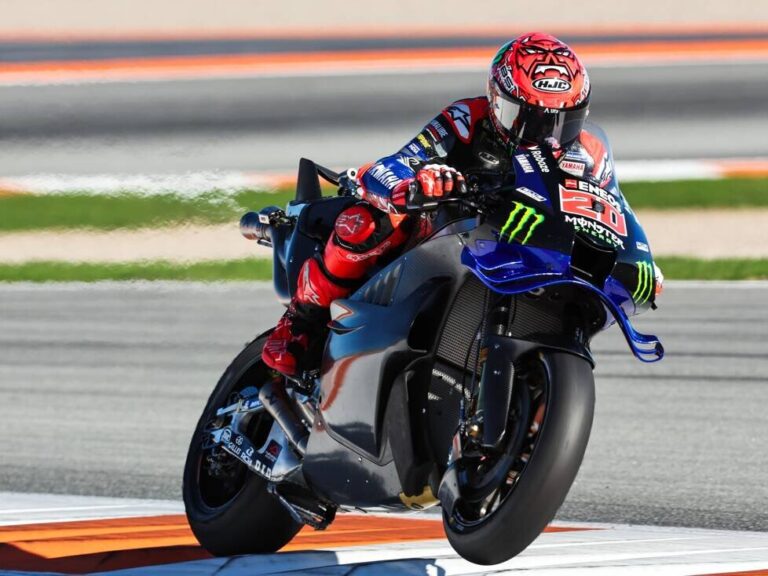
Yamaha is entering the V4 era in Valencia, but the Valencia test has brought mixed reactions—major issues with front-end feel, grip, and basic setup.
For the first time since Misano, Fabio Quartararo, Jack Miller, and Alex Rins had the opportunity to ride the new V4 Yamaha during an official test day in Valencia. But instead of euphoria, mixed feedback dominated.
Although the 2026 project showed promising signs, there were still significant areas for improvement, particularly in terms of the basic setup and front-end feel. A second, private test day on Wednesday will be crucial in providing Yamaha with the right solutions over the winter.
Quartararo: “The V4 lacks our strongest point”
After the rain-shortened opening day, Quartararo emphasized that the focus was not yet on finding an improvement over Misano.
“We had to find the best setting first. It wasn’t about having something better than at the Misano test.” However, he said that they had not discovered “anything really important” at this stage. Yamaha is still a long way from having a good base. “We spent a lot of time changing a lot of things in the setup because we clearly lack our strongest point: the feeling for the front wheel.” As a result, he spent a lot of time in the pits and was only able to complete a few laps (46) in total.
He described the day as “very hectic” because the primary focus was on getting the bike to a working state. “Tomorrow will be important in terms of finding a way forward with the chassis, electronics, engine, and aero. Today was mainly about getting back on the new bike.”
Quartararo said that the lap time (1:29.927 minutes) was achieved with the new machine, but with soft tires and without focusing on performance.
He said it was essential to give the engineers clear directions: “We have to tell them exactly what we need. Today, we were lacking a lot at the front end. The bike didn’t handle well in the corners, we lacked power, and the grip was different than expected.“
Despite the difficulties, he liked the fundamentally new riding experience: ”The riding style is completely different from an inline engine, but I like how the V4 rides.” The engine is significantly smoother than the previous one, but it clearly lacks power.
Miller sees a new but promising approach
Pramac rider Miller was moderately satisfied after his day of testing on the V4 Yamaha: “A decent first day. Of course, there is still work to be done, but we are on the right track.” According to Miller, the main purpose of the test was to understand the new machine and develop a feel for it.
He praised Quartararo’s strong time, which he himself was a good nine tenths off. However, he said he had identified “clear points” where he needed to work on feedback and setup: “Fortunately, we have another day tomorrow to iron out a few details and gather the necessary information for Malaysia.”
On the much-discussed front-end feel, Miller admitted: “The M1 had a remarkable front end. When you come from that, every other bike feels like a step back.”
He could therefore understand the frustration recently expressed by test rider Augusto Fernandez. Nevertheless, Miller was optimistic: “Yes, we have to work on that. But once we’ve found a direction, it will be a solvable issue.“
Technically, Miller classified the V4 as a mixture of characteristics from different manufacturers: ”It clearly has Yamaha DNA. The sound is a bit like Honda or KTM. In terms of weight and inertia, it’s more reminiscent of Ducati. At the same time, the engine has its own unique characteristics.”
The decisive factor for him is that Yamaha is now fully committed to the new project: “Now that the old project is complete, all hands are free for the new machine—this manpower alone will drive development forward,” said Miller.
Rins: “I feel much better when braking now.”
Unlike his brand colleagues, Rins was able to make significant progress compared to Misano, even though hardly any major components were changed on the bike itself: “The machine has improved slightly. The gearbox and major parts haven’t been changed, but I felt better than in Misano.”
He was particularly pleased that the power transmission now works much more smoothly. Although Rins only completed a few laps (33), those he did complete were “real, meaningful laps.” He tested many different setups and experimented with the bike’s center of gravity and chassis geometry. When asked whether the V4 was fundamentally better suited to his style than the inline engine bike, Rins replied clearly: “When braking, yes. Much better, in fact.” With the inline four-cylinder, he practically only stopped the bike with the front tire. With the V4, he can use both tires for the first time: “When braking, the bike skids slightly, which helps a lot.” But even Rins still sees major shortcomings. “We’re still lacking a bit of top speed. And we’re struggling when accelerating out of corners,” he notes. “We can lift the bike better than with the inline engine, but that’s exactly why we lack traction when exiting corners.” This will be his main focus for Wednesday.
Don’t miss a thing: All dates, photos, and information about the design and car presentations from Audi, Ferrari, McLaren, Mercedes, Red Bull, and Co. for the 2026 Formula 1 season
The new look of Formula 1: When the winter break comes to an end, the teams present their cars for the new racing season. This is particularly exciting when, as in 2026, new regulations are introduced, because the new technical rules have an impact on the appearance of the cars.
In this continuously updated overview for 2026, we not only list the dates for the individual presentations and initial details about the race cars, but also provide a complete overview of all Formula 1 launches in 2026 and the respective car names. Of course, we will also post pictures of the individual vehicles here as soon as they are available.
Will there be another overall presentation of all cars in 2026?
No. This was a one-off event at the start of the 2025 season to celebrate the 75th anniversary of the Formula 1 World Championship. At least for 2026, no overall presentation is planned.
However, those involved do not rule out the possibility of such an event taking place again in the future.
Will we see the real cars at the presentations?
Sometimes, but not always. Formula 1 teams often present earlier versions or even “dummy cars” at their individual car launches. Apart from the color design, there is usually not much in common with the later race car.
The purpose of this exercise is to deceive the competition and keep any innovations under wraps for as long as possible. Due to the extensive rule changes for 2026, this “hide-and-seek” game could be particularly intense in 2026.
All presentation dates for the 2026 Formula 1 cars
In this overview, we will compile all car presentations for 2026 as soon as they are known and link to the respective images.
January 15: Racing Bulls (design presentation) at Ford in Detroit (USA)
January 15: Red Bull (design presentation) at Ford in Detroit (USA)
Still to be confirmed: Alpine, Aston Martin, Audi, Cadillac, Ferrari, Haas, McLaren, Mercedes, Williams
Details and background information on the 2026 Formula 1 cars
Alpine: If the French-English Formula 1 team remains true to its previous naming convention, Franco Colapinto and Pierre Gasly will compete in the 2026 season with the A526. The 5 is a tribute to the first Renault prototype in Formula 1, which was built by Alpine – hence the A. The 26 is simply the year. However, there will no longer be a Renault engine in the car in 2026: Alpine is switching to Mercedes and is therefore no longer a works team, but a customer team.
Aston Martin: The English team names its Formula 1 cars according to a clear pattern: the team prefixes each car with the letters AMR for “Aston Martin Racing,” followed by the year. For 2026, this probably means that Fernando Alonso and Lance Stroll’s race car will be called AMR26. What is new, however, is that Mercedes will no longer be supplying the engines, but Honda – as the exclusive supplier.
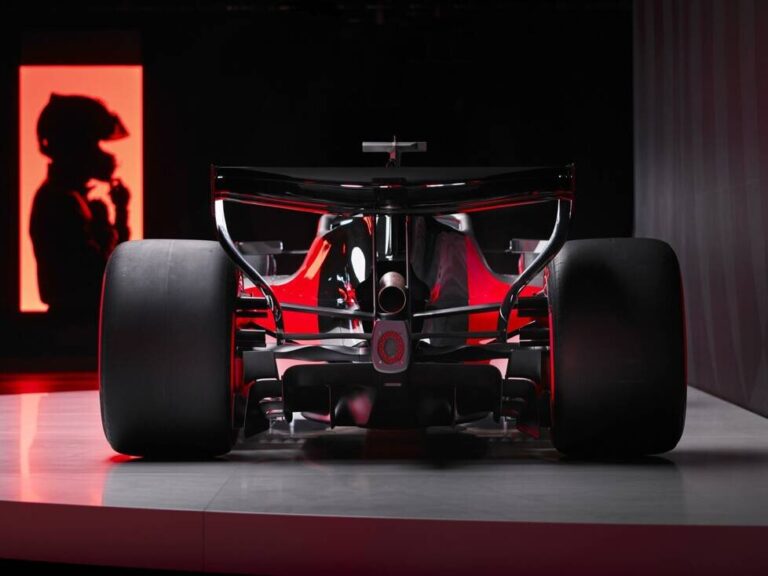
Audi: The new Audi works team is building its own engines and chassis – in Neuburg an der Donau in Germany and at the former Sauber site in Hinwil, Switzerland, respectively. At its Formula 1 presentation in November 2025, Audi unveiled a design study called the R26. However, it remains to be seen whether the colors and name will remain the same. The previous Sauber regular drivers Gabriel Bortoleto and Nico Hülkenberg have been confirmed as drivers. Cadillac: Formula 1 newcomer Cadillac has not yet announced any details about its car naming. The only thing that is clear is that Valtteri Bottas and Sergio Perez will be driving. And the US racing team’s car will be powered by a Ferrari engine. This will remain the case for the first few years until Cadillac’s parent company, General Motors, has developed its own Formula 1 engine.
Ferrari: The traditional Formula 1 team par excellence does not follow a uniform line when naming its cars. However, if the current convention remains in place, Lewis Hamilton and Charles Leclerc will drive the SF-26 in 2026. However, Ferrari sometimes deviates from its usual names when rules change. Internally, the 2026 race car is referred to as “Project 678.”
Haas: The US team Haas is a safe bet when it comes to car naming. Since entering Formula 1 in 2016, the rule has been: VF with the year. The letters stand for “Very First.” It’s important to note that the Haas Group has its roots in mechanical engineering, and the first Haas machine was once called VF-1, meaning “Very First One.” Applied to Formula 1, this means that in 2026, Oliver Bearman and Esteban Ocon will probably be driving a VF-26 with a Ferrari engine. McLaren: The racing team from Woking, England, is one of the teams that always continues counting when naming its Formula 1 cars. The McLaren MCL39 from the 2025 season should therefore be followed by the MCL40. Lando Norris and Oscar Piastri are aiming for their third consecutive world championship title in the constructors’ standings. McLaren will continue to source its engines from Mercedes in the new Formula 1 era.
Mercedes: Since returning to Formula 1 for the 2010 season, Mercedes has also simply continued its numbering system. The successor to the W16 from the 2025 season will therefore probably be the W17, which will once again be driven by Andrea Kimi Antonelli and George Russell. The “W” in the car name stands for ‘Wagen’ (car), a Daimler tradition. Similarly, the engine is always preceded by an “M.”
Racing Bulls: In 2024, Racing Bulls not only introduced a new team name, but also a new naming convention for its Formula 1 cars. The new car for 2026 is therefore likely to be called VCARB 03. This name reflects the team’s biggest sponsors: Visa and Cash App. Added to this are the team abbreviation and a number. The number three because the 2026 car is the third under the current team name. Who will drive it has not yet been confirmed. The only thing that is clear is that the engines will come from Red Bull/Ford. >Red Bull: Max Verstappen’s team has stuck to its traditional naming convention for its cars and will probably use the RB22 in 2026. It is still unclear who Verstappen’s teammate will be. One technical innovation is the powertrain: Red Bull is collaborating with Ford to build its own Formula 1 engines for the first time and will therefore compete as a works team from 2026.
Williams: Although former team founder and long-time team principal Frank Williams passed away in 2021 and the racing team has not been family-owned since 2020, Williams is sticking to its traditional naming convention: all of the team’s cars have so far borne Frank Williams’ initials, FW. The FW47 of 2025 will likely be followed by the FW48 for Alexander Albon and Carlos Sainz in 2026. Mercedes will supply the powertrains.
The legacy of former team captain Niki Pilic will be celebrated at a ceremony during the Davis Cup Finals.
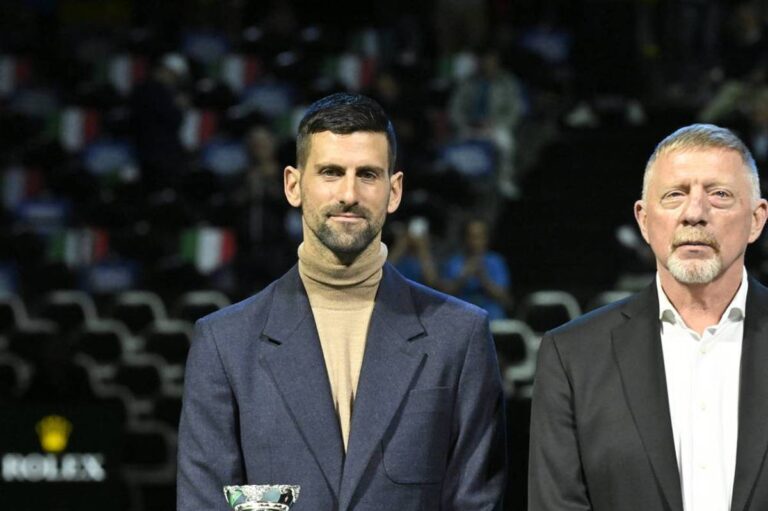
The German Davis Cup heroes led by Boris Becker joined Serbian Grand Slam record champion Novak Djokovic in Bologna to honor their former team captain Niki Pilic at a memorial service. Pilic passed away in September at the age of 86.
Pilic’s wife Mija and his daughter Danijela were also present at the ceremony during the Davis Cup Finals. “There is no better place than the Davis Cup to celebrate his legacy,” said Djokovic, paying tribute to Pilic as a person and tennis coach: “We will never forget you, Niki. We love you.”
Pilic won the Davis Cup three times with Germany
Pilic won the Davis Cup three times as team captain with Germany. Becker was the team captain during the “Miracle of Gothenburg” in 1988 and in Stuttgart in 1989, both against Sweden, while Michael Stich led the team in Düsseldorf in 1993 against Australia.
Pilic also triumphed as team captain with Croatia in 2005 and was an advisor in the box during Serbia’s Davis Cup victory in 2010.
In addition to Becker, DTB President Dietloff von Arnim, Patrik Kühnen, Carl-Uwe Steeb, and Marc-Kevin Göllner were also present at the ceremony.