Friday, December 19, 2025
spot_img
Home Blog

Supercoppa: Höjlund and David Neres shoot Napoli into the final

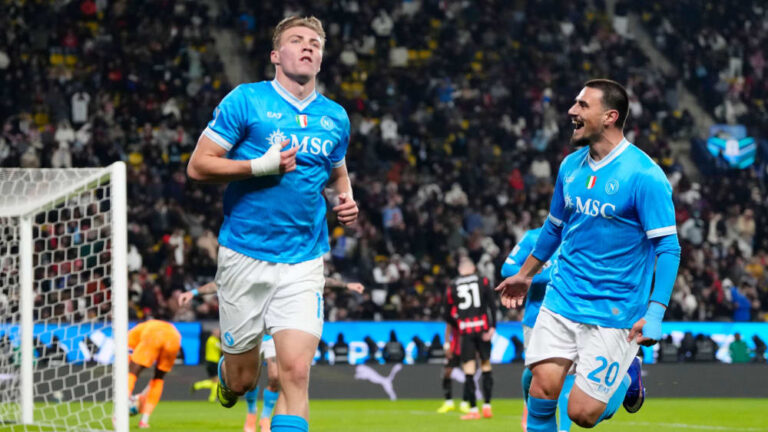
Thanks to a 2-0 win over Milan, SSC Napoli are in the final of the 2025 Supercoppa. The Italian champions were the more efficient team against the defending champions.

After the 0-1 defeat to Udinese Calcio, SSC coach Antonio Conte made three changes to the Napoli lineup: Juan Jesus, Lobotka, and Politano started in place of Beukema, Buongiorno, and Lang (all on the bench).

Milan coach Massimiliano Allegri also made three changes to the team that drew 2-2 with Sassuolo, some of them forced.
De Winter, Jashari, and Estupinan started in place of Gabbia (injured, not in the squad), Modric, and Bartesaghi (both on the bench). Rafael Leao was also absent again due to injury.
Milan had more chances, David Neres scored

Both teams were evenly matched from the start, with Milan having more clear chances in the first 20 minutes or so. Milinkovic-Savic made an early save against Loftus-Cheek (5′), then Saelemaekers narrowly missed with a drop kick (16′). At the other end, former Leipzig player Elmas shot wide from a good position after a mistake by Maignan (22′).

Napoli gradually got into the game. McTominay narrowly missed the goal (32′). However, AC remained more determined, with Rabiot missing a header and Nkunku missing another chance after a counterattack (35th, 37th). But it was the other side that took the lead. After an attack by Spinazzola and Höjlund, David Neres scored from close range – also because Maignan once again did not look good with his clearance attempt (39th).

In stoppage time, however, the French Milan keeper distinguished himself and prevented the Lombards from going into the break 2-0 down: Maignan just managed to deflect a powerful and well-placed shot from Höjlund past the post (45+1).

Höjlund seals the deal

Once again, the defending champions from Milan started the second half with a little more vigor, with Rrahmani forcing Maignan into a flying save from distance (54′). But Napoli remained the more composed team in front of goal. The duo of Spinazzola and Höjlund, who had already played a key role in the 1-0, were also responsible for the 2-0. The left winger sent the center forward on a wonderful run, before the Dane finished from a tight angle with the help of the inside post (64′).

That was the decisive moment in the game, as the second goal had an effect on the Rossoneri, who were more notable for their toughness in the closing stages—Pavlovic was lucky to stay on the pitch after elbowing Rrahmani (76′)—than for creating any real chances.

In the Supercoppa final, Napoli will face the winner of Friday’s second semifinal (8 p.m.) between cup winners Bologna and Inter Milan on Monday. In Serie A, both teams will not play again until December 28 (Sunday): Napoli will then face Cremonese at 3 p.m., while Milan will host Hellas Verona at 12:30 p.m.
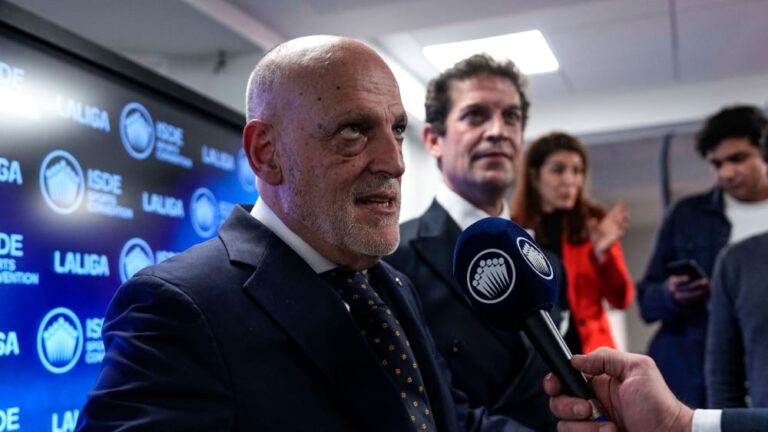
Record year: Player agents break the billion mark

For years, attempts have been made to limit the earnings of player agents—with limited success. Now it has emerged that player agents have earned more this year than ever before.

According to the world governing body FIFA, there are 10,525 licensed player agents worldwide (as of December 4, 2025), collected a total of US$1.37 billion, or approximately €1.167 billion, in transfer fees for the period between January 1 and December 1, 2025. This significantly exceeded the previous record of US$889.4 million (€758 million) set in 2023, when clubs from Saudi Arabia, among others, were on a major shopping spree.

According to FIFA, the largest share of agent fees was paid by European clubs, with the Premier League considered the strongest driving force. English clubs, which had been surprisingly restrained in the previous year with expenditures of “only” $2017 million (€186 million), acted almost unrestrainedly this year. They alone paid more than $375 million (€320 million) to player agents, followed by German clubs with $165 million (around €141 million).

At least there was no new record in the Bundesliga this time, as significantly more commission payments were made to player agents in both 2024 (€249.7 million) and 2023 (€187.8 million). It also remains clear that FIFA’s attempts to limit the income of player agents have not really been effective so far.

Exorbitant increases for women too

A new record has also been set in women’s soccer, where more money than ever before was spent on agent fees.
According to FIFA statistics, the total amounted to $6.2 million (around €5.3 million), which is double the amount from the previous year and 13 times as much as in 2020.
The total amount of agent fees paid by clubs to players’ agents in 2021 was $6.2 million (around €5.3 million), which is double the amount from the previous year and 13 times as much as in 2020.

Tebas demands: “No reform without everyone’s approval”

It’s no breaking news that Javier Tebas is no fan of the increasingly bloated club competitions. Now, for the first time, Spain’s league boss is demanding veto rights for the leagues with regard to the status quo.

“No competition should be changed without the consent of all leagues,” “We don’t want any more reforms in European competitions, the Club World Cup, and the regular World Cup without everyone’s approval. We have to see the damage and say: Enough is enough!”

“The pots are like a cake, the distribution plays a role”

Tebas sees the damage primarily in the increased pressure on the national leagues: “Everything that has happened since the 2016 Champions League reform is taking away space and attention from the national leagues. It’s not just about the players, but the entire soccer ecosystem with its schedule and increasingly differentiated media rights.” The Spaniard sees a sum X that the media companies—whether TV stations, streaming services, or radio stations—are willing to pay. The more that flows into UEFA club competitions or FIFA’s inflated Club World Cup, the less remains for the individual leagues and thus the basis of competition: “The pots of the broadcasting platforms are like a cake, and it matters whether it is divided among 10 or 20. The majority of clubs have no access to the new competitions in Europe or the Club World Cup.”

In the eyes of the 63-year-old, the weight has shifted toward the big clubs: “Fifteen years ago, the national leagues were the economic center of soccer.” According to his analysis, they are no longer. This is more than polemic or criticism; it is a systemic diagnosis that describes a historic structural shift toward a super-elite of clubs and players.

“The small and medium-sized leagues are already affected”

“The small and medium-sized leagues are already severely affected,” he warns, citing the Belgian league as an example, whose media revenues have fallen by 20 percent. Although La Liga has been able to defend its position, Germany has grown by just two percent and “in Italy and France, rights revenues have fallen.” A good example is the Swiss league: “The clubs there that participate in the Champions League receive almost 30 million euros, while the next team in the league receives 5 million euros. That makes you lose competitiveness.”

In the long run, this could also threaten the big leagues: “This is a message to the big clubs: This development means you are taking away the income of smaller and medium-sized clubs from the national leagues. But you need competition to get at least the same media money.” A decline resulting from cemented power relations cannot be offset in the long term with money from Europe.

The Spaniard calls on UEFA to take action

But what can be done? Tebas calls on UEFA to take responsibility, focusing in particular on the governance rules with regard to the ECA, the association of major clubs, with which the confederation has a joint venture that essentially determines the system and distribution of funds for UEFA club competitions. “The ECJ has established UEFA as the owner of the club competitions, but UEFA must fulfill one condition: it must ensure competitiveness, including in the national leagues,“ Tebas recalls the European Court of Justice’s Super League ruling. ”So there needs to be a better balance between small, medium, and large clubs. I don’t get the impression that they are trying to find that balance.”

Finalissima 2026: Spain challenges defending champion Argentina in Doha

Before the World Cup kicks off in the USA, Mexico, and Canada on June 11, 2026, another trophy will be up for grabs: In March, the two soccer heavyweights Argentina and Spain will meet in the Finalissima.

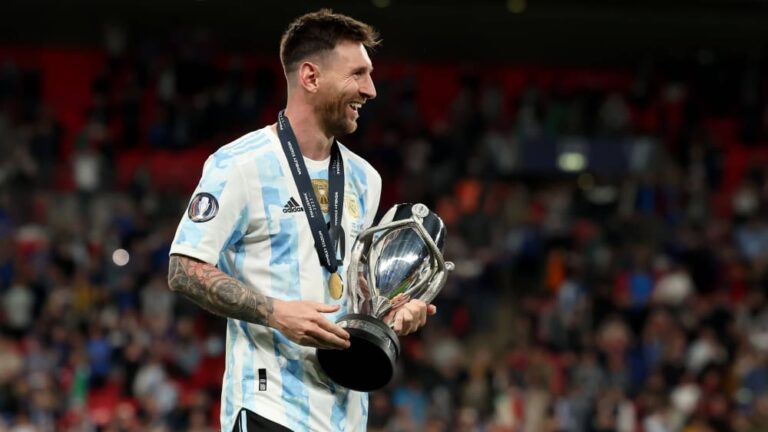
This will be the fourth time that the reigning European champions and the reigning South American champions have met, after UEFA and CONMEBOL revived the competition between the two title holders following two matches in December 2021. In 2022, Italy and Argentina faced off, with Lionel Messi and Co. winning 3-0 at Wembley Stadium in London.

Italy then missed out on the World Cup, while Argentina were crowned world champions in Qatar. The South Americans now have the chance to win the Finalissima again ahead of the continental title matches. After all, Argentina won the Copa America in 2024 with a 1-0 extra-time victory over Colombia.

The opponent of the CONMEBOL champions and world champions is Spain, who beat England 2-1 in the final of the European Championship. This means that Spain, currently the leading nation in the FIFA world rankings, will face their closest rivals.

Argentina’s fond memories of Doha

The match between the two continental champions is scheduled for March 27, 2027, as announced by the South American and European football associations on Thursday. Argentina, led by Lionel Messi, and Spain, led by young star Lamine Yamal, will meet in Qatar at Lusail Stadium in Doha. It was there that the Albiceleste clinched their third World Cup title in the 2022 final against France (4-2 on penalties).

“The Finalissima celebrates outstanding soccer by bringing together the best national teams in Europe and South America,” UEFA said in a statement.

Both nations will also be represented at next summer’s World Cup and are among the favorites to win. Argentina is aiming for its fourth World Cup title, while Spain wants to bring the trophy home for the second time after 2010 (1-0 a.e.t. against the Netherlands). In the group stage, Spain will play Uruguay, Saudi Arabia, and Cape Verde in Group H, while Argentina has been drawn in Group J with Algeria, Austria, and Jordan. If both teams finish first in their groups, they will only meet in the final.

Despite Banchero’s triple-double: Magic no match for strong Nuggets

0

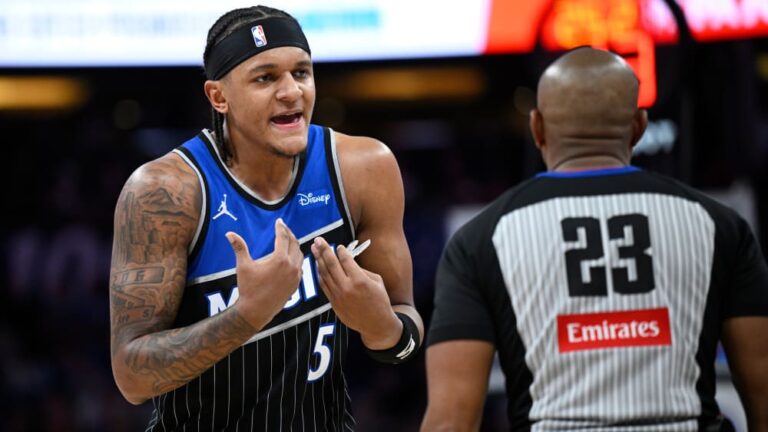
The Orlando Magic suffered a clear defeat in their matchup with the Denver Nuggets. Even a triple-double from Paolo Banchero couldn’t change that, as Nikola Jokic and Jamal Murray were simply too good on the day.

Orlando got off to a much better start. They built up a double-digit lead in the first quarter, which they extended to +15 in the middle of the second quarter. Then the Nuggets suddenly got into their stride, while nothing went right for the Magic.

Within six minutes, the Nuggets turned a 33-47 deficit into a 68-54 lead at halftime. Murray in particular was unstoppable for the Magic during this period, the guard scoring an incredible 20 points (five three-pointers!) in the six minutes before the break. As against New York, Orlando couldn’t rely on its usually strong defense. As a team, Denver shot 56 percent from the field and 44 percent from outside throughout the game. And after the break, they kept their foot on the gas, building a 21-point lead early in the third quarter, which they then managed professionally. Led by Banchero (26 points, 16 assists, and 10 rebounds) and Wendell Carter Jr. (26 points, 9 rebounds), Orlando went on a 15-2 run in the closing stages to bring them within striking distance, but a three-pointer by Cam Johnson with 75 seconds left to make it +9 sealed the deal.

Jokic with another triple-double

Johnson was also the statistically best player on his team with a +27, scoring 19 points on good shooting (6/9 FG, 3/5 three-pointers) and grabbing 11 rebounds. However, Murray was the top scorer with 32 points, while Jokic recorded his 13th triple-double of the season (23, 11 & 13).

In addition to Wagner, Tristan da Silva also missed the game, and Desmond Bane had a rough day, scoring just six points on 3/12 shooting from the field.

The Magic, who are still without Franz Wagner, face three more consecutive away games, first in Utah, then in Golden State, and finally in Portland. Denver, on the other hand, will play at home against the Rockets and Jazz.

“Don’t understand it”: Is it the end for Timo Glock’s confidants at McLaren team Dörr?

0

Will Timo Glock lose two important confidants at his McLaren team in 2026? Why the chief engineer has to leave and why his race engineer’s position is also uncertain

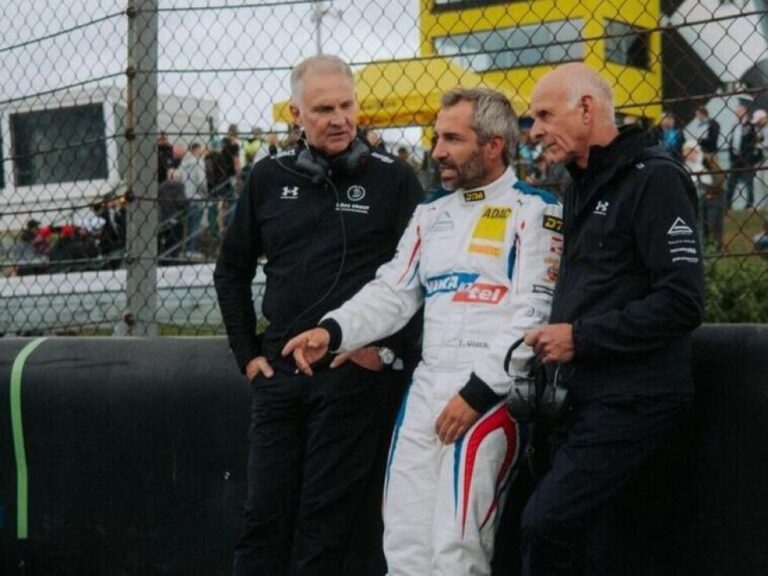
The McLaren team Dörr Motorsport, for which Timo Glock competed in the DTM this season, is facing a major upheaval. Following the appointment of motorsport legend Volker Strycek as the new GT3 manager, the team is parting ways with chief engineer Richard Selwin after just one year. The Brit, who led Glock to the GP2 title as his race engineer in 2007, also played a key role in his DTM comeback.

There are also rumors that race engineer Kevin Mirocha, another of Glock’s confidants, will no longer be part of the team in 2026. How does the former Formula 1 driver react to this? “I had a great relationship with both of them, and as a team we took a huge step forward thanks to them,”

“I don’t understand why they want to make changes on my side of the garage, but Volker Strycek is the new man making the decisions,” he says, referring to the 68-year-old racing driver and former Opel racing director, who is now in charge of the Dörr team.

Why does Glock’s former GP2 race engineer have to leave?

In fact, it looks as if the team around Glock’s teammate Ben Dörr will remain unchanged: With race engineer Erich Baumgärtner, who looked after Jamie Green in the Class 1 era of the DTM with the Rosberg Audi team, the team has agreed to work together in 2026.

Strictly speaking, Selwin was responsible for both cars as chief engineer, but due to their shared history, he is considered Glock’s confidant. But how does the team explain the personnel decisions?

The fact that the highly experienced Briton Selwin is no longer being retained after just one year has to do with “the fact that we don’t want to fill the position anymore,” “It has nothing to do with his work or anything else.”

The arrival of Strycek, who himself has experience in vehicle development and reports directly to team owner Rainer Dörr, is also not the reason for the decision. “It’s partly for budgetary reasons,” explains Funke. Who will now take over Selwin’s duties? “We’ll transfer them to the existing engineering team,” says the team manager, referring to the two engineers per car plus technical director Robin Dörr.

“Maybe we’ll find someone who can get even more out of Timo.”

But what about the future of Glock’s race engineer Kevin Mirocha? The former racing driver was brought in by Glock himself and, as a former racing driver, also provided the team with valuable input in terms of video and onboard analysis. Glock also repeatedly spoke very positively about the collaboration with his race engineer during the season.

“They work very well together—and Kevin has also provided a lot of input this year, but we are now questioning everything,” explains Funke. “All personnel matters are under review.” No decision has been made for or against Mirocha yet, but Funke says, “Maybe we’ll find someone who can get even more out of Timo.”

Isn’t there a fear that a new race engineer could have a negative impact on the former Formula 1 driver’s satisfaction with the team, despite the apparent chemistry between Glock and Mirocha? “In the end, we’ll make a decision and consider: What’s best for the team and the team’s further development?” replies Funke. “I can’t ask every mechanic who they want to work with.”

Will Glock continue his DTM career? Here’s what the Dörr team has to say

Apart from that, there could also be “a scenario where we hire another engineer for the engineering on the car—and Kevin stays on board and does what he does best,” he says, seeing a future for Mirocha in the team in a different position. Funke trusts in the expertise and experience of GT3 manager Strycek.

Is it still the plan for Glock to race for the team in the DTM alongside Ben Dörr in 2026? “Exactly,” replies Funke. This is also stipulated in the contract, as the five-time DTM race winner signed a two-year deal with the McLaren team from Frankfurt upon his return to the DTM. Glock also completed the Pirelli tire test with Dörr for the 2026 DTM season at the end of November in Le Castellet.

Max Verstappen confirms his new starting number for 2026

0

Max Verstappen’s wish has been granted and the Dutchman will be able to race with starting number 3 in 2026 – this number was actually reserved for Daniel Ricciardo

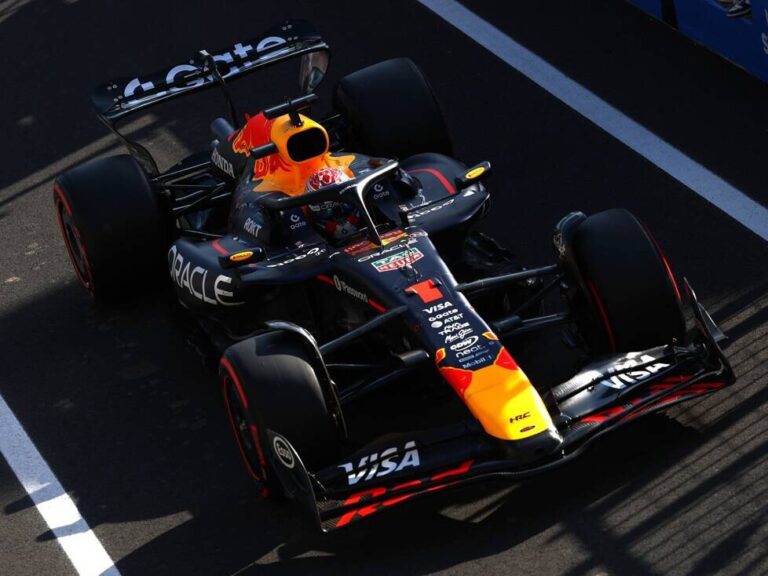
Max Verstappen will have to give up his starting number 1 in the 2026 Formula 1 season. Only the world champion is allowed to start with this number in the premier class, and because Verstappen lost his title in 2025, this privilege will go to the new champion Lando Norris in 2026.

Theoretically, Verstappen could have used the number 33 again from next year, which he had on his car until he won his first title in 2021. However, the Dutchman has already announced that he wants to change his starting number.

Now, the four-time world champion has officially confirmed that he will race with the number 3 in the 2026 season. “It won’t be number 33. My favorite number has always been 3, apart from number 1,” Verstappen told Viaplay.

“Now we can swap, so it will be number 3,” he reveals, adding with a smile: “Number 33 was always fine, but I just prefer a 3 to a 2. I’ve always said it means double luck, but I’ve already had my luck in Formula 1.”

The swap is only possible because Daniel Ricciardo is voluntarily giving up “his” number. This is because Formula 1 regulations stipulate that a starting number is only released again if a driver has not participated in any Grand Prix for two seasons.

However, Ricciardo’s last Formula 1 race in Singapore in September 2024 was just over a year ago, which is why the number 3 was actually still blocked. However, as the Australian is not planning a comeback, he has now released his number ahead of schedule.

The official Formula 1 rules for the 2026 season state in Article A2.4.1: “Drivers may apply in writing to the FIA for a change of their starting number, provided that this request is made before the publication of the championship entry list and is to take effect only in the following championship.”

The official entry list for the new Formula 1 season is to be published by the FIA on Friday.

Vasseur warns: Why the start of the 2026 season is completely irrelevant

0

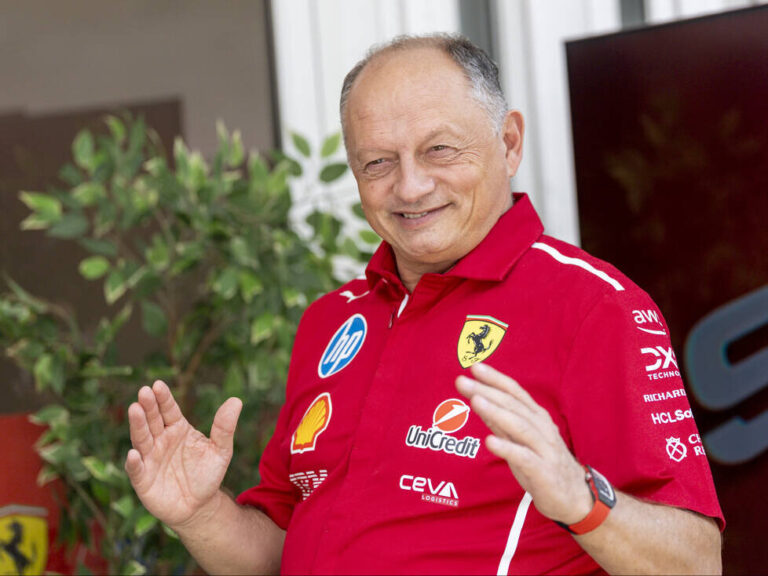
Frederic Vasseur warns against jumping to conclusions after the first Formula 1 race in 2026 and is fully focused on developing the car

Ferrari team boss Frederic Vasseur expects rapid evolution among the teams for the 2026 Formula 1 season. He is convinced that the initial pecking order at the start of the season in Melbourne will change quickly once the teams develop a better understanding of the new regulations.

The upcoming rule change for 2026, which includes comprehensive new power units, modified energy management, and revised aerodynamics, marks one of the most profound changes in the history of Formula 1. This realignment gives Ferrari the opportunity to compete for the top spot right from the start, after the team was unable to mount a serious challenge for the world championship title in the outgoing era.

To increase its chances of success, Ferrari shifted the focus of its aerodynamic development almost entirely to the 2026 car as early as April. However, this strategic decision came at a price: in the second half of 2025, the team fell back to fourth place in the Constructors’ Championship and ended the season without a single race win.

Development is key

Vasseur is aware of the high expectations placed on Ferrari for the 2026 season, especially after he and his team came under increasing scrutiny and pressure in Italy this year.

At the same time, he emphasizes that the key to success next year lies primarily in improvements during the season—not in the result of the first race in Melbourne. To achieve this, teams need to develop and understand a wide range of performance factors.

“Next year, it won’t be about the snapshot at the start of the season, not just the result in Australia, but above all the capacity for rapid further development,” warns Vasseur. “The season is certainly not over after Australia. It doesn’t matter whether we’re in first or tenth place, it’s going to be a long way to the end for everyone.”

The best work will decide

When asked whether his strategic decisions will pay off in 2025, the Frenchman replies: “I have no idea. Our sport is based on comparisons. I can do a good job, but if someone else does a better job, I’ll look stupid.”

“We push ourselves to the limit and try to do our best. And one thing is certain: the more time you invest in the project, the better you will be,” he explains. “But I don’t know if McLaren, Red Bull or Alpine are ahead of us. Nobody knows that, and I think the most important thing is not to waste time thinking about whether the others are ahead of us or behind us. “

According to Charles Leclerc, everything is at stake for Ferrari in the new era, and he sees the opportunity as ”now or never.” Although the Monegasque had one of his strongest Formula 1 seasons in 2025, he had no real chance of winning the title.

Leclerc hungry for more

Since joining Ferrari in 2019, Leclerc is still waiting for a real championship chance. Lewis Hamilton, on the other hand, needs a “reset” over the winter after a much more difficult debut season in Maranello than expected.

Does Vasseur share Leclerc’s impatience? “No, there’s no rush. But if you ask him if he’s satisfied with a session when he finishes second or sixth, then it’s definitely not the same Charles,“ says Vasseur. ”But if you ask him on Thursday, ‘What do you want to achieve with the team?’, then the approach is always the same. It’s always constructive to want to improve, even if I’m in first place. We simply try to improve in every single area: the engine, the gearbox, the aerodynamics, the setup, the simulator. That’s the DNA of our work.“

Vasseur adds: ”It’s not like one team wakes up in the morning and thinks, ‘Ah, we’re not doing a good job, we need to push’. Believe me, I think Max [Verstappen] pushes his team to the limit, Lando [Norris] pushes his team to the limit. And honestly, that’s what we expect as a Formula 1 team. If Charles and Lewis were totally happy with the car and everything, I’d be desperate! That’s more positive than anything else.”

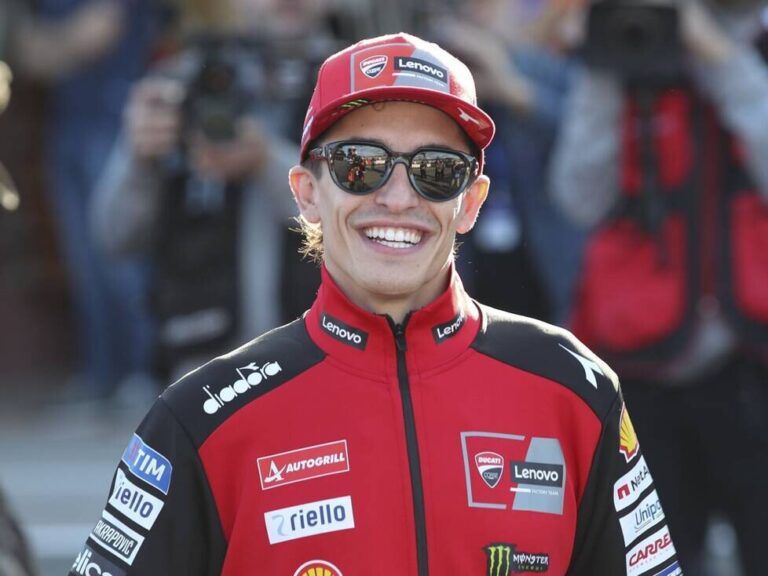
Pol Espargaro on the real Marc Marquez: “Takes everything to the extreme”

0

Pol Espargaro speaks openly about Marc Marquez, as a rival, as a teammate, and as an exceptional talent—why the Spaniard can “destroy” other riders

Pol Espargaro has experienced Marc Marquez’s career up close like hardly any other rider.
As a rival in the smaller classes, later as a teammate at Repsol Honda, and today as an observer in his role as KTM test rider. In an interview with the Spanish newspaper AS, the 34-year-old paints a complex picture of the nine-time world champion. One that makes one thing clear above all else: Marquez is an exceptional rider who pushes others to their limits and beyond.

Espargaro realized early on that Marquez was something special. However, he doubts that anyone could have predicted such a career. Although Marquez’s closest circle believed in him very early on and did “incredible work,” the future of such a young rider is hardly predictable.

“So many things can happen and go wrong with young talents that it is very difficult to make a long-term prediction,” Pol explains in retrospect.

Marc Marquez: uncompromisingly competitive

As an opponent, Espargaro describes Marquez as extremely difficult to beat. Even in the 125cc class, it was clear that Marc had advantages, and not just because of his talent. “He was very small, very light. At a time when weight was extremely important, you knew that sooner or later he would overtake you on the straights.”

But that alone does not explain it. Even as a teenager, Marquez had “excessive talent” and made perfect use of his physical attributes, despite the disadvantages that a small body brings when riding a motorcycle.

Espargaro got to know a whole new dimension when he became Marquez’s teammate at Repsol Honda in 2021 and 2022. “Marc is extremely competitive and takes everything to the extreme, with his team and with his riding style,” he says. After all, in the MotoGP paddock, the first opponent is always your own teammate. And that’s exactly how Marquez lives, “down to the last detail, down to the thousandth.”

There was tension at the beginning, for example at the season opener in Qatar. But given the difficult situation at Honda, it quickly became clear that the only way forward was to work together. “The MotoGP Honda wasn’t working well, so we had to help each other out at least a little bit to get the project off the ground,” says Espargaro. They succeeded in doing so over the course of the season.

Time at Honda: a motorcycle with no leeway

Espargaro speaks openly about the Honda of those years: “It was complicated, very complicated.” At the time, he thought Honda was going through its worst phase. With a little distance, he sees things differently. “In retrospect, those were still the last good years.”

Podium finishes, a pole position, and even a double victory at Misano with Marquez are proof of that. Later, with riders like Joan Mir and Luca Marini, it became even more difficult. “In that respect, I feel almost privileged to have experienced that phase,” Espargaro looks back with pride.

He also puts into perspective the famous scene of Marquez on the Honda pit radio saying that he is better than everyone else but needs the right tools to prove it. At the time, Honda was still very much stuck in old Japanese ways of working. “Times have changed—aerodynamics, tires, reaction speed. The European manufacturers were simply better in these areas.“

The difficult Honda was also a factor in the many injuries, both for Marquez and for himself. ”We crashed a lot, we had a lot of injuries.“

Without the necessary tools, you had to constantly push yourself to the limit. ”You had no leeway, you couldn’t pace yourself. You always had to ride at 100 percent, and that inevitably led to crashes.“ Injuries made the risk even greater because it was almost impossible to maintain that level.

”As a teammate, Marc can destroy you”

When asked whether Marquez is worse as a rival or as a teammate, Espargaro is very clear. Marc has the ability to reach the limit earlier than others and play with it. That helps him identify problems earlier and adapt. That’s exactly what we’re seeing right now in comparison to Francesco Bagnaia.

“When you have problems yourself, but your teammate is suffering just as much, it comforts you. But when your teammate doesn’t feel those problems and still wins, it brings you down.
It destroys you as a rider,“ Espargaro knows. However, the Spaniard firmly rejects the idea that Marquez had to win with Ducati to confirm his status. He draws a comparison with Dani Pedrosa: one of the best riders in history, even without a MotoGP title. ”Results and numbers don’t always tell the whole story,” Espargaro emphasizes.
A title with a dominant Ducati should be evaluated differently than a title with a difficult Honda. That’s why the KTM tester believes: “Marc didn’t need a world championship title with Ducati to show that he’s the best.”

But now that he has won the 2025 title in such a dominant manner, the question arises: Who is Marc Marquez racing against today? For Espargaro, the answer is clear: “Against himself.” Against his own ambition, his passion, his hunger.

Perhaps the next goal is to surpass Valentino Rossi in terms of titles. But even after that, Marquez will not stop. “He doesn’t ride for the numbers. He rides out of passion, out of the will to win. And as long as he can, that’s exactly what he’ll do.”

Zverev confirms participation in Munich

0

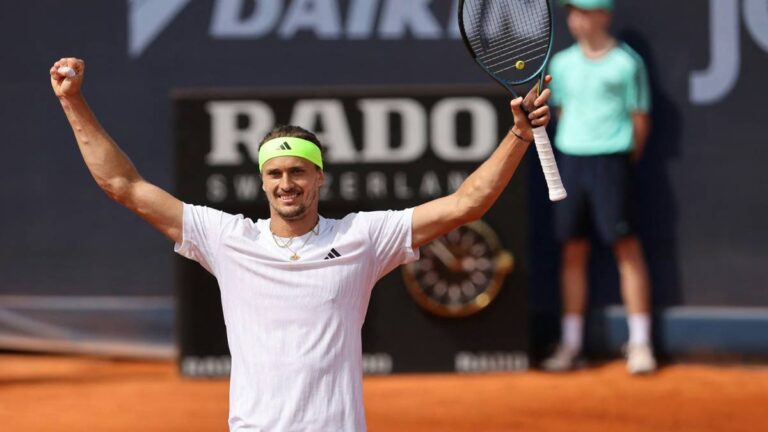
Alexander Zverev aims to defend his title at the ATP tournament in Munich.

Germany’s top player Alexander Zverev will defend his title at next year’s ATP tournament in Munich.

The 28-year-old from Hamburg has confirmed his participation in the clay court tournament, which will be played on the courts of MTTC Iphitos from April 11 to 19.

Zverev: “Munich is like a second home”

“Munich has a permanent place in my calendar and always feels like a second home. The support and atmosphere are simply incredible, and I’m really looking forward to coming back in April,” said Zverev. The world number three is tied with record winner Philipp Kohlschreiber with three victories (2017, 2018, and 2025).

Top ten players Fritz and Shelton to compete in Munich

Zverev’s challengers include top ten players Taylor Fritz and Ben Shelton from the USA. Fritz lost last year’s final to Jan-Lennard Struff, while Shelton was defeated by Zverev in this year’s final.

“The fact that these three players are back with us is a strong sign of the appeal of our tournament. It underlines our commitment to offering fans in Munich tennis of the highest international standard,” said tournament director Patrik Kühnen.