Thursday, March 19, 2026
spot_img
Home Blog

Kane’s announcement: “We will be ready, we fear no one”

Big Champions League nights take place every year in April and May. The 2026 quarter-finals will see the classic between FC Bayern and Real Madrid. After many years, Munich finally want to have the better end for themselves.

Bayern have the reputation of “La bestia negra” at Real Madrid, but this nickname has suffered considerably in recent years. “Then it’s about time,” said sporting director Max Eberl in response to the fact that Bayern’s last win against the Whites came in the semi-final first leg in 2012, which was enough to see them through. Since then, Munich have played Real nine times without success, losing to them in 2014, 2017, 2018 and 2024. Three times in the semi-finals, once in the quarter-finals.

This will be the 14th time the giants have met in a knockout round. FC Bayern came five times, Real Madrid eight times. Most recently, three times, but always with the second leg at the legendary and feared Bernabeu. This time it will be different, as Munich have the slight advantage that the second game will take place at the Allianz Arena on April 15.

With this starting position, Bayern have twice failed to progress against Real, but have done so three times. Including in 2001 on the way to the Champions League triumph, which celebrates its 25th silver jubilee in the spring. Can that be interpreted as a good omen? Rather, it will depend on the performance on the pitch, but even in this respect, Bayern need not be afraid of the Whites, despite all their respect.

Meeting of the two top scorers

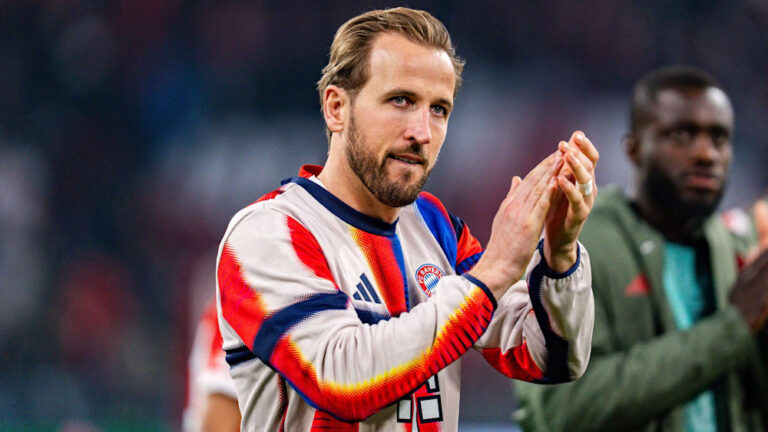
Harry Kane, who scored his ninth and tenth goals of the season in the 4-1 second-leg win over Atalanta Bergamo, agrees: “We’ll be ready. We don’t fear anyone.” It sounds like a crude challenge, but of course the Englishman is aware of the difficulty of the task: “When you play Real Madrid in the Champions League, you always have to expect a tough opponent. You have to be ready for a fight and to play in a certain way.”

Only Real’s Kylian Mbappé has scored more goals than Kane with 13, so this will be a summit of the top scorers, a clash of several top stars on both sides. Real may have the bigger names, Bayern the stronger collective based on impressions this season. Who will come out on top? Completely open, form on the day, luck here, bad luck there. Perhaps, but hopefully not, the referees could also play a role.

Both clubs will have to see how they come out of the upcoming international break, how quickly they find their top form. And they have to hope that all their stars are available. It doesn’t look bad for Bayern. Manuel Neuer, Alphonso Davies and Jamal Musiala are likely to return, so there are plenty of alternatives for coach Vincent Kompany. His team scores enough goals and will have to defend with great concentration and avoid conceding cheap goals to progress.

“The higher the level, the better they get”

Football Europe can rejoice. For the loser, the quarter-finals will mean an early exit from this competition. The winner, on the other hand, will face the next giants in the semi-finals, defending champions Paris St. Germain or Liverpool FC.

All that remains is Kompany’s statement, and as almost always, it’s worth listening to him carefully. That’s why he said in detail: “When you play against Real Madrid, everything is big – for both clubs. Who is the better team at the moment doesn’t play the biggest role. The history of these clubs is enormous and the quality on the pitch will be something very special. It’s often the case against Real: the higher the level, the better they get. That’s why I’m expecting an absolute top match. We want to give the fans – including the neutrals – a great game and, of course, win in the end. No matter who we play: If we press high, then everyone has to get involved. That’s crucial. At the same time, we can also defend compactly and stay calm. Against an opponent like this, you need players with confidence – and we have that confidence.”

The game is just under three weeks away. Until then, patience is required from those involved and fans, and the tension will increase the closer the match gets.
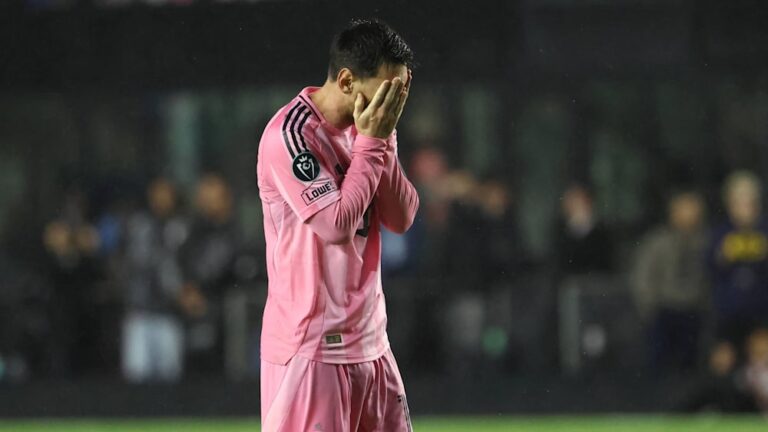
Messi scores 900th goal – and is knocked out like Müller

Without defeat and despite Lionel Messi’s anniversary goal, Inter Miami were eliminated in the last 16 of the CONCACAF Champions Cup. Thomas Müller also experienced a bitter evening.

Inter Miami have already written off their first title of the new season. In the CONCACAF Champions Cup, the equivalent of the European Champions League for teams from North and Central America and the Caribbean, Lionel Messi & Co. were knocked out in the round of 16. Last season, they had advanced to the last four.

The exit was particularly bitter for Inter because it came without defeat. Coach Javier Mascherano’s side were held to a 1-1 draw at home by MLS rivals Nashville SC on Thursday night (CET) after a goalless draw in the first leg. Nashville advanced to the quarter-finals thanks to the away goal.

The hosts had started perfectly: Messi took a pass in the penalty area and finished it perfectly in the tightest of spaces and against several opponents. His sharp low left-footed shot was unstoppable (7th) – and marked a major milestone. It was the 900th goal of the world champion’s career.

Inter’s last home game at Chase Stadium? – Müller without a chance in the end

Nashville were unimpressed, however, and fought their way back after the break. Messi’s compatriot Cristian Espinoza was in the right place after a confusing scene in the penalty area and dusted off the ball to make the final score 1:1 (74′). Hany Mukhtar and his team therefore remain in the competition, the winner of which will be rewarded with a place at the next Club World Cup.

For Inter, it was their first appearance at home after five away games since the MLS Cup triumph in the previous season. And if all goes according to plan, it will also be the last at Chase Stadium in Fort Lauderdale. On the night of April 5 (CET), the MLS home game against Austin FC will take place at the new Nu Stadium.

Like Messi, Thomas Müller also bowed out of the CONCACAF Champions Cup early. The Vancouver Whitecaps, who were only stopped in the final last year and got off to a perfect start in the new MLS season, also lost their second clash with the Seattle Sounders (1-2) after a sobering 3-0 home defeat in the first leg. After Jeevan Badwal (24) gave them the lead at the break, the Canadians still had some hope, but a Sounders double in the closing stages (79/83) finally decided this round of 16 tie.

Why Senegal can count on their chances before the CAS

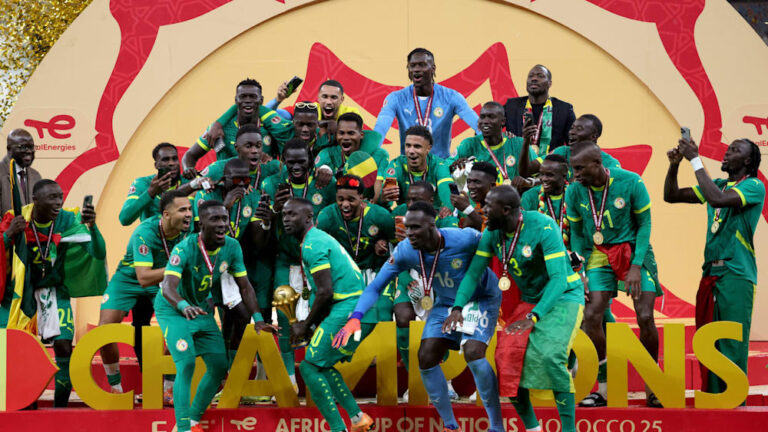
The African Football Association CAF has stripped Senegal of the Africa Cup title. Now the association is taking its case to the International Court of Arbitration for Sport – and can certainly raise its hopes there.

Who will ultimately go down in history as the winner of the Africa Cup 2025/26 is no longer in the hands and feet of the players on the pitch, but in those of the lawyers. After an appeals committee of the African Football Confederation (CAF) surprisingly upheld the Moroccan protest on Tuesday evening and awarded the final 3-0 to the host nation, the Senegalese Football Association announced in return that it would take the case to the International Court of Arbitration for Sport (CAS).

In its statement on Tuesday, the CAF justified its decision with Articles 82 and 84 of the Africa Cup regulations. Article 82 states that if a team withdraws from the competition for any reason, fails to appear for a match, refuses to participate or leaves the field of play before the regular end of the match without the referee’s permission, it shall be deemed to have lost and shall be definitively eliminated from the competition in progress.

As part of the Senegalese team had left the pitch in stoppage time of the final played in mid-January at 0-0 in protest against two controversial decisions by referee Jean-Jacques Ndala Ngambo without the referee’s permission, this article applies here in accordance with the rules. Article 84 continues: “A team that infringes the provisions of articles 82 and 83 shall be permanently excluded from the competition. This team shall lose the match 0:3.

Referee Ndala Ngambo could therefore have stopped the match and awarded it to Morocco after the Senegalese team had gone into the dressing rooms. In this case, Senegal would have had no room for protest. However, because the referee allowed the game to resume and finish after the Senegalese team returned, Sadio Mané’s team can at least have some hope before CAS.

Rule 5 of the international rules authority IFAB gives the referee “full authority” to determine what happens in a match. Rule 5.2 states: “The referee’s decision on facts relating to the match, including whether or not a goal has been scored and the result of the match, shall be final.”

Further inconsistencies arise from the way the CAF ruling came about. Morocco had initially lodged an appeal against the scoring of the match, but the CAF Disciplinary Committee rejected it at the end of January. Morocco appealed against this – and have now been upheld by the relevant appeals committee. The question that now arises: Was this appeal even possible

On what basis did the disciplinary committee make its decision?

After all, article 44.1 of the Africa Cup regulations states: “An appeal may be lodged with the Appeals Committee against the decisions of the Organizing Committee and the Disciplinary Committee, but not against decisions that have been determined as final.”

However, it remains unclear whether the decision of the Disciplinary Committee was considered final. However, Article 44.5 states that “During the final round of the Africa Cup, all decisions of the Organizing Committee and/or the Disciplinary Committee, except those relating to the application of disciplinary measures based on the reports of match officials, shall be final and non-appealable.”

This raises the crucial question: was the decision of the disciplinary committee based on the referee’s reports? If not, then the Moroccan appeal would not have been legal under Article 44.1. Because the decision of the disciplinary committee was communicated in January without further justification, there are also a lot of question marks here.

The exact interpretation of the paragraphs is now in the hands of the CAS. However, the Senegalese protest is not completely hopeless.


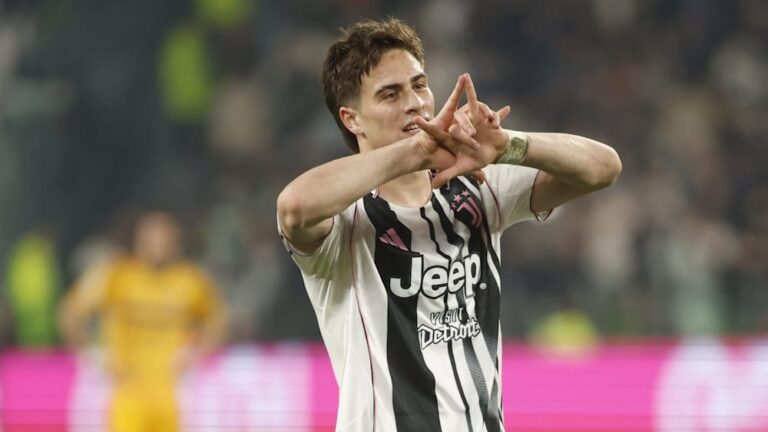
“Never felt confidence”: Yildiz found it easy to leave Bayern

Despite his eleven years in Munich, Kenan Yildiz looks back on FC Bayern without nostalgia. In an interview, the Juventus striker talks about problems with the German record champions – and the DFB.

Kenan Yildiz joined FC Bayern’s youth department at the tender age of seven and played in all the youth teams up to the U19s. After eleven years with the German record champions, the Regensburg-born striker finally moved to Juventus Turin in Italy, where he quickly established himself in the professional team and is now an absolute regular (38 appearances including ten goals in the current season). It was only in February that Yildiz extended his contract with the Old Lady until 2030.

The now 20-year-old does not look back on his long time in Munich with nostalgia. On the contrary: “It was easy to leave FC Bayern,” said Yildiz in an interview with Corriere dello Sport. “There were a lot of problems with Bayern. I was there for eleven years, but I never felt their trust. There was always someone better than me.”

DFB squad was never up for debate

And it wasn’t just FC Bayern, but also the DFB, that Yildiz felt under-appreciated, as he explains in the interview. That’s why playing for the DFB team was never an option. “In Germany, I wasn’t considered good enough, they always nominated other players,” says Yildiz: “That’s why I decided to play for the Turkish national team.”

The son of a Turkish father and a German mother already played for the Turkish team at U17 and U21 level. In October 2023, just one year after leaving Munich, Yildiz finally made his debut for the Turkish senior national team at the age of 18. To date, the 20-year-old has played 26 international matches for Turkey (five goals) and was a regular for Germany at Euro 2024,

At the end of March, Yildiz will now face some groundbreaking international matches: In the play-offs, Turkey will first face Romania (March 26, 6 p.m.) and – assuming a win in the first clash – then Slovakia or Kosovo (March 31) to qualify for the World Cup finals for the first time since 2002. A clash with the DFB team would be possible in the USA as early as the round of 16.

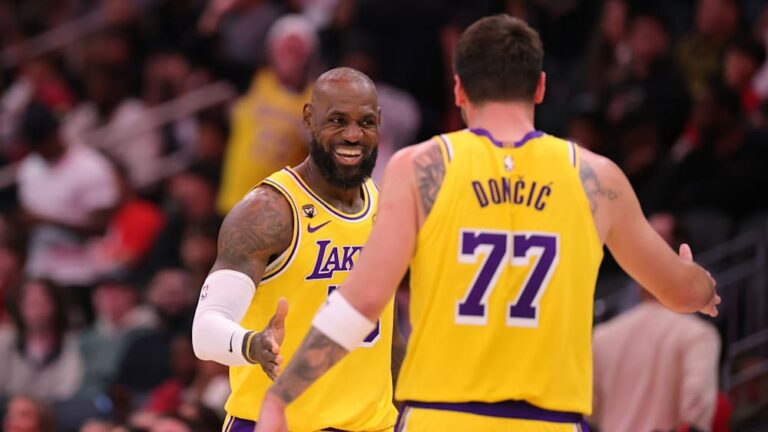
Doncic dominates, LeBron historic: Lakers continue winning streak in Houston

0

The Los Angeles Lakers remain in top form and extend their winning streak. Led by Luka Doncic and LeBron James, they decide an intense duel with the Houston Rockets in their favor late on.

The Los Angeles Lakers celebrated their seventh win in a row with a 124:116 victory at the Houston Rockets and have won ten of their last eleven games. In a game that was open for a long time, the visitors only pulled away decisively in the final spell – once again buoyed by their superstar duo.

Luka Doncic excelled with 40 points, ten assists and nine rebounds, narrowly missing out on a triple-double. LeBron James also put in an outstanding performance: 30 points on an outstanding 13 out of 14 shots from the field and five rebounds. With his 12,002nd rebound, the veteran also broke the 12,000 mark and reached another milestone in his career.

Decision comes late: Doncic makes the difference

The game remained close right into crunch time. After the Rockets had taken the lead at one stage (105:102), the Lakers struck back with back-to-back threes by Rui Hachimura and Doncic. In the final minutes, an alley-oop from Doncic to James and another three by the Slovenian made the final decision.

Houston held out for a long time, led by Alperen Sengün, who added 27 points and ten assists on his comeback. Amen Thompson also impressed with 26 points and 11 rebounds. Kevin Durant, on the other hand, remained inconspicuous for a long time and only scored 18 points late on. In the end, however, the Rockets lacked the consistency to stop the Lakers’ streak.

Valentino Rossi listens carefully: Dani Pedrosa reveals his recipe for rain

A dinner with MotoGP legends led to a revealing conversation – Dani Pedrosa explained to Valentino Rossi his path to becoming a rain specialist

On the occasion of the last Grand Prix of the past season in Valencia, the organizers of the MotoGP World Championship gathered the legends who had just been honored as members of the “Hall of Fame” around a table. A select circle of the most important riders in history.

Dani Pedrosa and Valentino Rossi sat next to each other at the dinner, which was also attended by Giacomo Agostini, Jorge Lorenzo, Casey Stoner, Freddie Spencer and Kevin Schwantz. This led to one of the most interesting conversations captured by the cameras.

In this conversation, the Spaniard explained to the Italian in detail the strategy he used to master riding on a wet track after many setbacks, crashes and injuries. For a long time, this was one of his biggest weaknesses.

In contrast to most of the riders on today’s grid, Pedrosa only trained on the bike when he felt it was necessary, whereas in everyday life he preferred to train in the gym or ride his bike.

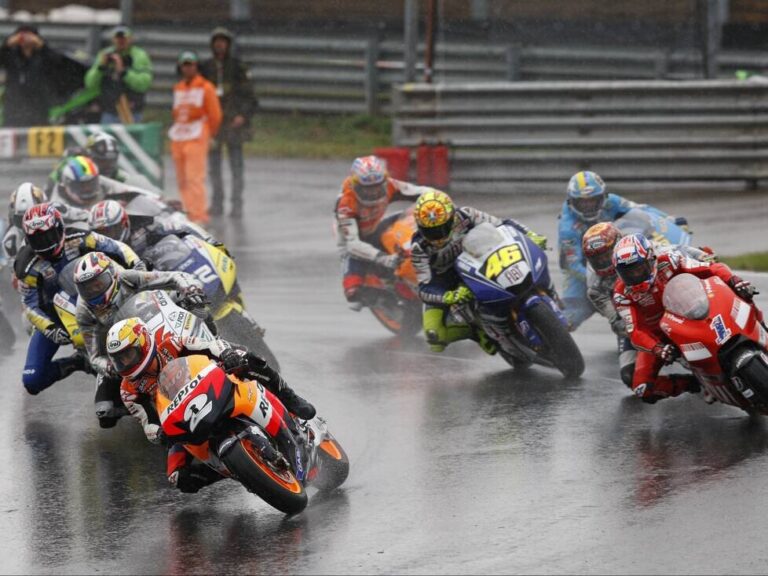
However, this routine changed after his crash at the 2008 German Grand Prix, when the Sachsenring was soaked by rain. Despite this, Pedrosa led the race with a commanding lead after the early stages.

The Honda rider had just completed the fifth lap and had already opened up a lead of more than seven seconds over Casey Stoner (Ducati), a specialist for such conditions.

The lead was apparently too big for the Spaniard. He crashed at the end of the straight, crashed into the barrier and injured his arm. In the end, Stoner won the Grand Prix by around four seconds ahead of Rossi (Yamaha).

“That’s when I said to myself: That’s it!” Pedrosa told MotoGP.com. “In the rain, I didn’t really understand where the limit was. I decided that I had to do something to improve, because I thought that I was always losing the championship because of the rain races.”

“So I took the supermoto bike on a rainy day and went to the kart track. I crashed on the first lap. Then I tried to get the tires up to temperature, went out again, and boom – I crashed again.“

”At that moment, I understood that you can’t grasp anything like that because the asphalt on kart tracks is very slippery.” So Pedrosa turned to his sponsor and mentor at the time, Alberto Puig, who himself had ridden in the motorcycle world championship for ten years.

“So Alberto and I started to think about what we could do,” Pedrosa continues. Puig lives in the northern part of Barcelona, but spends a lot of time on a family estate in Cardedeu on the outskirts of the city.

This area is surrounded by hills that can be reached via winding roads. “When Alberto saw that a rainy day was coming up, he would call me and I would go. We’d both put on our leather suits and rain gear.“

”We’d take money with us to fill up the tank in case we ran out of gas, and then we’d set off. Uphill, downhill, one behind the other.” Pedrosa learned to ride in the rain on normal country roads, on public roads.

“From then on, I turned things around and got podium finishes and the odd win in the wet.” He won in the rain for the first time in Sepang 2012. Shortly afterwards, he won in Valencia in wet conditions. Further rain victories followed at Le Mans 2013 and Motegi 2015.

With 31 victories, Pedrosa is the most successful rider in the MotoGP class never to become world champion. In 2003, he won the world title in the 125cc class, followed by titles in the 250cc class in 2004 and 2005.

Frustration among fans: What David Coulthard says about Formula 1

0

Former Formula 1 driver David Coulthard reacts to the mixed reactions to the new 2026 regulations – a meeting with a fan causes a stir

Former Formula 1 driver David Coulthard has called on fans to give the new regulations a fair chance before making a final judgment. The 2026 season marks the beginning of a completely new era in the premier class. So far, however, reactions in the paddock and in the stands have been rather mixed.

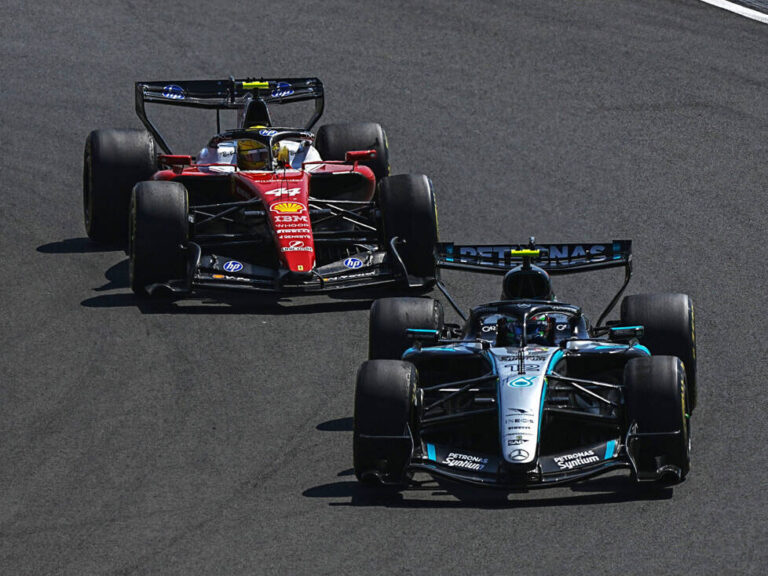
While critics mainly criticize the “artificial” overtaking, the so-called “superclipping” and the extreme energy management of the drivers, others celebrate the thrilling season opener in Australia – above all the intense duel between George Russell and Charles Leclerc for the lead.

The numbers speak for themselves: the race in Melbourne featured a whopping 120 overtaking manoeuvres, compared to just 45 in the previous year 2025.

High-end customer frustrated

In an episode of the Up To Speed podcast, Coulthard recounted an encounter at the airport after the start of the season that illustrates the current dichotomy. “I was standing behind a man who was even older than me at passport control when I left Australia. He said: ‘I’m done with Formula 1. I go to six Grands Prix a year, own all the Ferrari models and am waiting for my RB17 to be delivered’ – a car costing five million pounds,” said Coulthard.

“So we’re talking about a real high-end customer here. And he said, ‘I don’t want to see managers, I want to see racing drivers’. I replied to him: ‘Okay, I understand you, but let’s give it some time’.”

From his own perspective, the Scot can certainly see the positives in the new era. “Looking at it from my point of view, I really enjoyed the first few laps of the Grand Prix. There were overtaking maneuvers and direct counterattacks. The drivers first had to figure out how best to use the tools at their disposal. But hasn’t that always been the case?”

Does Formula 1 need more time?

The 2001 world championship runner-up draws a historical comparison: “When Cosworth came along with the DFV engine, the rules of Formula 1 were rewritten. Anyone who didn’t have this engine could basically forget about it. That’s why I think we have to be patient.”

According to the Scot, the top talents will adapt anyway: “The best drivers will always be able to make the best use of the resources available. I think we’re seeing some interesting tactics at the moment. Mercedes probably didn’t give its customer teams the information [about the drive] until quite late. Why wouldn’t they? They’re not in the business of letting McLaren or other customers win.“

Coulthard’s conclusion before the second round of the season in China, which has now been completed: ”As we know, things change quickly in Formula 1. Let’s have this conversation again in six months’ time.”

Media report: Saudi Arabia wanted to save the Grand Prix

0

According to a media report, Saudi Arabia was determined to hold on to the Grand Prix in April and allegedly offered Formula 1 special security guarantees

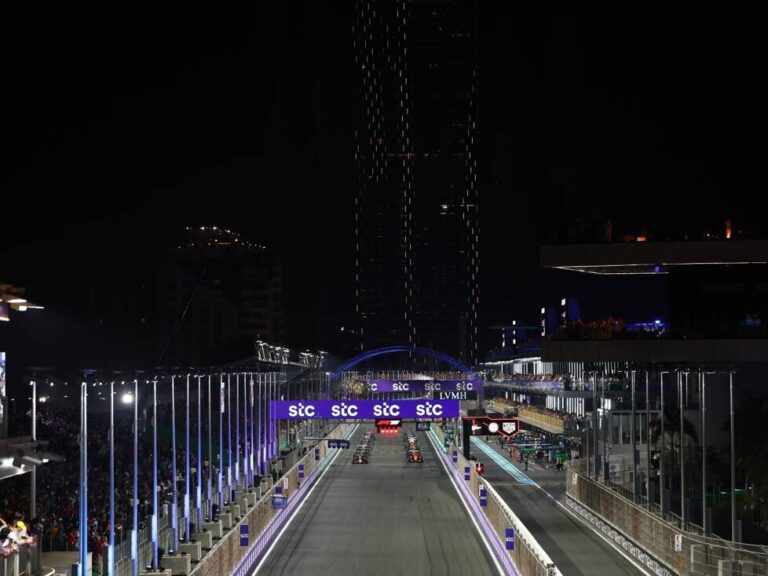
The Formula 1 races in Bahrain and Saudi Arabia cannot take place in April as planned. The current war in the Middle East means that it will not be possible to hold the two Grands Prix safely in a few weeks’ time.

Sport Bild now reports in the current issue that Saudi Arabia in particular is said to have tried to prevent a cancellation at all costs. The talks focused on security guarantees for the premier class.

The report states that Saudi Arabia “offered Formula 1 the prospect of a special missile defense system for the Jeddah Corniche Circuit”. However, this did not lead to the Grand Prix taking place after all.

FIA President Mohammed bin Sulayem justified the cancellation of the two races a few days ago as follows: “The FIA will always put the safety and well-being of our community and our colleagues first.”

“We made this decision after careful consideration and we were fully aware of this responsibility,” said the President. Bahrain and Saudi Arabia have been repeatedly bombarded with drones and missiles from Iran since the start of the war.

Formula 1 already had experience of a missile attack in Jeddah in 2022. Back then, Houthi rebels fired on a factory belonging to the oil company Aramco during the Grand Prix weekend.

At the time, there were also lengthy discussions about canceling the weekend, but in the end the Grand Prix went ahead as planned. Four years later, the decision has now been made to cancel the race in advance.

Formula 1 is expecting a break of more than a month after the Japanese Grand Prix in Suzuka (March 29) as a result of the cancellation of the two races. It will not resume until five weeks later with the Miami Grand Prix in the USA (May 3).

Iran war forces Qatar postponement, Marc Marquez: “Peace is the most important thing”

The Iran war forces MotoGP to change its calendar – Marc Marquez warns that peace and security must be established in the region

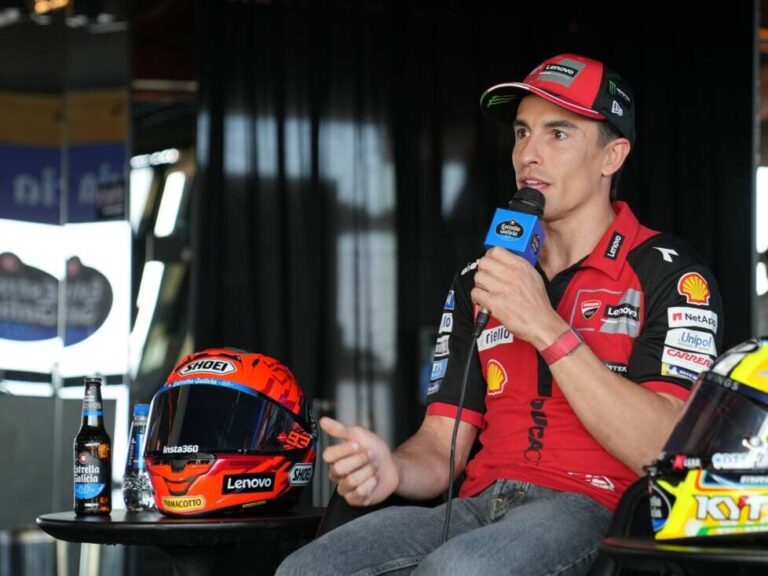
Marc Marquez brought forward his trip to Brazil by a day to attend an event with one of his personal sponsors in Sao Paulo ahead of the new Grand Prix, which takes place this weekend in Goiania.

MotoGP is returning to the South American country after more than two decades and will be held at a completely rebuilt and modernized circuit, the Autodromo Ayrton Senna in Goiania. This is where the first three Grands Prix in Brazil took place between 1987 and 1989.

Although the track consists mainly of right-hand turns, Marquez, a proven specialist for counter-clockwise courses, hopes to call on his well-known strength and win the first race on a new track.

He succeeded in doing so last year at the premiere in Balaton Park and previously at the debuts of Buriram, Termas de Rio Hondo and Austin. “As soon as we arrived in Brazil, you can clearly feel the enthusiasm surrounding this event,” said Marquez at the event in Sao Paulo.

“The fact that MotoGP is returning to Brazil after so many years is something very positive for the championship and all the fans. To see that all the tickets are completely sold out shows how much anticipation there was for this return.“

”It will be an intense weekend and the aim is to be competitive from the first moment and give everything on the track,” says the Ducati rider. After the season opener in Thailand, Marquez traveled to Brazil in eighth place in the world championship.

When asked about the recent calendar changes due to the Iran war, which saw the races in Portimao and Valencia postponed to accommodate the Qatar Grand Prix at the end of the season, Marquez put peace in the region above all other concerns.

“The most important thing is to end the conflicts to ensure peace and security in these areas,” emphasized the 33-year-old. One week after the race in Brazil, the MotoGP moves on to the USA and holds the Grand Prix in Austin in the state of Texas.

Moreira excited about his home race

If Marquez embodies the present of MotoGP, then the young rookie Diogo Moreira is the most promising future for the championship. The young 2025 Moto2 World Champion also took part in the event in Sao Paulo.

“We’ve been talking about the Brazilian Grand Prix for many months and you can feel the anticipation,” emphasized the LCR Honda rider. “It’s something very special for me: even as a small child, I dreamed of racing MotoGP at home.”

“For this to become a reality this season is incredible. I believe that all Brazilian fans are experiencing this with the same emotions. The fact that the tickets are sold out shows how much they have wanted our return.“

”It will be a very intense and emotional weekend,” said Moreira, referring to the hype surrounding him. “We are only at the second race of the year, so the aim is to continue to understand the bike better and adapt to the class step by step.”

“Nevertheless, we will arrive motivated and with a lot of self-confidence. A home race always gives you an extra boost and we will do everything we can to make sure the fans have fun.” In his first Grand Prix in the premier class, Moreira finished 13th in the championship points.

The deep fall of an unfinished man

0

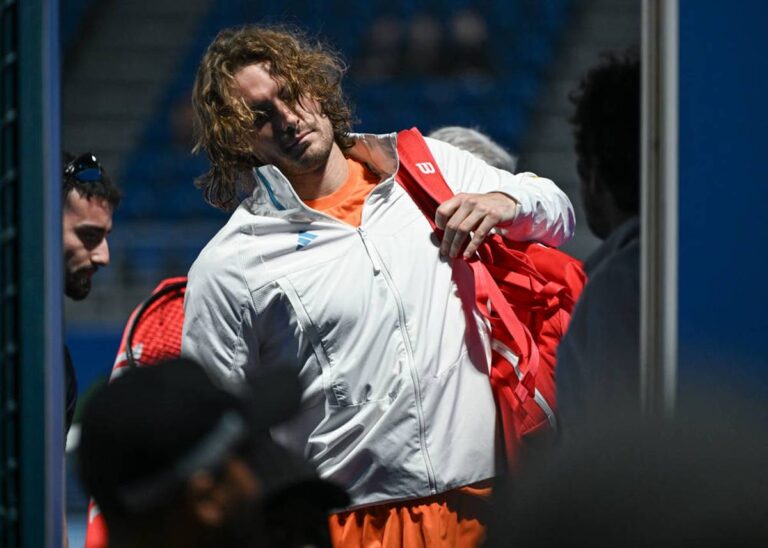
Former top star Stefanos Tsitsipas is experiencing the most difficult phase of his career. One early exit followed the next and he was plagued by physical problems. Now the Greek has even dropped out of the top 50.

Stefanos Tsitsipas is regarded as the best tennis player in Greek history. At the beginning of his career, he was even expected to become number 1 and win a string of Grand Slams. No wonder, as the Greek even defeated the Big Three of Novak Djokovic, Rafael Nadal and Roger Federer at a young age and won the ATP Finals. He fought his way up to third place in the world rankings and seemed to be well on his way to conquering the tennis world.

Fast forward six or seven years and the present looks very different. Although he has also reached two Grand Slam finals, one of which he lost after leading in two sets, this was followed by a fall that has now reached its sad low point. After his first-round exit in Indian Wells, Tsitsipas even slipped out of the top 50 – his worst ranking in eight years.

The tennis mystery surrounding Stefanos Tsitsipas

The drop in performance is no coincidence. For around a year now, the Greek has failed to return to his former consistency and has barely managed more than two wins in a row.

Tsitsipas has also recently experienced disappointment at his favorite tournament, the Australian Open. After reaching the semi-finals there three times and the final once, which he lost to Djokovic in 2023, the Greek was eliminated in the second round at the beginning of the year.

The failures coupled with physical problems even took the joy out of tennis for the 27-year-old for a while. “Even when I won the tournament in Dubai, I was unsure whether I would be able to maintain my level or continue playing at all. It got worse and worse over the course of the spring, and I finally stopped enjoying the game.”

Even ending his career before the age of 30 doesn’t seem out of the question at the moment – that would be a huge shame, as his path to the top of tennis seemed to be mapped out.

Tsitsipas: Steep ascent followed by steep descent

He first appeared in the top 500 of the world rankings back in 2016, one year later he was already in the top 100. Two years later he was finally named “Most Improved Player of the Year” and established himself in the world elite over the years.

The Greek player achieved his best ranking in August 2021 with third place. He also established himself in the top five in the two years that followed and was regularly one of the hottest contenders for titles.

However, this was followed by a turnaround, a negative trend consolidated, all the defeats against the biggest stars around Djokovic gnawed at his self-confidence, which was now increasingly evident in inexplicable performances, even against weaker players.

There were other influences outside of the tennis court that could be linked to the decline in sport. On the one hand, his love affair with tennis pro Paula Badosa came to an end.

Successful coaches kept coming on board and his otherwise influential and vocal father Apostolos Tsitsipas was supposed to step back a little – but this agreement often didn’t last long and coaches such as former pro Goran Ivanisevic, who also publicly criticized him, often resigned quickly. His father also officially returned to the Tsitsipas team, which has done little to help his career so far.

Tsitsipas even hints at early career end

At the same time, Tsitsipas has recently been struggling more and more with physical problems, which have also had an impact on his mental state. His back in particular has caused the Greek a number of problems in recent months.

After his defeat at the US Open 2025 against the German Daniel Altmaier, Tsitsipas spoke openly about his situation: “I was really worried about my back because I couldn’t walk for two days. When something like that happens, you start to think about the future of your career.”

How much these thoughts are on his mind was also evident in October 2025 at the Six Kings Slam in Saudi Arabia. After a clear defeat against Jannik Sinner (2:6, 3:6), Tsitsipas said: “When you’re not fit, in such a bad condition – all the time and not just one or two weeks – then a lot of thoughts go through your head.”

He also spoke openly about phases in which he asked himself fundamental questions. “Why am I doing this? In the end, it’s more important to me to be happy and free than to have problems because of pain because of the sport I love. I would rather put an end to it if it goes on like this,“ Tsitsipas stated.

Last year, the 27-year-old was still looking forward with confidence to a more successful and pain-free new tennis year: ”I hope it will be different in 2026, that’s my biggest wish.” However, neither the problems with his back seem to have disappeared completely, nor does the return to more sporting success seem to be working out.

Tsitsipas is now trying to turn things around at the Miami Open – if he fails early again, his doubts as to whether it all makes sense will probably only increase.