Thursday, March 12, 2026
spot_img
Home Blog

St. James’ Park? Lost fan ends up in Exeter and misses Barca game

A FC Barcelona fan wanted to go to Newcastle to watch the Champions League round of 16 game. However, he got confused about St. James’ Park. He ended up somewhere completely different, but still got to see a soccer game.

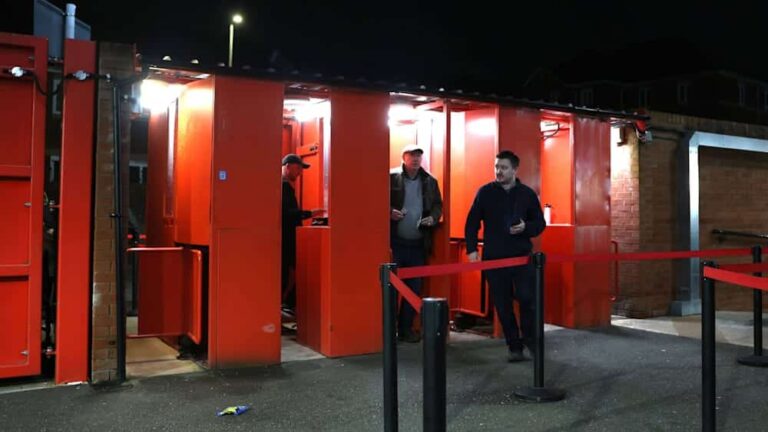
A FC Barcelona fan who wanted to attend his team’s Champions League match in Newcastle, northern England, on Tuesday made a fatal mistake on his journey there. Instead of St. James’ Park in Newcastle, the Spaniard traveled 580 kilometers to St. James Park in Exeter, southwest England, according to the AP news agency, citing the English third-division club. In the end, it was probably a single apostrophe that distinguished the two stadiums in their spelling. The fan from Spain arrived at the stadium gates shortly before kickoff of Exeter City’s game against Lincoln City on Tuesday evening. “It was only when he showed his ticket to the staff that he realized his mistake,” the club said on social media. A stadium employee had alerted the club to the man’s predicament. At least he was lucky in his misfortune that a soccer game was taking place at almost the same time and he wasn’t standing in front of completely empty gates.

Fan representative: “He was pretty down and a little embarrassed.”

“As far as we know, he came from London. I guess he typed St. James’ Park into his phone and then just followed the directions,” said Adam Spencer, fan representative for Exeter City, who also admitted that he didn’t get much out of the Barca fan because his English wasn’t very good. That’s why it wasn’t clear whether he had traveled from Spain or lived in London. In any case, his mood matched the situation. “He was pretty down and a little embarrassed. So we got him a ticket and he was able to watch the game at the real St. James’ Park. He’s welcome back anytime.”

While the Barca fan in Exeter watched the home team lose 0-1 to league leaders Lincoln City at St. James Park (without an apostrophe), which has a capacity of just over 8,000, FC Barcelona salvaged a 1-1 draw in the first leg of the round of 16 at St. James’ Park (with an apostrophe) in Newcastle in front of 52,103 spectators after a penalty goal by Lamine Yamal in extra time secured a 1-1 draw in the first leg of the round of 16 at Newcastle United.

Arteta’s praise for Havertz: “That speaks volumes for him”

Arsenal FC got off lightly in Leverkusen, returning home with a 1-1 draw. Ironically, it was at his former club that Kai Havertz came to the Gunners’ rescue – and received special praise for his efforts.

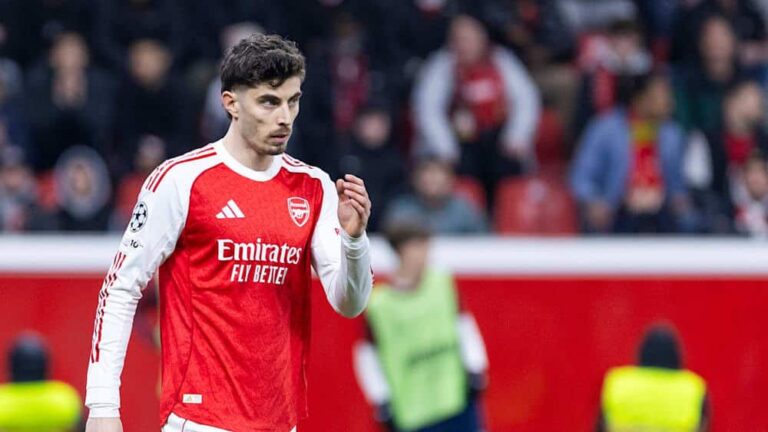
“Last-minute penalties aren’t always that easy,” Kai Havertz told Sky after the 1-1 draw at the BayArena, emphasizing that “these are the moments I’ve worked for. I’m very happy about that.” Arsenal were equally pleased, as the converted penalty significantly improved their starting position for the return leg at home in a week’s time. “It was an important moment in the game, given the score. The fact that Kai remained calm and composed speaks volumes for him,” said coach Mikel Arteta, praising the 26-year-old who had come off the bench to score.

The goal threat posed by substitutes is one of the Gunners’ strengths anyway, with this being the seventh time in the current competition that a player has scored from the bench – no other team in the Champions League can match that. “That’s the great strength of this team,” Arteta knows, referring to what makes them special: “The number of goals and assists scored by the whole team. It’s incredible, it’s our greatest strength, and we have to maintain it.”

Mixed conclusion from Arteta

The Spaniard is unlikely to want to maintain the way the English league leaders presented themselves in Leverkusen. That was mixed, to say the least. “In the first half, we had phases where we were very dominant, but in the final third, we failed to convert our chances,” Arteta summarized, annoyed by simple mistakes in build-up play that allowed Bayer to “launch counterattacks. And that’s a team that’s very dangerous in that regard.”

The start of the second half was really disappointing. “We had to change a few things and were hoping to start really strongly,” revealed the 43-year-old, noting that “the exact opposite happened. We were caught cold right after the kickoff.” Arteta also pointed to Martin Terrier’s big chance, whose header David Raya saved with a great reaction. “They could have scored immediately,” said Artea, noting Robert Andrich’s 1-0 goal: “Then they scored in the next move after the free kick, which was very, very disappointing for us.”

However, he went on to praise his team’s emotionally mature performance, saying they didn’t panic and were rewarded with the equalizer. Now the Londoners have their fate in their own hands at home at the Etihad. “I can’t wait,” said Noni Madueke, who won the flattering penalty for the English side, adding optimistically: “I’m confident that we will accomplish our task.”

“The concentration of money poses a risk”

The consolidation of national competitions through funds from UEFA club competitions is a thorn in the side of many. The Union of European Clubs (UEC) is now presenting a radical redistribution model to remedy the situation.

Without the Club World Cup, as honorary president Uli Hoeneß explained a few months ago, even FC Bayern would have been in the red in 2024/25. But as we all know, one man’s joy is another man’s sorrow. Because one thing is also clear: from a German perspective, even without the expanded FIFA event, Munich already had the highest revenues from international club competitions last season, further cementing its position as number one in Germany.

These high distributions from UEFA are not only a problem for the Bundesliga in terms of the title race; the question of cementing competition arises in almost all national leagues.

€4.4 billion in revenue – and how it is distributed

Swiss Claudius Schäfer, president of the European Leagues (EL) association, recently warned of “significant distortion.” At the EL’s annual general meeting, representatives of the Union of European Clubs (UEC) presented a plan to counteract this development. And it’s safe to say that this plan will meet with little approval, especially among representatives of the big clubs and their association, the EFC (formerly ECA), with Paris Saint-Germain CEO Nasser Al-Khelaifi at the helm, who has a changing conflict of interest.

The UEC, which primarily represents small clubs and clubs from the middle and lower leagues of Europe, is calling for a change in the distribution model for prize money for UEFA club competitions. Of the current €4.4 billion in revenue, €3.317 billion in prize money remains after deducting organizational costs (€387 million), solidarity payments (€440 million), payments to the Women’s Champions League and the Youth League (€25 million), and UEFA’s share (€231 million).

Of this, 27.5 percent is distributed as a starting bonus and 37.5 percent as a performance bonus, while 35 percent is distributed as a value bonus, which takes into account not only the strength of the national media market but also a club’s performance over the past ten years. A look at the previous season shows how this works: both VfB Stuttgart and RB Leipzig were eliminated in the league phase of the Champions League, but the Saxons earned around €20 million more than the Swabians through this pillar.

Financial differences with a factor of 79.8

And it is precisely this value premium, which at least helps to cement the status quo internationally, that the UEC wants to abolish and distribute differently. In the first step, this would increase the total prize money for all three UEFA club competitions from €3.317 billion to €3.525 billion, because the solidarity payments would be eliminated.

This is because, according to the UEC, the entry fees should be distributed entirely among the national leagues. 85 percent would be distributed equally among the respective first division clubs, and 15 percent among the second division clubs. In addition, the pots between the competitions are to be redistributed: The Champions League, which currently accounts for 74 percent of the prize money, would “only” receive 50 percent, with the Europa League (17 to 30 percent) and Conference League (9 to 20 percent) receiving the rest – so that smaller clubs and nations could also benefit more. This will not be welcomed in Munich, at FC Barcelona or FC Arsenal, and certainly not at the EFC.

However, the basic idea behind it is definitely worth discussing, because the figures presented by the UEC to the leagues in Sofia on Wednesday are alarming: in Portugal’s Primeira Liga, the club with the highest revenue currently earns 79.8 times as much as the club at the bottom of the table in economic terms. In Ligue 1, this factor is 46.1, in the Eredivisie 19.9, in Serie A 8.1, and in La Liga 6.7. According to the paper, the UEC distribution would at least close the gap somewhat without destroying the good starting position of the top earners.

Applied to the 2024/25 season, the factors would then be 11.4 in Portugal, 7.7 in France, 5 in the Netherlands, 4.4 in Italy, and 4.2 in Spain. The extreme example is Ukraine, where the factor is currently 134.8; the UEC reform would reduce it to 3.2.

These factors show that UEFA prize money cements competition, especially in the medium-sized and smaller soccer leagues.
But even in the major leagues, they naturally reinforce the pole position of the leaders. Although the argument also applies here: clubs such as Bayern have fought for their position for decades, both athletically and economically.

“Playing in Europe is a dream for thousands of soccer clubs. But the concentration of money at the top of the sport poses a serious risk that UEFA club competitions will become boring and predictable, with the same clubs represented in the later rounds year after year,” explains a spokesperson for the UEC, which recently proposed a player development fund. “With the sale process for UCC media rights officially underway from 2027, now is the time to rethink what we do with the revenue from the Champions League and other European competitions.”

The UEC hopes that its reform proposal, which is to be introduced gradually over a five-year transition period so as not to upset current financial plans, will strengthen national competitions and result in growth in media revenues. “Less distortion domestically / healthier conditions? More excitement, closer races, more meaningful qualifying battles for Europe,” says the position paper presented in Sofia, adding: “Greater interest in national competitions? Higher long-term media/commercial value that benefits all clubs, not just the European regulars.”

More exciting championships for more revenue

In fact, an exciting championship battle can be beneficial, as the German Football League experienced during the recent national media rights tender in early summer 2024. At that time, Bayer Leverkusen surprisingly overtook FCB for one season after its eleven-year title streak, and DFL revenues even grew slightly against the sharply declining pan-European trend. However, it is doubtful whether a majority can be found for the UEC idea, not least against the backdrop of the EFC’s high level of influence, which it can exert through its joint venture with UEFA.

“Are we going to allow increasing polarization and predictability to ruin the magic of soccer for those who love our sport? Or is there a sensible way to distribute UEFA club competition revenues in a way that strengthens clubs, leagues, UEFA competitions, and the entire pyramid?”

A rhetorical question that the UEC is asking itself. The answer from the perspective of the interest group: “The UEC and our member clubs believe that there is another way. And if UEFA and its partners are brave enough to look beyond short-term interests and political pressure from Europe’s most powerful clubs, many of which were actively involved in the failed Super League initiative, a serious discussion is on the cards that could benefit European soccer as a whole.”

Before clash with Reus: No US visas for ten players from Jamaica’s runners-up

Ahead of the CONCACAF Champions Cup round of 16 match against Los Angeles Galaxy, ten players from Jamaican runners-up Mount Pleasant have been denied visas for the US. The case is likely to raise concerns about the World Cup in the summer.

The World Cup in Mexico, Canada, and the US next summer is casting its shadow. There are ongoing concerns, particularly regarding the restrictive visa policy of the US administration under President Donald Trump. How this could affect soccer is currently being demonstrated in the CONCACAF Champions Cup, the Champions League of North and Central America.

Jamaican runners-up Mount Pleasant are set to face Marco Reus’ Los Angeles Galaxy in the first leg of the round of 16 on Wednesday (local time; Thursday, 2:30 a.m. CET). However, it has been announced that ten players from the club will not receive visas for the US. Among them are seven Haitian citizens.

An interesting twist for the upcoming World Cup: Haiti, which is on a list of 19 countries whose citizens are currently subject to a general entry ban into the US, has qualified for the World Cup in the summer and is scheduled to play its three preliminary round matches in the US. Although World Cup participants are officially exempt from the entry restrictions, the rules for the Champions Cup have been unclear until now.

Will CONCACAF find a solution?

Paul Christie, sporting director of Mount Pleasant Club, sharply criticized the actions of the US authorities. “We don’t just want to be there for the game, we want to fight for the win. But we’re not being given the opportunity to field our best team,” he told the Jamaica Observer newspaper. Although media reports suggest that CONCACAF is working on a quick solution, the North and Central American continental association has not yet issued a statement. The Jamaican runners-up therefore traveled to California with an improvised team. Only 18 players are in coach Theodore Whitmore’s squad, including five players from the club’s own youth team and several players from Jamaica’s U-20 national team.

Third quarter decides: Chemnitz fights hard but is eliminated in Ljubljana

The NINERS Chemnitz have been eliminated from the EuroCup. In the knockout game in Ljubljana, the Saxons lost to Cedevita Olimpija 65:73.

Chemnitz got off to a decent start in Ljubljana and kept the game open from the outset. After an evenly matched first quarter (15-16), the NINERS even took control at times in the second quarter and went into halftime with a narrow 39-36 lead. However, the game turned around after the break. Cedevita made significant defensive changes and gave the visitors little room to maneuver in the third quarter. Chemnitz only managed to score seven points in this quarter, while the hosts built up a decisive lead.

Chemnitz fights back, hosts respond

In the final quarter, the NINERS fought their way back into the game, but were unable to significantly reduce the deficit. In the end, Ljubljana prevailed 73-65, securing its ticket to the quarterfinals, where a duel with JL Bourg-en-Bresse now awaits. DJ Stewart led the hosts’ scoring with 14 points. Umoja Gibson contributed twelve points and six assists, while Andrej Nikolic scored eleven points. Amadou Sow was the top scorer for Chemnitz with 13 points, while Aher Uguak contributed 12 points and Kevin Yebo had 11 points. This ends NINERS Chemnitz’s first EuroCup season in the round of 16.

Max Verstappen reveals: Contact with Helmut Marko continues

0

The Australian Grand Prix was the first race for Red Bull without Helmut Marko: What has changed for Max Verstappen as a result and why contact still continues

It was all over after last year’s Formula 1 season: just a few days after the final race in Abu Dhabi, Red Bull announced that Helmut Marko would be stepping down from his role as motorsport advisor at the end of 2025. The 82-year-old Austrian had been with the team for over 20 years and leaves a gap – especially for Max Verstappen.

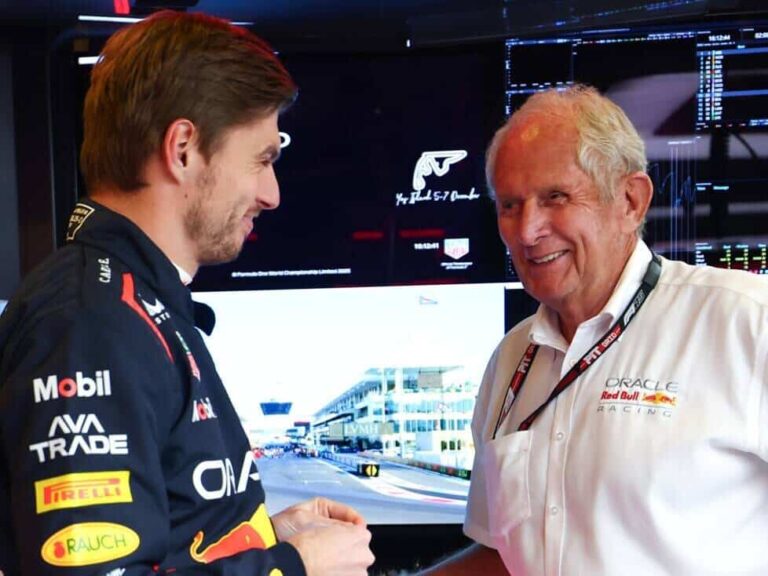
The start of the new season marked the first race without Marko. But what will actually change in the Red Bull garage this year? “Maybe there will be a few less Austrian jokes from Helmut, but I’m still in contact with him,” Verstappen reveals with a smile.

The Dutchman, who was discovered and promoted by Marko, continues to maintain a close relationship with the Austrian. What do the two talk about now that Marko is no longer with Red Bull? “Maybe not so much about the details of the car, but more about life,” says the four-time world champion.

Verstappen admits: “It will feel a little different.”

Verstappen even admits that the loss of the Austrian is quite noticeable for him on race weekends. “I’ve shared so many moments with him, so of course it will feel a little different in the pits, but you also have to look ahead,” the 28-year-old emphasizes in Australia.

However, the first race without his long-time mentor did not go as planned for Max Verstappen: After an accident in qualifying, the Red Bull driver had to start from the back of the field, but after a solid comeback, he still managed to finish in sixth place, thereby limiting the damage somewhat.

However, it seems unlikely that Marko’s departure from Red Bull will have a profound effect on the Dutchman. “You have to think about performance,” says Verstappen, dismissing the idea of worrying too much about it. “But at the same time, as I said, we have a great relationship and will stay in touch anyway.”

Alexander Albon reveals: Why his engagement plan went completely wrong

0

Williams driver Alexander Albon talks for the first time about his engagement to Lily Muni He – Why the original plan in Bhutan fell through because of a ring

Williams driver Alexander Albon has revealed details of his engagement to pro golfer Lily Muni He – and explained why the original plan for the marriage proposal went completely wrong. The couple had announced the news on social media over the winter. “I guess we’re stuck with each other now,” they both wrote in a joint post.

Ahead of the season opener, the Australian Grand Prix, Albon gave deeper insights into the process during a fan event while on stage with his teammate Carlos Sainz.

“I actually wanted to do it earlier,” Albon admits. “I was in Thailand and then traveled to Bhutan—that’s where it was supposed to happen. But the ring just wasn’t ready in time. After that, we started a two-and-a-half-week training block.“

However, proposing between the weight bench and sweat was out of the question for the 29-year-old: ”I didn’t want to propose in my training clothes. And the place where I train isn’t exactly pretty. It’s more of a real ‘dungeon-style’ gym. So I had to squeeze in a spontaneous day trip.“ The choice finally fell on Big Sur in Northern California: ”A beautiful area,“ says Albon.

”The full program” in California

However, the action did not go completely unnoticed. “I think when you fly somewhere for just one day – I had to be back at the factory the next day – then of course she already suspects something. It was nighttime, we were looking at the stars, and then it happened.” When asked if he got down on one knee in the traditional way, the Williams driver confirmed: “The full program.”

In sporting terms, however, the start of the 2026 Formula 1 season was less romantic for Williams. After delays in the construction of the FW48, the team completely missed the private test drives in Barcelona. In Australia, Albon and Sainz only managed to finish in twelfth and fifteenth place.

Albon optimistic despite false start: ” It’s not the end of the world.“

Albon described the result as ”painful,“ but is convinced that the traditional team from Grove can turn things around. ”It’s no worse than 2022. It hurts, but we’ve been in this situation before and we’ve worked our way out of it,” he told media representatives after the race.

“It’s not like we don’t know where the lap time is. Even if you take our base car, which we’re not happy with, in terms of the figures – especially the weight – it’s still a solid midfield car,” he said, analyzing the situation.

Despite the zero points in Melbourne, his conclusion is combative: “We’re not looking for false comfort in this, but we also know that it’s not the end of the world and that it will have a positive outcome. We just have to make it happen now.”

KTM believes: MotoGP 2027 could be just as fast on many tracks

0

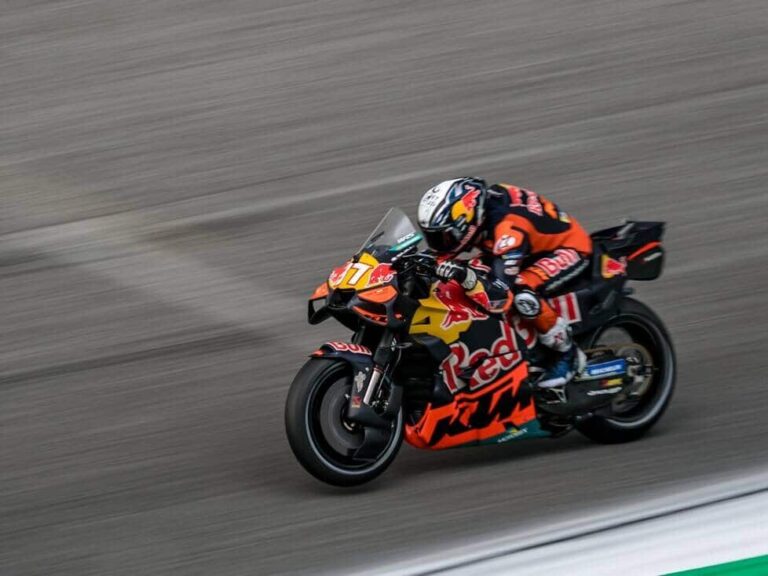
MotoGP bikes are set to become slower in 2027, but KTM takes a more nuanced view – technical director Sebastian Risse expects lap times to remain similar in some cases

The major technical rule changes in MotoGP from 2027 are intended to make the prototypes slower. However, after initial tests, KTM does not believe that the drop in performance will be so extreme and noticeable everywhere.

According to technical director Sebastian Risse, the new machines could even achieve similar lap times to the current bikes on around half of the tracks.

Risse led the first test of the new 850cc bike at the Circuito de Jerez in Spain in December. Based on what he has seen so far, the German engineer believes that the impact of the new rules will depend heavily on the track in question – provided that the performance of the tires remains similar to today.

Smaller engine, new tires for MotoGP 2027

When asked how much slower the 2027 bikes could be, Risse told Motorsport.com, “It really depends. I think it’s still too early to say anything about the tires.”

“But if you just look at engine power, there are some tracks where you almost never go full throttle with the current 1000cc engines. So if you look at Misano or Jerez, I don’t think lap times will be slower. But on some tracks they will be slower, that’s clear.”

From 2027, the current 1000cc engines will be replaced by smaller 850cc units. At the same time, aerodynamics will be reduced and ride height devices will disappear completely. There will also be another significant change: Michelin will be replaced by Pirelli as the official tire supplier.

“If there are several long straights, you’ll suffer from the loss of the ride height device and the lower power,” says Risse. “But I think it’s a pretty healthy way to slow the bikes down because it doesn’t hurt the show.”

Slower on some tracks, not on others

From the perspective of KTM’s technical director, this could result in a mixed picture: on some tracks, the times will remain similar, while on others, the difference will be more noticeable.

“Looking at everything we’ve learned and how positive we are with our new bike at the moment, I think that on half of the tracks we may not be any slower than we are today in terms of lap times.”

How much slower we will be on the other half remains to be seen. “But the difference in top speed will be a significant step, as intended in the rules. I’m talking about 15 to 20 km/h.”

“If development continues, you have to take that into account, of course. Then it might not be so much,” the engineer interjects. ” Perhaps it will only be around 15 km/h on a high-speed track. But from this perspective, the effect on lap times will not be so dramatic.”

Development likely to partially offset performance deficit

Even if the new MotoGP bikes are slower at the beginning, Risse expects manufacturers to find more performance over the course of the rule era. The development potential is particularly high at the beginning, especially with new engine concepts. “Looking back at the average of our engine development, we find about 5 to 6 hp per year,” he says. “This will probably also apply to this smaller engine – perhaps even more so because the project is new and there is more room for improvement at the beginning before it levels off.”

In the long term, the initial performance difference is therefore likely to shrink. “But from this perspective: if you have 30 hp less now, this 30 hp deficit will not remain constant over the next five years. That’s clear.”

“Badge next to World Cup trophy”: Mario Andretti moved by Cadillac name

0

Cadillac’s first Formula 1 chassis bears the name of a US legend – Mario Andretti is moved

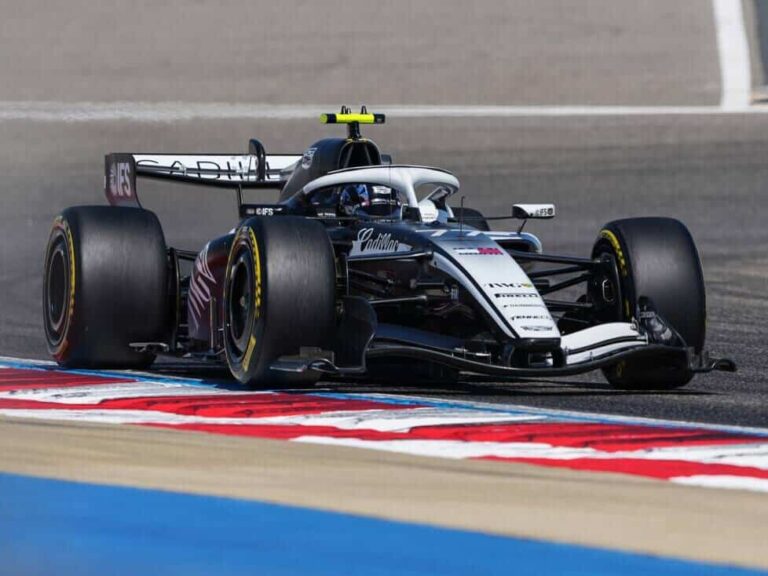
It is a tribute to a legend that goes far beyond mere marketing. When Cadillac rolls onto the Formula 1 starting grid in 2026, the heart of the car—the chassis—will bear a name that stands for the American racing spirit like no other: Mario Andretti.

As the team has officially confirmed, the US outfit’s first chassis will be christened “MAC-26” – an acronym for “Mario Andretti Cadillac.” For the 1978 world champion, this is an honor that still visibly moves him, even at the ripe old age of 86. “I already have the plaque right next to my World Championship trophy in the display case,” Andretti reveals in an interview with our sister site Autosport.

More than just a name: The “Andretti spirit” as a recruiting tool

But how did this decision come about? In an episode of the Beyond the Grid podcast, the team provided deeper insights into the story behind the decision. According to the podcast, the connection to the Andretti family was the emotional North Star of the project from day one – even after Michael Andretti stepped back somewhat from operations to make room for the Cadillac structure.

“What better way for America’s newest team to celebrate than with the 1978 world champion?” says Cadillac CEO on Beyond the Grid. Mario Andretti was much more than just a namesake; he was the most important argument in the search for talent in Europe.

“When you talk to people like Graeme Lowdon, who were recruiting people with Formula 1 experience back then, when we didn’t even have a start confirmation yet, there was always this aura around Mario. There was this appeal of building a team from the ground up that wasn’t ‘corporate’. Formula 1 is big business, no doubt about it. But people want to be race car drivers. Mario represented that ethos.“

”MAC-26“ was decided from the outset

The decision to use the name ”MAC-26“ was by no means spontaneous after the FIA gave the go-ahead. ”It was always the intention to do so,” said the team management. “Even in the initial documents submitted to the FIA, it was called ‘MAC-26’. Both GM President Mark Reuss and I agreed: we want Mario to be part of this team forever.”

For Andretti himself, however, the gesture came as a surprise. “I certainly didn’t expect them to do something like this for me,” said the icon modestly. At the season opener in Melbourne, where Cadillac was on site to observe, he was enthusiastic about the car’s first look: “The car looks very good! When everything has calmed down a bit, I’d like to secretly take it for a spin,” he joked.

Proud of the “risk takers” in the team

Andretti is particularly proud of the team working in the factories in Fishers (Indiana) and Silverstone. Many employees left secure jobs with established Formula 1 teams to join a project whose future hung in the balance for a long time.

“These are very experienced people who took the risk of coming to us before anything had even been approved,” Andretti emphasizes. “They saw the potential and the long-term commitment. Cadillac’s management is fully behind it. The fact that the largest car manufacturer in the US is committing to Formula 1 for the first time in history is good for the sport.”

Rivalry with Ford and focus on Colton Herta

Cadillac’s arrival also fuels a historic US rivalry: Cadillac versus Ford, which is cooperating with Red Bull. For Andretti, who celebrated some of his greatest victories (Daytona 500, 12h Sebring, Indy 500) with Ford power, this is a blessing: “Competition brings out the best in all of us. It brings even more eyes to our sport.”

Andretti also paid special attention to Colton Herta in Melbourne. The Cadillac development driver and IndyCar star is currently trying to recommend himself for a Formula 1 cockpit via the Formula 2 junior series. With a controlled seventh place in the main race, he did damage control in Australia. “You can tell he really, really wants it,” Andretti says passionately. “It has to start with that inner passion. He used his head today, just wanted to get there and get a feel for everything. I respect that a lot.”

With the name “Andretti” on the chassis and the power of General Motors behind it, the Cadillac F1 project finally seems to be gaining momentum – and the legend Andretti will symbolically be driving every kilometer in 2026.

Match of the year? Djokovic defeated

0

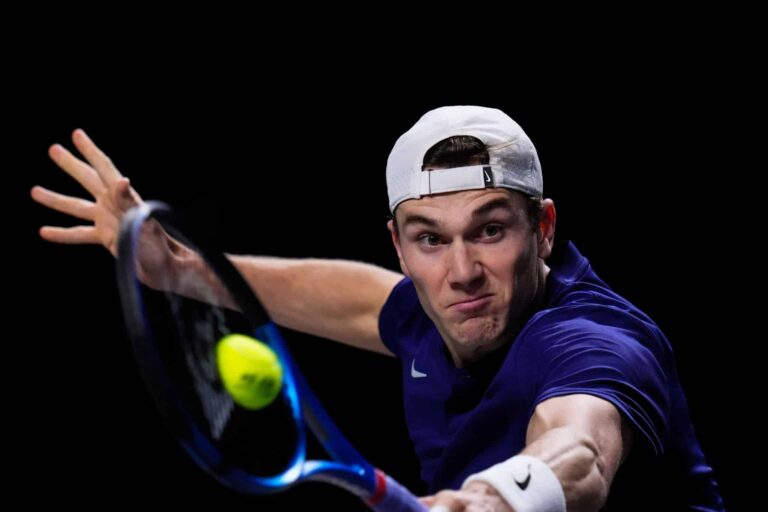
Britain’s Jack Draper wears down veteran top star Novak Djokovic in what is arguably one of the best matches of the year. Carlos Alcaraz also advances.

Grand Slam record champion Novak Djokovic has been knocked out in the round of 16 at the ATP Masters in Indian Wells. The 38-year-old Serb lost to British defending champion Jack Draper 6-4, 4-6, 6-7 (5-7) after 2 hours and 35 minutes. Meanwhile, Carlos Alcaraz remains undefeated in 2026 after his convincing 6-1, 7-6 (7-2) victory over Casper Ruud. Draper wore Djokovic down in a hard-fought third set, denying him his first quarterfinal appearance in the California desert since his last of five titles in Indian Wells in 2016.

“I won this match through determination, trying to solve problems, giving my best, and showing a great attitude,” Draper said afterward.

Spectacular rallies: “Djokovic and Draper defy all logic”

For Djokovic, it was his first appearance since his Australian Open final defeat to Spanish star Alcaraz. Draper, who was playing only his second tournament since returning from a nearly six-month break due to an arm injury, kept Djokovic running with a series of drop shots.

Some spectacular rallies at the limit of both players’ abilities had fans and media raving. In the live commentary on the Tennis Channel, the commentator raved about the “best point you’ll ever see” after a symbolic scene. After the match, the American sports channel also wrote: “Ice cold, tennis. Jack Draper defeats Novak Djokovic in one of the matches of the year.”

The ATP Tour also wrote in a post on X: “Insane, just sit back and enjoy as Djokovic and Draper defy all logic.”

The 24-year-old Draper will now face Russia’s Daniil Medvedev in the quarterfinals. For Djokovic, however, Indian Wells remains a shortcoming of recent years. Between 2007 and 2016, he won the desert tournament five times, but since then he has only reached the round of 16 at best.