Saturday, December 27, 2025
spot_img
Home Blog

Apparently free admission after kick-off at the Africa Cup of Nations

0

This year’s Africa Cup of Nations has attracted good spectator numbers so far. There is said to be a special reason for this.

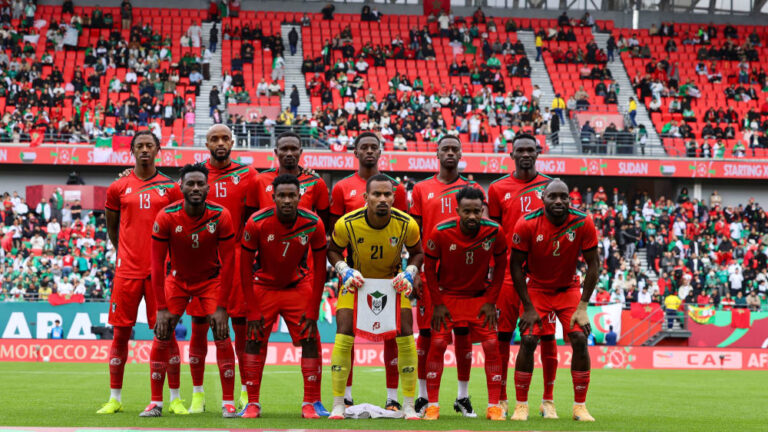
The 60,180 spectators at Morocco vs. Comoros were undoubtedly attracted by the fact that the host of the Africa Cup of Nations was playing here. And despite being booed at half-time, they scored a fantastic overhead kick to win the game.

But even aside from the opening game, the tournament in Morocco has attracted very good attendance figures after the first day of the preliminary round. For example, there were 35,200 spectators at Cameroon vs. Gabon (1-0) and 28,199 at Egypt vs. Zimbabwe (2-1). Only one match fell below the 10,000 mark, and by a wide margin: South Africa vs. Angola (2-1) attracted 4,013 spectators.

However, these figures cannot be explained by everyday reasons. The organizers apparently allow spectators free entry to the stadiums after the kick-off. This was reported by a source from the African Football Association (CAF) to the AFP news agency.

Cameroon’s match against Gabon on Wednesday in Agadir started in front of almost empty stands. Despite the incessant rain, the stadium filled up significantly during the first half. The official attendance was later reported as 35,200, although the stadium has a capacity of over 45,000.

Stadium capacity is important with a view to the 2030 World Cup

Similar scenes had been seen at numerous matches in the early days of the competition, which caused some confusion regarding attendance figures. For example, the Group D match between the Democratic Republic of Congo and Benin on Tuesday at the Al-Medina Stadium in Rabat was initially reported to have had 6,703 fans in attendance, but the figure was later corrected to 13,073.

According to the source, the organizers, in consultation with the African Football Confederation, opened the stands about 20 minutes after the start of the game so that fans gathered outside the stadium could enter without paying. Stadium attendance at the Africa Cup of Nations is of great importance to the organizers with a view to the 2030 World Cup, as Morocco will co-host the tournament with Spain and Portugal.

There were major problems with attendance at the Africa Cup of Nations two years ago in Ivory Coast. This may be why the CAF is particularly keen to ensure that these circumstances do not repeat themselves this time around.

On Thursday, tickets were still available on the CAF’s official ticket platform for almost all remaining group matches of the Africa Cup of Nations, starting at 100 dirhams (equivalent to around €9.30).

According to this, only the matches between host Morocco and Mali on Friday and Zambia on Monday, as well as Algeria against Burkina Faso on Sunday and Algeria against Equatorial Guinea on Wednesday, are considered sold out. What the information about free admission after kick-off has to do with the number of tickets sold remains unclear for now – and will have to be monitored.
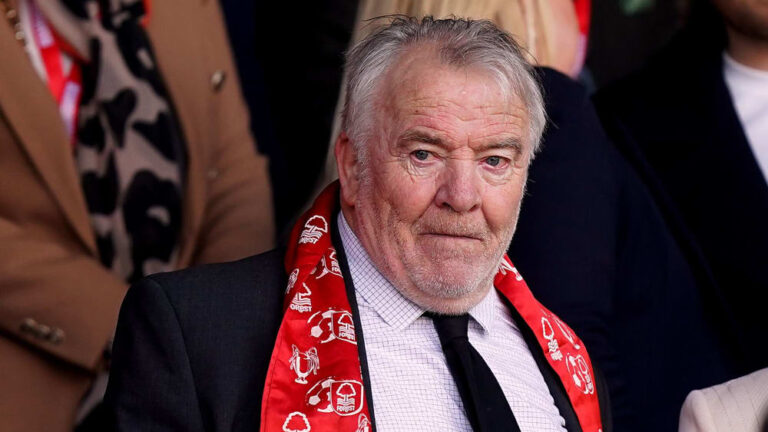
Once a hero against HSV: Nottingham legend Robertson has died

0

British soccer mourns the loss of John Robertson. The former Scottish international has died at the age of 72.

“It is with deep sadness” that Nottingham Forest confirmed Robertson’s death in a club statement on Thursday. He would have celebrated his 73rd birthday in mid-January. “He was a true legend of our club” and “will never be forgotten for his incomparable talent, his modesty, and his unwavering loyalty to Nottingham Forest,” the Premier League club said on its website.

Robertson, who was born in Scotland, played continuously for the Tricky Trees from 1970 to 1983 and shaped the most successful period in the club’s history. In 1977, the attacking player was promoted to the first division with Nottingham and then achieved the feat of winning the championship as a promoted team.

Winning goal in the final against Zebec’s HSV

Two sensational successes in the European Cup followed in 1979 and 1980. Robertson finally cemented his place in Nottingham’s history in the 1980 final. Against Branko Zebec’s Hamburger SV, the winger scored the decisive goal in a 1-0 victory. His then coach Brian Clough once described Robertson as “the Picasso of our game.” In 1983, after 13 years in Nottingham, he moved to Derby County for two years before finally ending his career back with the Tricky Trees in 1986. In 2015, he was voted the greatest player in the club’s history in a poll conducted by the Nottingham Post.

Assistant coach after his career

Robertson played a total of 28 international matches for the Scottish national team and took part in the 1978 and 1982 World Cup finals. After his playing career, Robertson moved into the background and was assistant coach under Martin O’Neill at various clubs in British professional football, including Celtic Glasgow and Aston Villa.

“Our thoughts are with John’s family, friends, and all who loved him,” Nottingham Forest wrote in its statement. “Rest in peace, Robbo… our greatest.”

Liverpool’s set piece problem: Top 4 “impossible”

With a win over bottom-of-the-table Wolverhampton, Liverpool FC could return to the top 4 of the Premier League. However, the Reds will only stay there if they get their set piece problem under control, believes coach Arne Slot.

The chances are good that Liverpool FC will push back into the Premier League’s top 4 before the turn of the year. The Reds, who slipped into the bottom half of the table in the fall, finally have a real must-win game ahead of them on Saturday. Chelsea FC, currently level on points, still has to take on the team of the moment.

While Wolverhampton Wanderers, who play at Anfield Road at 4 p.m., are in a historically poor position with only two points, Blues’ opponents Aston Villa have not lost a game since their defeat to the Reds on November 1—and have won all ten competitive games since then.

Despite the recent clear upturn in form (six games unbeaten, three wins in a row), Arne Slot does not yet believe that his team will remain in the top group for long. The Dutchman is particularly concerned about his team’s weakness in set pieces: his team has only been successful three times from set pieces, while conceding eleven goals from the opposition’s set pieces.

“With our record in set pieces, it’s impossible to finish in the top four or five, let alone win the championship,” the Reds coach is certain ahead of the game against Wolves.

Slot: “It’s very frustrating that we are where we are.”

League leaders Arsenal are already ten points ahead, while Manchester City (eight) and Aston Villa (seven) have also built up a decent cushion. “It’s very frustrating that we are where we are this season,” said Slot, “because halfway through last season we hadn’t conceded a single goal from a set piece.”

The tense personnel situation does not make things any easier for the Reds: Alexander Isak is out with a broken leg, and Cody Gakpo and Conor Bradley are also doubtful. Mohamed Salah is at the Africa Cup of Nations, Joe Gomez is out with muscle problems, and Dominik Szoboszlai (suspended) and Wataru Endo (ankle), who is hardly in demand anyway, are also unavailable.

“It’s time for the players we have available to do what they’ve done so many times before and roll up their sleeves,” Slot demands. “The players who are available have to give everything they’ve got.”

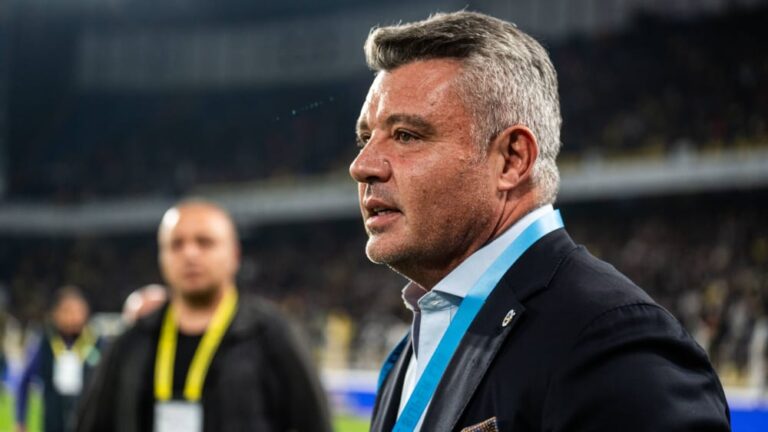
Drug investigation: Fenerbahce president Saran briefly taken into custody

Sadettin Saran, president of Fenerbahce Istanbul, was taken into custody on Christmas Eve as part of a drug investigation. According to state media, however, he has already been released.

On Wednesday evening, Fenerbahce confirmed that club president Sadettin Saran had “gone to the Maslak Provincial Gendarmerie in his own vehicle as part of ongoing legal proceedings on the instructions and under the supervision of the competent authorities.”

Turkish media quoted a statement from the Attorney General’s Office saying that Saran, who has been in office since September, had been taken into custody on suspicion of drug trafficking, aiding and abetting drug use, and drug use, and on the basis of “additional evidence” obtained in the ongoing proceedings.

Saran writes of a “clear smear campaign”

According to reports, Saran tested positive for cocaine in a hair sample. He stated in a post on his social media account that he had “never consumed the substance that allegedly tested positive in the Institute of Forensic Medicine’s test.” The 61-year-old wrote of a “clear smear campaign” against him. The club pledged its support for Saran. Fans also gathered around the courthouse on Thursday, where the official was scheduled to testify again in the morning. “At this stage of the proceedings, we urge all Fenerbahce supporters to trust the respected Turkish judiciary and to remain calm,” Fenerbahce said in a second statement late on Wednesday evening. According to the club, the first statement of this kind, issued three hours earlier, had led to misunderstandings among the public.

On Thursday, state media reported that Saran had been released on judicial conditions. After his testimony on Thursday, an Istanbul court ordered Saran to report to a police station twice a week. According to Anadolu Ajansi, he also remains subject to a travel ban imposed earlier in the investigation.

The Istanbul Public Prosecutor’s Office has been conducting drug investigations for several weeks, which have also focused on well-known personalities. Saran had already been released on bail last Saturday after several tests and his statement to the public prosecutor’s office.

Third win against the champions: San Antonio also triumphs in OKC

0

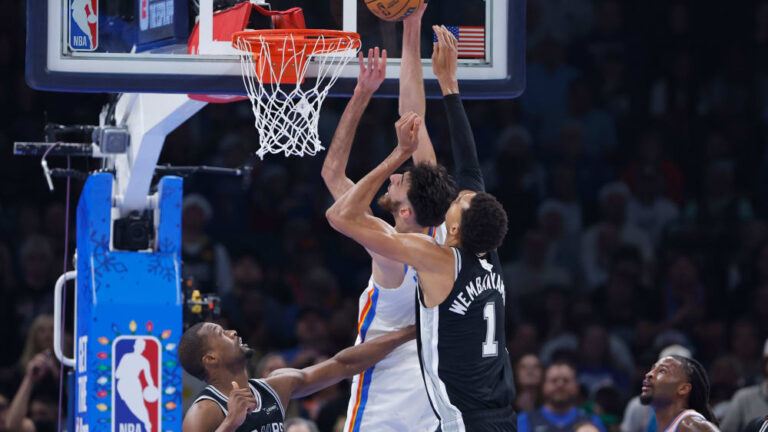
The San Antonio Spurs have also won the third matchup of the season against the Oklahoma City Thunder. The Texans, led by Victor Wembanyama, defeated the reigning champions 117-102.

The Thunder have lost five games this season, three of them against San Antonio. The Spurs are slowly becoming the champions’ nemesis, who couldn’t come up with much offensively after the break. Shai Gilgeous-Alexander (22 points, 7/19 FG) kept his 20-point streak alive, but it wasn’t the Canadian’s best game.

Overall, the Thunder shot poorly from outside and also struggled from mid-range. San Antonio, on the other hand, was able to rely on Victor Wembanyama (19, 11 rebounds) and the guard trio of De’Aaron Fox (29, 12/19), Stephon Castle (19, 8/11) and rookie Dylan Harper (12). Isaiah Hartenstein (13, 5/7 FG, 12 rebounds, 3 assists) was one of the Thunder’s better players.

Defense was optional at first, with the elite Thunder defense in particular struggling to make any headway. Fox (13 points in the first quarter) in particular was able to do as he pleased, with San Antonio sinking 71 percent of their shots from the field. OKC didn’t shoot quite as well, but kept pace initially thanks to a few offensive rebounds. Nevertheless, the Spurs led 43-38 after the first quarter.

Spurs confident in the end

This lead grew steadily because San Antonio once again bet that the Thunder would not make enough jumpers. And that was confirmed at first. Fox, on the other hand, remained hot and Wembanyama also had some good minutes. At times, the visitors led by 14 points, and at halftime it was still 69-60.

After that, the Thunder finally cooled off, with only one of twelve three-pointers (Alex Caruso) going through the net, and SGA suddenly missing a few shots. The Spurs, on the other hand, played well as a team, made few mistakes, and continued to rely on their strong guards, who consistently created good shots. As a result, the Spurs had almost 100 points on the board after just three quarters against a historically good defense (95-79).

A comeback was initially lacking. Isaiah Joe reduced the deficit to single digits with a three-pointer, but Wemby had the answer from outside. It was only when the Frenchman returned to the bench that there were easier finishes, but OKC simply couldn’t close the gap.

Change of philosophy at Alpine: Away with the 100-race plan

0

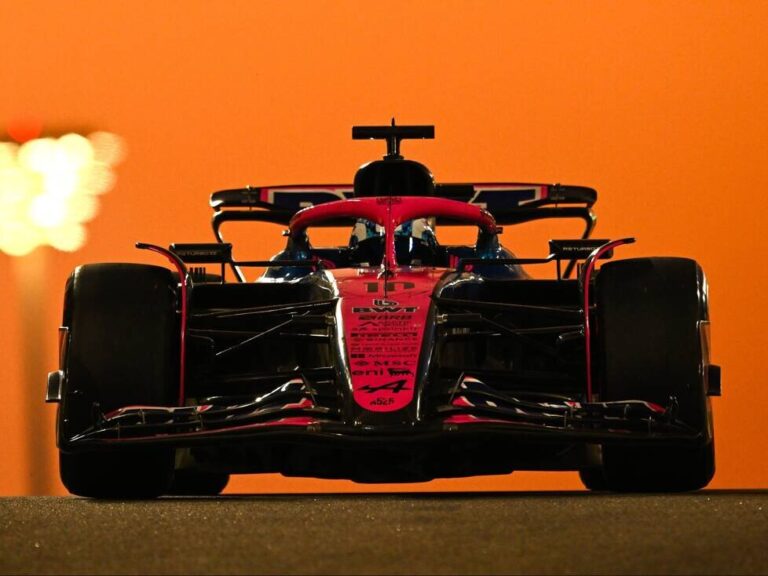
No five-year plans, no guarantees: Alpine is embarking on a sober but consistent rebuild under team boss Steve Nielsen

Alpine team boss Steve Nielsen is deliberately breaking with the Formula 1 team’s previous philosophy. Renault and Alpine had repeatedly communicated long-term plans in the past, but never achieved the goals they had set for themselves. That is now set to change.

“Personally, I don’t believe in a 100-race plan or a three- or five-year plan or anything like that,” Nielsen said. “I think it’s about having the best people possible and putting them in the right positions. Then you give them a clear goal and let the whole team work toward that goal—as hard and as well as possible.”

Under his leadership, Alpine will work its way forward “step by step,” said Nielsen, who has been in charge of the French-British racing team since fall 2025. However, he is not expecting immediate success, but rather a “slow, tough process.”

Why Nielsen is not promising quick wins

This is because Alpine’s initial focus is on improving internal structures and recruiting new talent. That takes time. “Things like that can’t be turned around in a few months or even a year,” Nielsen explained.

He speaks from experience: Nielsen was sporting director at Alpine’s predecessor Renault when the team won the Formula 1 world championship titles in 2005 and 2006 – after many years of development work. Now this process is starting all over again after Alpine finished the 2025 season at the bottom of the constructors’ standings.

Nielsen did not want to specify how quickly Alpine will make progress. All he said was: “I can say that we will build a better car next year than this year. But I can’t say whether that will be enough for first, tenth or twentieth place on the starting grid.”

His goal is “ideally to fight for points every race weekend,” Nielsen said. Alpine only managed to do that sporadically in the 2025 Formula 1 season. “We were too far behind too often,” said Nielsen. “That’s not where this team belongs and where it traditionally stands. We need to be in the upper midfield.”

End of a MotoGP era: Lin Jarvis parts ways with Yamaha for good

0

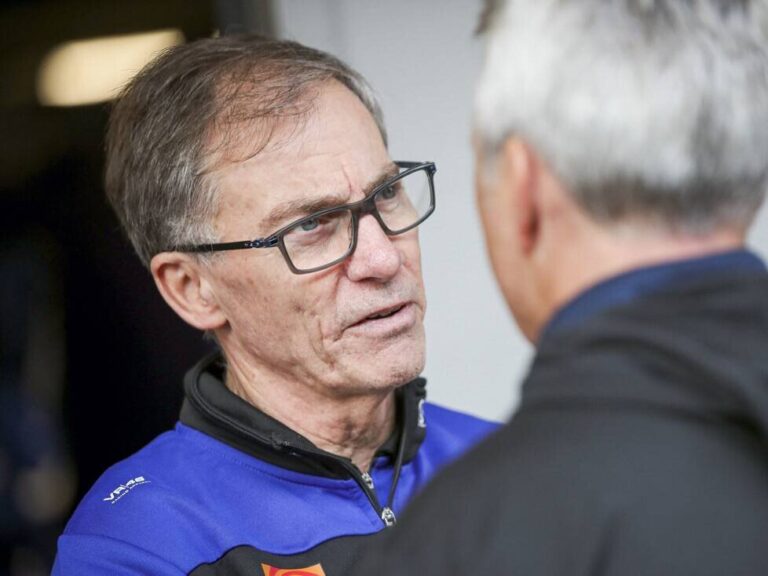
Lin Jarvis ends his work for Yamaha: After concluding the current Dorna negotiations, the Briton plans a future as an independent consultant

Lin Jarvis has finally ended his collaboration with Yamaha in MotoGP after a year as an external consultant and intends to work as an independent consultant in the future. According to information from the Spanish-language edition of Motorsport.com, the Brit has already informed several key contacts in the MotoGP paddock about his move into self-employment.

This marks the end of an era in MotoGP. Jarvis had been with Yamaha since 1993. He had worked his way up from the communications and marketing department to the top of the team.

Jarvis had been replaced as managing director of the MotoGP factory team by Paolo Pavesio before the current season, but remained with the Iwata-based manufacturer as a consultant. This role involved less presence at race weekends and at the same time opened up scope for additional tasks outside of day-to-day business. Jarvis recently played a central role in the talks between manufacturers and rights holder Dorna about a new contract that is to define the economic framework conditions for the MotoGP teams.

Dorna Sports Director Carlos Ezpeleta told Motorsport.com that negotiations for the 2027-2031 term were in the final stages: “We are in the final phase of negotiations. I am very optimistic; I think we are on the same page.”

According to the report, Jarvis will continue to attend selected events in the coming months until the agreement is finally signed. After that, his mandate as a link between manufacturers and rights holders will end.

Jarvis shaped Yamaha’s sporting direction for many years, including signing Valentino Rossi for the 2004 season. During his tenure, Yamaha won a total of eight riders’ world championships, most recently in 2021 with Fabio Quartararo, whose contract extension was also Jarvis’ responsibility. One of his last projects as Yamaha manager was the return of a satellite team. In 2025, Pramac switched to Yamaha after many years with Ducati.

341,099 kilometers: Amazing Pirelli figures for the 2025 F1 season

0

Almost 25,000 tires, extreme temperatures, and a stint for the history books: Pirelli’s season figures reveal the hidden side of Formula 1

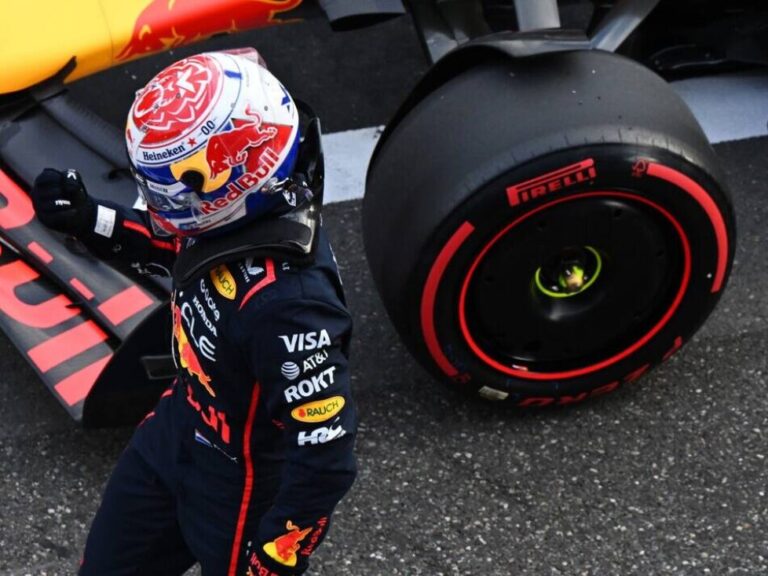
Formula 1 tire supplier Pirelli has published impressive figures for the 2025 season at the end of the year. The manufacturer from Milan, Italy, supplied a total of 24,480 tires to the ten teams for the race weekends alone. These covered 341,099 kilometers—a distance that would be enough to circle the earth eight and a half times.

The most frequently used tires were slick tires, which accounted for 96 percent of the total distance covered. However, the different compounds were used to varying degrees: the medium compound C3, for example, had the highest mileage with 93,493 kilometers, while the hardest compound C1 had the lowest with 17,368 kilometers.

The best individual performance on a set of tires was achieved by Haas driver Esteban Ocon at the Saudi Arabian Grand Prix in Jeddah: After his pit stop on lap one, Ocon completed the remaining 49 laps of the race on the C3 compound, covering 303 kilometers in one go – the maximum possible under the current Formula 1 tire regulations.

Pirelli also measured the highest asphalt temperatures of the year in Jeddah: 58.2 degrees Celsius in the second free practice session. This contrasts with the coolest conditions of the 2025 season, which were in Las Vegas: in the rainy qualifying session, the track temperature was just 12 degrees.

Pirelli as Formula 1 tire supplier – historical overview

Pirelli has been the sole tire supplier to Formula 1 since 2011. The Italian company succeeded its Japanese competitor Bridgestone, which had supplied the standard tires for the “premier class” of motorsport from 2007 to 2010.

Every race weekend, Pirelli offers Formula 1 teams three different compounds for dry conditions: Soft (marked red), Medium (yellow), and Hard (white), which were selected in 2025 from a pool of six compounds (C6 to C1) specific to each track. In addition, there are “light” rain tires for wet conditions (“intermediates,” green) and rain tires (blue).

Pirelli was already involved as a supplier in 1950, the first World Championship season in Formula 1 history, and dominated the early years of the World Championship with numerous victories. From 1959 to 1980, the company took a break from Formula 1, only to make a comeback in 1981 and remain active until 1991. This was followed by another break until 2011.

The craziest nicknames of MotoGP riders and what’s behind them

0

Now as in the past, riders in the premier class often have a special nickname in addition to their starting number – we’ve picked out the most curious ones

From “The Doctor” to “Kentucky Kid”: MotoGP is not only the fastest motorcycle racing series in the world, but also a stage for big personalities and their often equally legendary nicknames.

There is more to many of these nicknames than just a casual remark from the pit lane: they tell stories about the origins, character, riding style, courage, or simply the particularly memorable idiosyncrasies of the stars on two wheels.

Some names were given to them by fans, others by teammates or the media. Some came about by chance, due to a detail on their helmet or a childhood anecdote.

Rossi has had several nicknames during his career

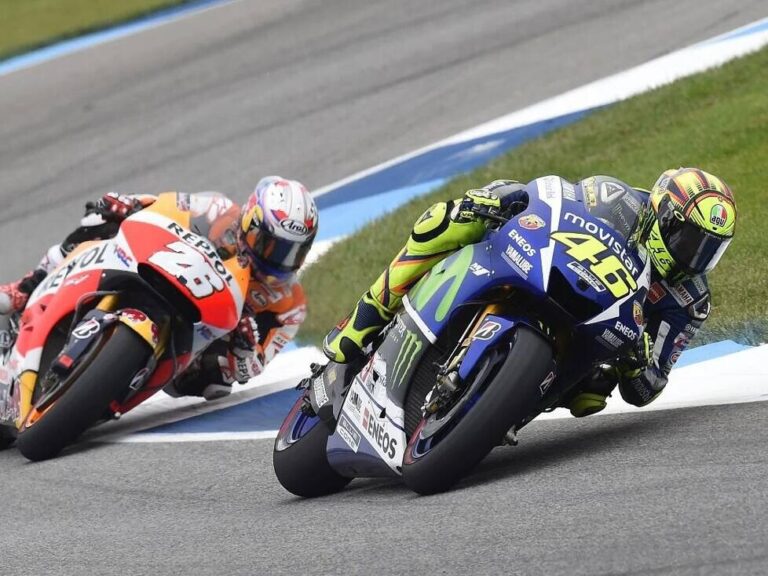
The most famous nickname is undoubtedly that of Valentino Rossi, who has turned “The Doctor” into a real brand over the years. But in fact, it’s not his only one. In his early years, the Italian gave himself the nickname “Rossifumi” in reference to his great idol Norifumi Abe. He later became “Il Dottore.”

But other riders have also become known for their nicknames. Why was Nicky Hayden called “Kentucky Kid”? What makes Enea Bastianini “The Beast,” and why did Garry McCoy drift his way into the history books as “Slide King”?

Each nickname provides a little insight into a rider’s personality and explains why they are more than just fast athletes to their fans.

Whether they have already retired from MotoGP or are still active: how they got their nicknames. If you can think of any other nicknames for current or former MotoGP riders, please feel free to leave a comment below this article.

The shadow man behind Jake Paul

0

Controversial influencer Jake Paul has become one of the most powerful players in the boxing industry. A strategically astute business partner from the UFC universe has played a decisive role in this.

Jake Paul vs. Anthony Joshua: It’s a fight that many would have considered absurd just a few years ago. Remember: At the beginning of 2020, Joshua held four world titles and was the benchmark in heavyweight boxing. During the same period, Paul, then known only as a social media influencer, launched his boxing career as what appeared to be a marketing gimmick, with a duel against his British-Arab YouTuber colleague AnEsonGib in front of a few thousand spectators in a hotel complex in Miami, ridiculed by large parts of the scene.

Almost six years have passed since then. And during that time, Jake Paul has become one of the biggest power players in the industry – as a boxer, promoter and box office magnet.

Just over a year after his globally (and not only positively) acclaimed exhibition fight against boxing icon Mike Tyson, Paul is once again the main figure in an event that is attracting the interest of the masses. But what is the 28-year-old’s project, which has grown into an empire, all about? German Olympic hero Nelvie Tiafack is also active in Paul’s promotional company MVP. The story of boxing phenomenon Jake Paul is closely linked to a lesser-known shadow man behind the dazzling celebrity.

Jake Paul vs. Anthony Joshua: He is the shadow man

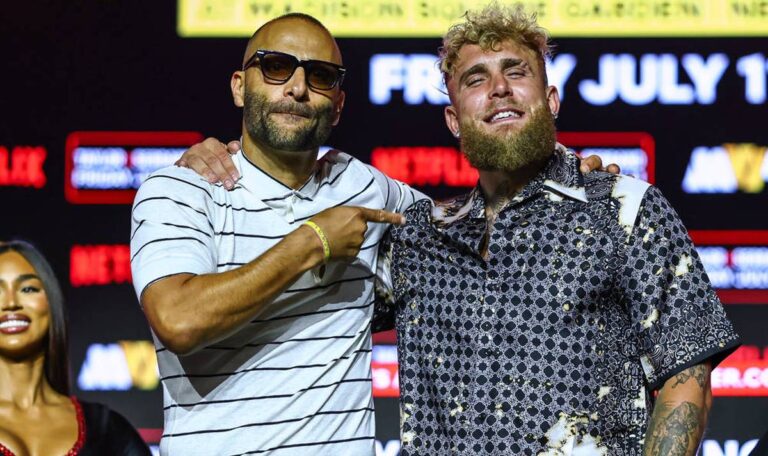
Nakisa Bidarian is the name of the man who can be considered the strategic mastermind behind Paul’s boxing career. The Iranian-born Canadian, a trained economist and former management consultant and investment banker, once met brothers Lorenzo and Frank Fertitta, the two architects behind the rise of the UFC to a global brand, through a business acquaintance.

Bidarian joined the MMA promotion and rose to become its chief financial officer. In 2019, he came into contact with Paul, who was then known only as a controversial influencer, and helped him organize his debut fight. The following year, he was hired by martial arts streaming startup Triller as executive producer for the nostalgia fight between Mike Tyson and Roy Jones Jr. – and in that role, he signed Paul for an undercard fight against former NBA star Nate Robinson.

The huge success of the fight night—which had a lot to do with Paul’s tens of millions of followers on social media—made everyone involved realize the business potential of the “Problem Child.” And 47-year-old Bidarian became the operator of the money-making machine.

Nakisa Bidarian: From UFC CFO to boxing revolutionary

Bidarian and Paul founded Most Valuable Promotions in 2021 and now have over 40 boxers under contract.

The heavily marketed fights between Jake Paul and stars from other weight classes and combat sports are not the company’s only successful mainstay—MVP’s involvement in women’s boxing, where Bidarian identified a major marketing gap, was and continues to be groundbreaking.

Inspired by Ronda Rousey’s huge box office success at the UFC, Paul and Bidarian first signed top boxer Amanda Serrano.

Through intensive marketing on social media and other channels, MVP created a hype that quickly led to a historic milestone: Serrano’s world championship fight against Katie Taylor became the first-ever women’s fight to headline a fight night at the venerable Madison Square Garden in New York. The world’s most famous arena was sold out, and global fan interest in women’s boxing reached a new high.

German Olympic hero Tiafack is on board

The MVP project is a similar success story to the social media careers of Jake and his older brother Logan Paul – who are similarly active as podcasters, energy drink entrepreneurs, and WWE wrestlers.

While the sporting value of Jake Paul’s fights is still considered rather dubious, there is no denying that he has brought a breath of fresh air and new pop-cultural relevance to an industry that had lost much of its popularity and appeal, especially among younger audiences, in the shadow of the UFC boom of recent decades.

It’s no coincidence that Tiafack, who has openly expressed his dissatisfaction with the state of the boxing business, decided to sign with MVP after winning Olympic bronze in the super heavyweight division in Paris in 2024. Tiafack has observed how Bidarian and Paul have transferred the UFC’s successful marketing concepts to boxing – and wants to benefit from this too.

UFC boss Dana White takes a less friendly view of the Paul empire, which competes with him for attention: He and Jake Paul have a lot in common – such as their political sympathy for Donald Trump – but Paul has made a name for himself many times through public attacks on White. Among other things, he accused White of paying his fighters too little and unfairly—a sensitive issue in the promoter business. Paul’s attacks on White initially led to a personal crisis with his business partner Bidarian, who is friends with White.

Paul vs. Joshua: The fight purse is breathtaking

Paul and Bidarian are now back on the same page and have landed their next coup with the fight against Joshua.

The big fight will take place on Saturday night at the Kaseya Center in Miami, which seats nearly 20,000 spectators. The show will once again be a global streaming event on Netflix, which outbid Joshua’s actual partner DAZN in the negotiations.

According to reports, the protagonists will share a purse of $184 million. Most of the money is now generated more by marketing phenomenon Paul than by Joshua—who now needs Paul more than Paul needs him in his fight for attention and a return to the boxing throne.