Friday, October 24, 2025
Home Blog

What Formula 1 history reveals about Max Verstappen’s title chances

0

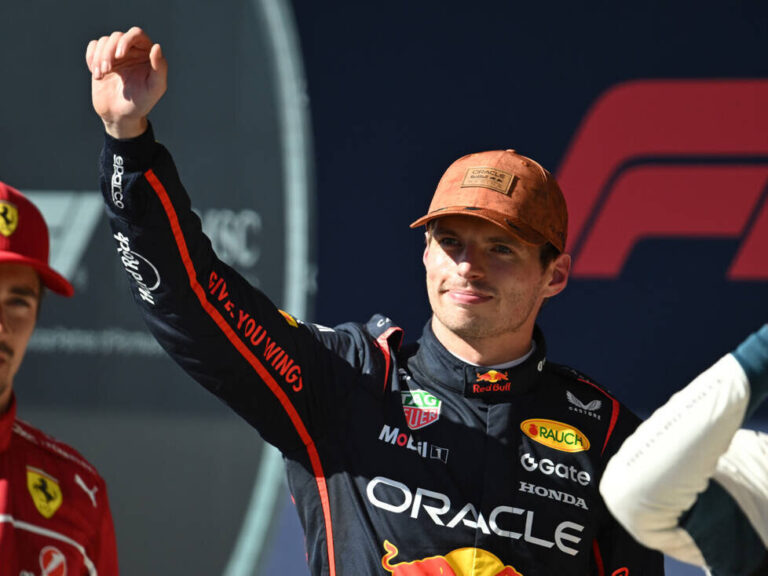
After catching up 64 points, Max Verstappen is back in the World Championship race – Formula 1 history shows how such comebacks work

Max Verstappen has made up a whopping 64 points on the World Championship leader in the last four races and is now back within striking distance in the World Championship battle. According to the Dutchman, “the opportunity is there. We have to deliver weekends like this until the end of the season.” He knows: “We have to be perfect until the end to have a chance.” While this shift in the balance of power seems spectacular, it is by no means unique in Formula 1 history.

Back in 1979, Alan Jones celebrated a late comeback. At that point, he was still 25 points behind, but with three wins in a row, he moved to within ten points of the lead. Or in 1991, when Nigel Mansell suddenly found himself at the front of the pack despite trailing by 33 points during the season. And in 2012, Sebastian Vettel turned a 39-point deficit into a 13-point lead – a perfect finale.

But despite these examples, Verstappen was by no means sitting pretty: he soberly emphasizes: “The gaps are very small. Every mistake can cost you everything.”

Historical role model: Alan Jones in 1979

The 1979 season is a prime example of how a team and driver can rise from under the radar to become title contenders. At the time, Jones was competing for Williams Grand Prix Engineering, which had just entered Formula 1 with its own car. In the first half of the season, Jones scored just seven points and was virtually out of contention, trailing by 25 points. But with his car, the FW07, he won three races in a row, reduced the gap to ten points and secured at least third place in the overall standings. Verstappen also senses this momentum: “We understood our car better and made upgrades that worked perfectly.” It doesn’t just sound like a comeback—it’s almost reminiscent of history.

Mansell in 1991 and Hakkinen in 2000: deficits as reality

It was not uncommon for major title fights to start with deficits. In 1991, Mansell was still in seventh place with only seven points with seven races to go. But with the new FW14, he won race after race and was suddenly in contention for the title—even though he was still 24 points behind Senna at the end. The situation was similar in 2000, when Mika Häkkinen suddenly took the lead after technical setbacks—until Ferrari struck back with Michael Schumacher at the end.

One of the most iconic comebacks was delivered by Sebastian Vettel in 2012. After trailing by 39 points, he scored four consecutive victories and ended up three points ahead of Fernando Alonso. At the time, strategy, consistency, and a car that was there when it mattered most helped him achieve this feat.

What does that mean for 2025?

With five races remaining, the battle is more open than ever. Verstappen is only 40 points behind Oscar Piastri – and has stated his intention to “avoid every mistake.” He says: “We’ve made up a lot of ground, but the gaps are very small.”

His team at Red Bull Racing is convinced: Helmut Marko believes that in this form, “it could still get really exciting” – and that with a three-point gap or eight points, nothing has been won yet. But he also knows: “If Max has the equipment, he is a very serious contender.”

History teaches us that deficits in Formula 1 are not the end – but often the beginning of a big final sprint. Whether Jones, Mansell, Häkkinen or Vettel – they have all shown that a strong car, a perfect weekend and mental strength can make all the difference.

Max Verstappen is now at exactly this point: 64 points caught up, close to Piastri—and with the will to deliver perfection every weekend. He says: “We’ve found a good way with the car… Now it’s about getting the maximum out of it week after week.”
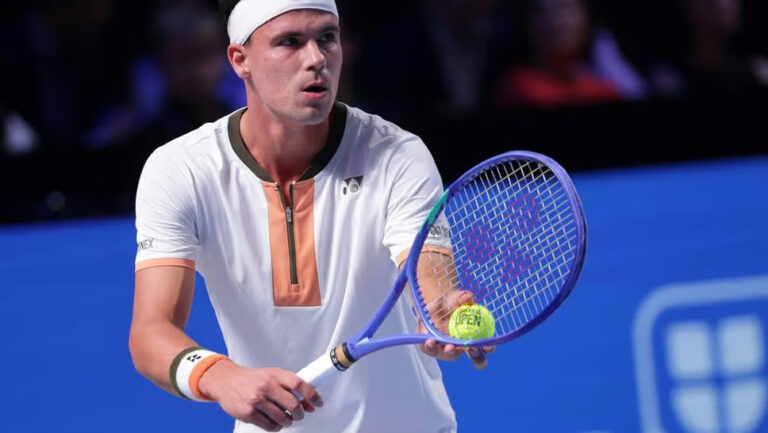
Sinner teaches Altmaier a lesson

The world number two makes short work of the player from Kempen.

A class difference at the Wiener Stadthalle: professional tennis player Daniel Altmaier was defeated by tournament favorite Jannik Sinner right at the start of the ATP tournament in Austria’s capital. The player from Kempen lost to the world number two from Italy on Wednesday without a chance, 0-6, 2-6.

Altmaier had no answer to Sinner, who was on a roll from the start: the South Tyrolean took a 3-0 lead within ten minutes after a double break and closed out the first set after 22 minutes. Altmaier fought back visibly, winning his own serve at the start of the second set. But it wasn’t enough to seriously challenge Sinner in the end.

For the 27-year-old, currently ranked 51st in the world, it was his second defeat to Sinner in October. He had already lost in two sets (3-6, 3-6) at the Masters in Shanghai.

Alexander Zverev is now the last remaining German player in the 500 tournament in Vienna. Zverev struggled to overcome Scottish qualifier Jacob Fearnley in his opening match on Tuesday. Zverev will face Italian Matteo Arnaldi in the round of 16 on Thursday.

A legendary giant from Bavaria

0

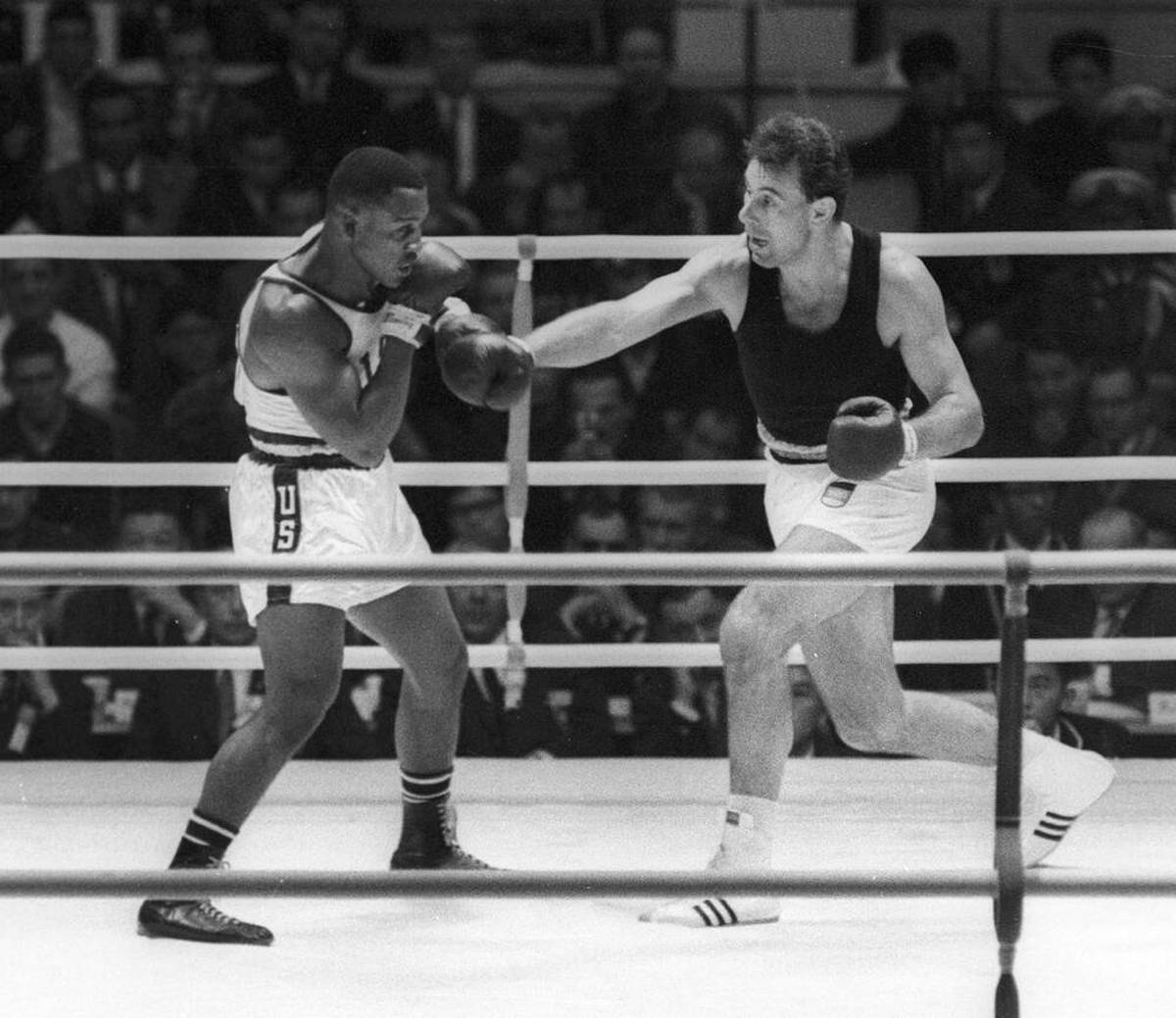
⁠Sixty-one years ago today, Regensburg bus driver Hans Huber almost snatched boxing legend Joe Frazier’s first major triumph—and sent fans in his homeland into ecstasy with his Olympic fairy tale.

Had Hans Huber known about Joe Frazier’s thumb, everything might have turned out differently.

It was the biggest fight in the life of the Bavarian amateur boxer – and in retrospect, it has become even bigger due to the iconic status that his opponent later achieved. And it didn’t take much for the legend of Hans Huber from Wenzenbach near Regensburg to become even greater in the Olympic final in Tokyo.

Hans Huber boxed against Joe Frazier at the Olympics

Wednesday marks the 60th anniversary of October 23, 1964, a big day for a German athlete whose story was already special before that.

Born on January 1, 1934, Huber lived a simple life that fatefully brought him to the Olympic stage: Huber was originally a baker’s apprentice and a young soccer goalkeeper at the local SV Wenzenbach club, but retraining as a bus driver paved his way into martial arts, rather by chance.

Huber’s driving instructor recommended that the 1.92-meter giant try his hand at wrestling at Regensburger Turnerschaft e.V. Huber did so with great success, becoming German heavyweight runner-up in 1958 and 1960 – beaten only by the legendary Wilfried Dietrich, the mythical “Crane of Schifferstadt.”

The realization that Dietrich was unbeatable prompted Huber to switch to boxing, where he reached the European Championship quarterfinals in 1963 and won the German Championship and Olympic qualification the following year.

Thousands of people gathered around their radios

Huber flew to the Japanese capital without high expectations, but surprised both himself and the boxing public with victories over Pakistan’s Abdul Rehman and Italy’s Giuseppe Ros in the heavyweight tournament.

A wave of euphoria broke out around the German boxing fairy tale, especially in his home region, with thousands tuning in to their radios at 3:30 p.m. German time to follow the final fight.

Huber’s opponent was a 20-year-old American who had not actually qualified for the Olympics, but was nominated after an injury to his compatriot and sparring partner Buster Mathis: Joseph William “Joe” Frazier – ten centimeters shorter than Huber, but already a formidable all-rounder with a dangerous left hook – or so it seemed.

Hans Huber lost on points to Joe Frazier in Tokyo

Frazier went into the fight with a handicap

What Huber didn’t know was that Frazier had broken his thumb in the semi-final against USSR starter Vadim Yemelyanov, effectively neutralizing his best weapon.

The duel between Huber and Frazier went the full distance, with two judges scoring it in Huber’s favor and three in Frazier’s. Years later, boxing experts were still wondering what would have happened if Huber had exploited Frazier’s handicap more aggressively: “Had he known how much pain Frazier was in with every left hook, Huber might not have been so cautious in dodging him, and the judges’ decision could well have been different,” wrote the New York Times in 1970. After his Olympic victory, Frazier turned professional, became world champion, and was the great rival of the iconic Muhammad Ali. Hans Huber disappeared from the limelight – voluntarily.

Huber preferred Frazier to Ali

The silver medalist from Tokyo decided against a professional career; at 30, he felt too old and no longer wanted to take on the hardships that would have awaited him.

Huber was satisfied with his big performance in Tokyo, which he felt had rewarded him richly despite his initial disappointment at missing out on the gold medal. Huber received congratulatory telegrams from Chancellor Konrad Adenauer and opposition leader Willy Brandt. When he returned home to Regensburg, 50,000 people welcomed him at the train station.
“That made up for it,” the Mittelbayerische Zeitung quotes from a late interview with Huber. After the Olympics, Huber worked at the Regensburg Sports Office, and there were two reunions with Frazier in 1971 at an Adidas gala and on a TV show in Los Angeles.

Huber also appreciated “Smokin’ Joe,” who died in 2011, on a personal level: “Joe was always a really nice guy. He never acted like a big show-off,” he said in an interview with the BZ. Huber criticized his great opponent Ali, however, for sometimes ridiculing his opponents (“That’s not what a great athlete does”). Hans Huber, the man who almost snatched the first major triumph away from the great Joe Frazier, died on January 12, 2024, shortly after his 90th birthday.

Kompany urges Karl and is delighted that his request has been granted

Munich’s winning streak continues unabated. Even on the third match day of the Champions League, FC Bayern was unstoppable, beating Club Brugge 4-0. Meanwhile, the coach was particularly pleased about something else.
“It was a good home game, we could have scored more goals,” Vincent Kompany told DAZN after the match. “We saw some young players who will have to help us as the season progresses,” said the Munich head coach, referring not only to Lennart Karl’s historic performance.

When asked how he would compare himself as a player at the same age as Karl, Kompany said with a grin: “I played in the Champions League, was a national team player, a regular starter. But joking aside, that’s not normal at this level. He’ll continue to get the chance to do so, but he’ll also need some rest. It was important that he showed it today in such a big game. But I also told him that he has to do the same at 30. Because Harry does that too.“

Kompany on contract extension: ”I wanted it just as much”

Kompany had already preached restraint when asked another question that concerned him personally – his contract extension until 2029: “It feels like the extension was a month ago because the preparation for the game was so intense. My biggest request to the club was that it not become a big issue in the public eye now that we have momentum,” Kompany said.

He was ultimately completely satisfied with how it was handled. “The club did a very good job, and I’m very grateful,” said the Belgian, who emphasized once again that signing a new contract was “really nothing special” for him. “I’ve been in the professional game for over 25 years now. We had an important game today, so I didn’t want it to be a distraction. That’s exactly how I wanted it.”

Dreesens double joy with Kompany

Jan-Christian Dreesen was delighted not only about the contract extension with Kompany himself, but also about the circumstances: “Normally, we’re as full of holes as Swiss cheese when it comes to things like this. Given that this was perhaps the most important extension for the club at the moment, I was particularly pleased,” said the Munich club’s CEO, who also added the following explanation: “Both sides want to build something together for the long term. This idea was deeply rooted in both sides. And that’s why it was really okay how the negotiations went.”

How VfB plans to crack Fener

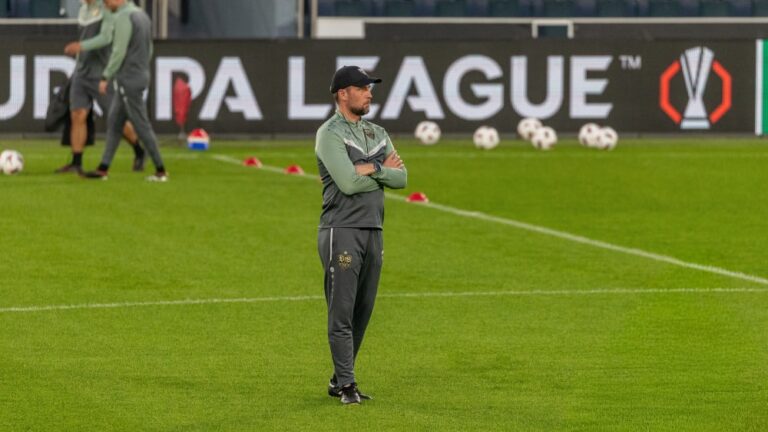
Fenerbahce and VfB Stuttgart are two teams that are currently on a roll. Sebastian Hoeneß wants to score points on the Bosporus with the usual style elements.

“We have ideas. We want to try to get the ball into our ranks quickly,“ said the VfB Stuttgart coach ahead of Thursday evening’s away game at Fenerbahce. Sebastian Hoeneß’s recipe: beat the opponents at their own game, because: ”This is a team that likes to have the ball and doesn’t like to defend. That’s exactly the situation we want to put them in.”

“It’s relatively clear how he will play. And so are we.”

The fact that he has a full squad to choose from is, of course, an advantage. With the exception of Ermedi Demirovic (foot injury) and Jamie Leweling (muscle problems), none of the regulars are unavailable. Hoeneß already has a clear idea of which players he will send onto the field, as his words at the matchday press conference on Wednesday evening suggest. With regard to his counterpart Domenico Tedesco, who took over the traditional Istanbul club in September and has a good interim record with four wins, three draws, and one defeat, he explained: ” Like us, he has two or three personnel decisions to make. Otherwise, it’s relatively clear how he will play. And so will we.”

Given the hosts’ attacking qualities, a formation with three central defenders, as seen in the recent 3-0 win at VfL Wolfsburg, would offer certain options to allow high pressing with many players in the build-up to run into space and then switch quickly. The fact that Bilal El-Khannouss, who sets the pace and provides ideas in the final third, and Angelo Stiller, who sets the tempo and is the man for the killer passes, are currently in top form should certainly not be detrimental.

VfB is the Bundesliga’s second-half leader

It is striking that Fenerbahce is struggling under Tedesco, especially in the final stages of games, as Kerem Aktürkoglu, Sebastian Szymanski, Talisca & Co. are not (yet) used to the German’s intense style. When asked about this, Hoeneß was cautious: “I can’t say whether that’s a weakness, but I want to talk more about us. We want to impress them with our intensity, our style of play.” However, should it be a close final phase, VfB can go into it with confidence despite the expected heated atmosphere: in a table that only takes into account the results of the second half of the season, the Swabians would be in first place in the Bundesliga with 18 points. That speaks for their physicality and mentality.

Kramaric overtakes Ibisevic and Hoeneß

With his goal in the 3-0 win at St. Pauli, Andrej Kramaric has also moved up the Bundesliga’s all-time scoring charts. And he has completed a special collection.

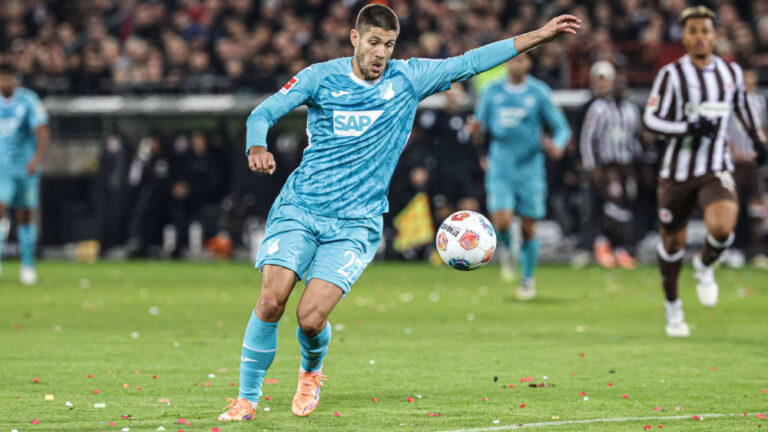
Andrej Kramaric crowned his outstanding performance at St. Pauli on Sunday with his goal to make it 2-0, and after Bazoumana Touré’s debut goal to give his side the lead, the game was as good as over. It was only the Hoffenheim striker’s second goal of the season in his seventh game, but it was remarkable in two respects.

It was his first against St. Pauli. The 34-year-old has now completed his personal “collection” and scored against all current Bundesliga teams, with the Hanseatic club being the only one missing.

He “only” scored against Fürth in the cup

But that’s not all. Kramaric has been hunting goals for TSG in the Bundesliga since winter 2016. During this period, the striker, who was signed from Leicester at the time, has faced a total of 28 different opponents with Hoffenheim in the top flight. He was successful as a goalscorer against 27 of them. Only SpVgg Greuther Fürth slipped through the striker’s fingers. The Fürth team had only been able to enjoy top-flight status for one year during Kramaric’s tenure, but Kramaric came away empty-handed in the spectacular 6-3 win in Fürth, and there were no goals at all in the return match in Sinsheim. And yet Kramaric was also successful against Fürth, not in the league, but two years earlier in the cup, when he scored the 1-0 for TSG in a narrow 7-6 victory on penalties (2-2).

With Sunday’s 2-0 win, however, Kramaric was able to overtake two renowned strikers in the all-time scoring list. With his 128th goal in the top flight, he surpassed Dieter Hoeneß and former Hoffenheim player Vedad Ibisevic.

27th place in the all-time scoring charts

Kramaric is now hot on the heels of Karl Allgöwer (129) and has his sights set on the top 25. Michael Zorc (131) currently ranks there behind Rudi Völler (132) and Giovane Elber (133). With Kramaric, that could happen very quickly. And since Hoffenheim’s star regularly scores in double digits, Horst Hrubesch (136) and Uwe Seeler (137) are also well within reach by the end of the season. However, the absolute elite remains out of reach for the 34-year-old.
To break into the top 10, Kramaric would have to add another 50 goals to overtake Dieter Müller and Klaus Allofs, who are tied for 10th place. And the giant Gerd Müller towers above them all, with 365 goals to his name, more than the two of them combined.

Somewhere between down-to-earth and cheeky

Lennart Karl played his way into the spotlight during his Champions League debut in the starting lineup—but this came as no surprise to his coach.

At home, Lennart Karl has “a wall” where he hangs items such as the jersey he wore during his professional debut at the Club World Cup and the one he wore during his first Bundesliga appearance. As of today, there will also be a silver metal ball, which the 17-year-old FC Bayern youngster earned as the official “Man of the Match” in Wednesday evening’s 4-0 win over Bruges. In his Champions League starting debut, by the way.

It’s a “really crazy story” that Karl is currently writing in Munich, but Christoph Freund isn’t really surprised. “You see it every day in training,” explains Bayern’s sporting director. “He plays with the team, is simply a really good footballer and has an outstanding finish.”

The overwhelmed Belgians felt this after just four minutes, when number 10 Karl got the ball in midfield, left four opponents standing and scored a spectacular goal from 20 meters to make it 1-0. Or, in the words of the carefree teenager: “Very good first touch, the shot was perfect.”

Karl is cheeky and down-to-earth at the same time, as demonstrated not only by his very courageous, entertaining and, above all, good performance against Bruges, but also by the way he presented himself in the interview afterwards. In front of the camera, the youngest German Champions League goalscorer of all time said very mature things like “keep working hard.”

Kompany and Freund fell into each other’s arms

Later, when DAZN and Co. were no longer watching in the mixed zone and a huge crowd had formed around this youngster, he stuck to his script, which, since his first steps with the Bayern pros, has sounded almost like the lyrics of a German rap song: “I don’t know if I should be afraid of my opponents now. I don’t need to be afraid of my opponents. That’s why I’m just going to do my thing.“

At FC Bayern, they always smile when the name Karl is mentioned, and Lennart usually becomes ”Lenny.” The way Vincent Kompany, the entire coaching team, and sporting director Freund embraced each other when celebrating the first goal spoke volumes. “Because it was still a surprise to many that he was in the starting lineup,” says Freund. “Not for the coaches, though. We talked beforehand and had a feeling that Lenny would score his first goal today. Because he always finishes so well in training.”

And when the coaching team told Lenny, “I’m going to score a goal, I just went for it.” . What else? “The guys really respect him because he’s just a good soccer player,” explains Freund with a permanent grin. “Then he scores a goal like that… it’s a really nice story.”

Now he has to keep “working hard,” because one goal in the Champions League is not the end. “He works under a great coach who will keep him grounded,” assures teammate Harry Kane, who even dedicated his obligatory post-match social media post to the ‘fantastic’ Lenny. “He has many good qualities to become a top player,” says Kane.

These include modesty (“In my opinion, he’s very down-to-earth, so we don’t have to worry about that” – Manuel Neuer), but also the boldness and cheekiness that produces such wonderful and unusual phrases as “I’ll do my thing” or “I don’t need to be afraid.”

Karl also got goosebumps on Wednesday when the Champions League anthem rang out and he was allowed to hum along on the pitch for the first time. “I always had that as a spectator up above,” back when veterans like Sadio Mané and Matthijs de Ligt were still playing for Bayern. “It’s a dream to be down there, of course.”

Schröder squanders Kings’ big lead in Phoenix

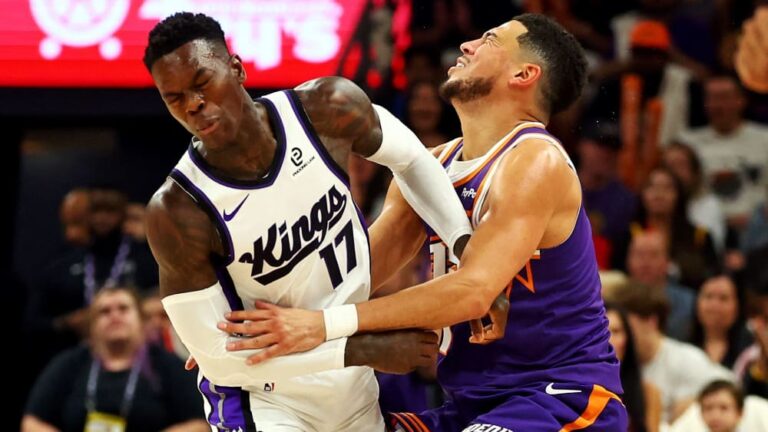
Dennis Schröder lost his first game with the Sacramento Kings. The Californians squandered a big lead and lost 116-120 to the Phoenix Suns.

This was certainly not how the Kings had imagined their season opener. The Kings were leading by up to 20 points at the end of the first half, but by the start of the fourth quarter, that lead had completely evaporated. The two guards, Grayson Allen (18 points) and Devin Booker (31, 10/19 FG, 10/15 FT), had caught fire, and the visitors were barely able to stop them.

After two three-pointers from Royce O’Neale, the Suns took the lead for the first time since the opening minutes and didn’t relinquish it for the rest of the game. The Suns always had an answer, Dillon Brooks (22) was fouled late on a three-pointer, and Booker converted a short jump shot with about 38 seconds left, which ultimately sealed the deal.

Schröder makes solid Kings debut

The Kings were missing two key players in Domantas Sabonis and Keegan Murray, but DeMar DeRozan (29, 12/17) and Zach LaVine (30, 13/24) took over the lion’s share of the scoring. LaVine had already scored 22 points by halftime, but cooled off noticeably after the break. Schröder, on the other hand, played just under 30 minutes and had occasional problems scoring in the zone. His jump shot, however, was much better, with two successful mid-range shots and two three-pointers.

In the end, the DBB captain had 14 points (6/13 FG, 2/4 three-pointers), seven assists and two steals, but also four turnovers. In the final phase, Schröder was hardly on the ball, with DeRozan and LaVine repeatedly getting the chance to try their luck.

The Kings now return home, where they will host the Utah Jazz at the Golden 1 Center on Saturday night, followed by the Los Angeles Lakers two days later.

“If this game flops…”: A rollercoaster ride with FM26

0

Football Manager 26 is about to be released in beta—which makes boss Miles Jacobson “both very excited and nervous.” Because he and his team cannot afford to fail.

It was like a big bang in the community when Sports Interactive announced in February that FM25 was being discontinued. For the first time, the developer had to deviate from its annual release cycle—the switch to the Unity Engine proved too much of a challenge. As a result, there is now a lot of pressure on Football Manager 26. The beta version of FM26 will be released on Thursday—and it’s already causing Miles Jacobson’s emotions to run high. In an interview with FM.Zweierkette, the studio director of Sports Interactive rates his emotional state on a scale of 1 to 10: “Today I’ve already been at 2, 5, 8, and 10. Right now, I’m probably around 7.”

Between 2 and 10: “Life is a rollercoaster”

Jacobson gives the confirmation of the FIFA partnership, which also includes the license for the 2026 World Cup, a positive maximum rating of 10. “But there was also a bug this morning that we thought had been fixed, but it came back—that was a 2 moment,” says the FM boss, explaining the downside of the current pre-release phase.

Jacobson uses the 2000 hit “Life is a Rollercoaster” by Boyzone singer Ronan Keating as a metaphor.

He says he is “both very excited and nervous” about the release of the beta. That’s because Football Manager 26 is “not a sequel to FM24” – rather, it can be thought of “as a reboot.” According to Jacobson, “everything has changed.” This could pose some hurdles for experienced and passionate players at the beginning.

Fans “who play 500, 600, or 1,000 hours a year” would need “significantly longer to familiarize themselves with the user interface. Because they have to forget everything they know.” While previous Football Manager games were designed more for absolute experts, the new FM26 will be more beginner-friendly.

“Sonic the Hedgehog” decides

Despite strong pre-order numbers, this could have a negative impact on financial success. And consequently on the future of the series. “At the end of the day, our studio belongs to SEGA – so Sonic the Hedgehog decides, not me,” explains Jacobson. “If this game flops, Sonic will be angry with me—and then that might be it.”

Because: “If we don’t sell anything, there probably won’t be an FM27, right?” he suggests. It’s a grim scenario, but one that the studio director himself doesn’t consider too realistic: “I think the game is really good.” If die-hard fans of the previous installments give FM26 a chance, they’ll recognize that too.

Jacobson raves about “FMPedia”

In addition to the Unity Engine and many major changes, small details are also intended to ensure the success of the new Football Manager. “The way the ‘back’ and ‘forward’ arrows work, i.e., the navigation keys, is really important and well done,” reports Jacobson. The Football Manager creator also raves about “FMPedia.”

“FMPedia means that you can no longer just search for players or clubs in the search bar. For example, you can enter ‘tactics’ or ‘scouting’ and get a description of what that is—plus links to the corresponding screens in the game,” says Jacobson. A “central point of contact for the game and the game world.”

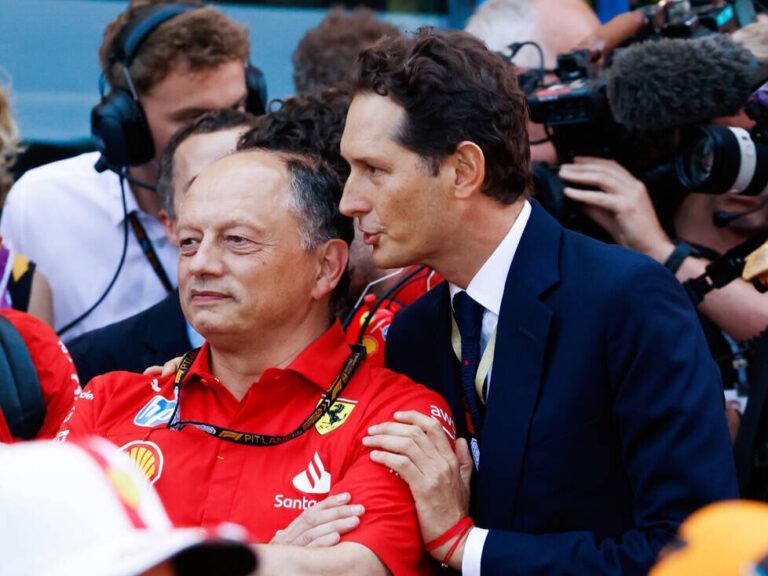
“Discussion over”: Ferrari team boss Vasseur welcomes Elkann’s message

0

Rumors of former team boss Christian Horner moving to Ferrari persist—Fred Vasseur explains President John Elkann’s statement on the matter

The latest rumors that former Red Bull team boss Christian Horner could move to Ferrari have also caused a stir at Scuderia: Lewis Hamilton is annoyed about it, but Ferrari president John Elkann has clearly backed current team boss Fred Vasseur.

How did the Frenchman react to the backing? “Honestly, I think it’s good for everyone to get news like this,” says Vasseur. “But since we are in constant contact, we already had the message—it was more intended for third parties and external audiences.”

Specifically, this means that with his official statement on Vasseur, Elkann wanted to make it clear to the public that there are no changes to the current lineup at Ferrari and that all rumors about a possible move by Horner are untrue.

“It’s important because it puts an end to the discussion and allows us to focus on the next one, instead of answering all the questions about it,” adds Vasseur, whose future has been called into question more than once this season. The Frenchman was already under criticism in the first half of the season.

New contract for Vasseur with moderate success

At the end of July, the contract with the current Ferrari team boss was extended to put an end to the rumors once and for all. However, this strategy by the Italians was not entirely successful: speculation about Christian Horner continues unabated.

“It distracts us a little as a team,” says Hamilton, who has known Vasseur for a long time. “Of course, the team has made it clear where it stands on Fred’s contract extension, and Fred, myself, and the entire team are working hard on the future of the team. So things like this are obviously not helpful.”

“I know that everyone at the factory is working incredibly hard and is focused, and rumors like this can sometimes be distracting.” Let’s hope that Elkann’s latest clarification will finally bring some calm—and that Ferrari can once again concentrate fully on its performance on the track.