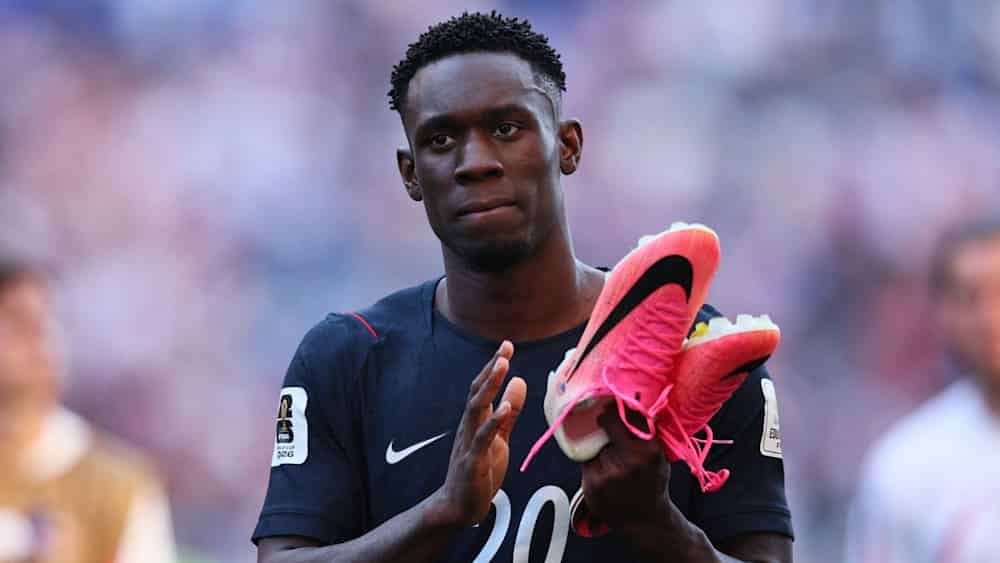
The red-card suspension for Folarin Balogun, which was subsequently suspended on probation, sparked the biggest debate at the World Cup. Mohammad Al-Kamali, chairman of the disciplinary committee of the world governing body, is said to be solely responsible for this decision.
Ahead of the World Cup round of 16 match between host nation the U.S. and Belgium, the actual game took a back seat. Instead, the suspended red card for U.S. forward Folarin Balogun dominated the pre-match coverage. While FIFA’s decision sparked outrage among many—including UEFA and opponent Belgium—U.S. President Trump expressed his gratitude. The 80-year-old himself had called FIFA President Gianni Infantino and asked for a review. In his view, Balogun’s kick to the ankle of opposing player Tarik Muharemovic “wasn’t even a foul.”
Although Infantino denied any interference, the FIFA Disciplinary Committee reviewed the incident and subsequently, citing Article 27 (which states that “it is at the discretion of the FIFA Disciplinary Committee to suspend the implementation of disciplinary measures, provided they do not concern match-fixing—which, of course, was not the case here.”) the suspension was made conditional.
According to a media report in the British Times, this decision was not made collectively by the 18-member committee, but solely by its chairman, Mohammad Al-Kamali. Normally, three committee members jointly render the verdict in important cases. However, it is not unusual for a single committee member to act unilaterally. That said, Al-Kamali has apparently never acted as the sole decision-maker in the recent past. The man from the United Arab Emirates had already explained the reasons for the revoked suspension last Monday when he published a 13-point statement.
Balogun did not help his team in the Round of 16
In any case, Balogun’s appearance had no impact on the action on the field. Even with their top scorer (three goals), the U.S. lost to Belgium 1–4. The 25-year-old put in his weakest performance of the tournament.