The premier class sees itself on track to meet its net-zero goal—but a global calendar with 24 Grand Prix races remains the biggest challenge
According to its own figures, Formula 1 has further reduced its CO2 emissions and believes it is well on its way to achieving its 2030 sustainability goals. As shown in the latest sustainability report, the premier class’s emissions in 2025 stood at 148,805 metric tons of CO2 equivalent (tCO2e). This represents an 11.8 percent decrease compared to the previous year.
Compared to the 2018 baseline of 228,793 metric tons of CO2 equivalent, Formula 1 has thus reduced its emissions by a total of 35 percent. The goal of Formula 1 is to reduce emissions by 50 percent by 2030 and to offset the remaining, unavoidable emissions through credible offset programs in order to achieve the target of “net zero.”
The current report was audited by Normative, a company specializing in carbon accounting. It covers the emissions generated by Formula 1 and its teams at their facilities, during race events, and through the extensive travel and transportation activities associated with the calendar—which originally comprised 24 Grand Prix races but was shortened to 22 this season due to the cancellation of the Bahrain and Saudi Arabia Grand Prix.
Savings Primarily in Energy and Logistics
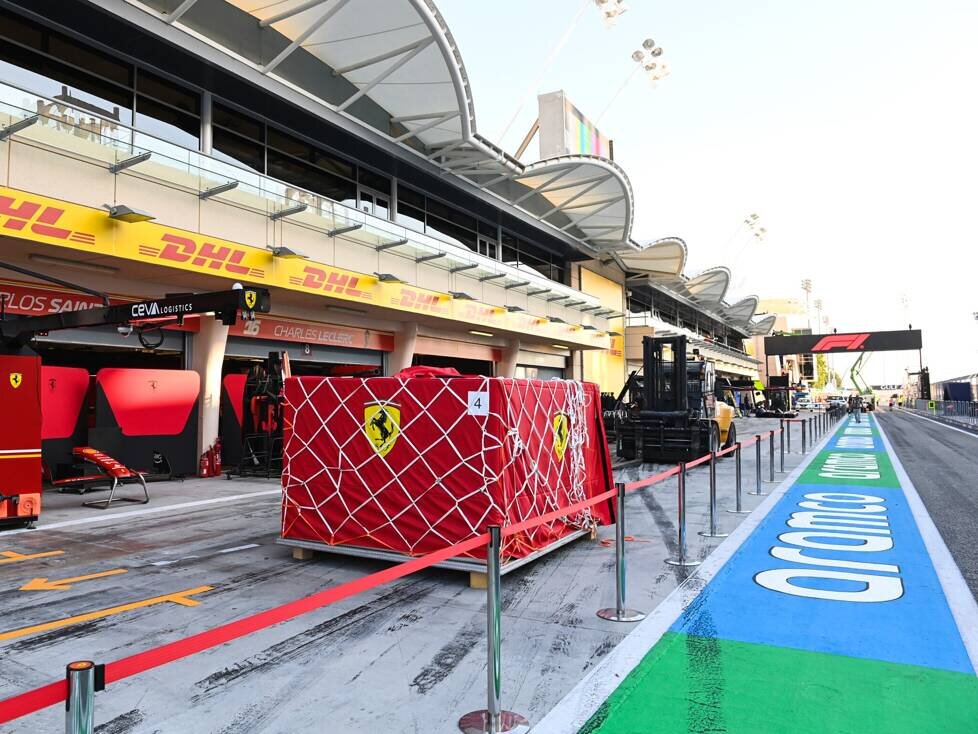
According to Formula 1, the switch to renewable energy at the teams’ and series organization’s factory sites and other facilities contributed to the largest savings. In addition, emissions from travel were reduced through increased investment in sustainable aviation fuel (SAF), the expansion of remote operations, and a reduction in the volume of cargo transported to the Grand Prix events.
Progress has also been made among logistics partners and teams. According to the report, an increasing number of teams are using sustainable fuels for their trucks, while Formula 1 has also invested in sustainable fuels for maritime transport for the first time.
Following initial tests at the 2023 Austrian Grand Prix, renewable energy is now being used to power the paddock at all European Grand Prix events. A combination of solar energy and HVO fuel (hydrotreated vegetable oil) is being used for this purpose.
Further measures planned through 2030
For the coming years, FOM (Formula One Management) plans to store even more equipment in regional logistics centers instead of regularly transporting it between the race venues and the United Kingdom.
By 2030, half of the broadcast and support cargo currently transported by air is also to be shifted to other modes of transport. Additional savings are also expected through further optimization of the race calendar. This includes, among other things, the planned closer scheduling of the races in Miami and Montreal starting in 2026.
Jones: “Sustainability Shapes Every Decision”
“Safety and sustainability form the foundation of every decision we make,” says Ellen Jones, Head of ESG (Environmental, Social, and Governance), Formula 1’s sustainability and responsibility division.
“By doubling our investment in sustainable aviation fuel, making our first investment in sustainable marine fuel, and working closely with event organizers, teams, and partners, we are achieving further emissions reductions while accelerating the adoption of new technologies.”
“These measures demonstrate our ongoing commitment to leading the way through sustainable innovation. On the path to our 2030 net-zero goal, the Future Race Operations Program will enable further significant emissions reductions in the coming years. Added to this are the effects of optimizing the race calendar, which will take full effect starting with the 2026 season.”
Formula 1 Sees Itself on Track
According to Formula 1, the planned measures are intended to help further reduce emissions in the coming years and achieve the series’ long-term sustainability goal.
While the results so far show significant progress, the most difficult part of the task still lies ahead for Formula 1: Whether the net-zero goal is actually achieved will likely depend above all on whether the largest sources of emissions from a global racing calendar can be permanently reduced—and not just managed more efficiently.