The 2026 World Cup will bring several changes for both referees and players. These changes primarily concern time-wasting and the increased role of VAR. Here is an overview of the rules and changes FIFA plans to implement …
Time-wasting has been a problem ever since soccer began. Even at the 2022 World Cup, the rulemakers dealt intensively with the issue of net playing time. As a result, stoppage time was noticeably increased. It lasted particularly long during England’s 6-2 win over Iran, in which Brazilian referee Raphael Claus added 27 minutes of stoppage time. For the tournament in Canada, Mexico, and the U.S., FIFA is taking a new approach and attempting to tackle the root of the problem. As a result, the causes of the delays will be penalized.
No time-wasting on goal kicks and throw-ins
For goalkeeper goal kicks and throw-ins, the eight-second rule has been in effect since the 2025/26 season. If the ball does not leave the hand quickly enough, play continues with a corner kick for the opposing team. In the future, this will also apply to throw-ins (if the rule is violated, possession changes). It is up to the referee’s discretion when to start the countdown and signal it visibly to the player. To start the countdown, the referee does not have to wait until the player is in possession of the ball. They may also begin counting if the player “takes the ball slowly,” if they “attempt to take the throw-in from the wrong spot,” or “places the ball incorrectly during a goal kick.”
Time limit also applies to substitutions
The substituted player has only ten seconds to leave the field once a substitution has been signaled. If the player does not comply, the substitute designated to replace him may not enter the field until there is another stoppage in play after at least one minute. It could therefore take significantly longer for the team to be back at full strength.
What changes during injury breaks?
To prevent time-wasting during treatment breaks, a player receiving treatment must leave the field for at least one minute. Exceptions include injuries to the goalkeeper, injuries resulting from a collision between the goalkeeper and a field player or between multiple players on the same team, serious injuries (such as to the head), or injuries resulting from a foul for which the opposing player received a yellow or red card. If a penalty kick is awarded as a result of the injury and the player receiving treatment is the kicker, he may also return to the field immediately, even if no personal penalty was imposed on the opposing player.
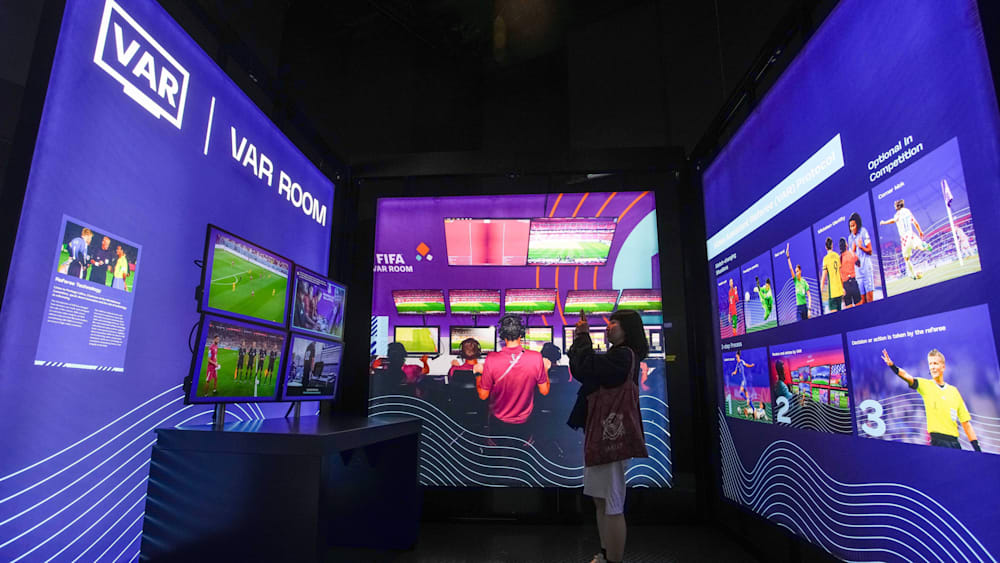
2026 World Cup: VAR Gets New Access Rights
Even more VAR? That’s unlikely to sit well with many fans. In the event of a red card following a yellow-red card, the validity of the second yellow card may now be reviewed. However, incorrect decisions will still be unavoidable, as the first yellow card cannot be reviewed, meaning a yellow-red card could still be issued incorrectly. If the wrong player is penalized with a yellow or red card, intervention should no longer be limited to cases of mistaken identity within the same team, but should also apply when a player from the opposing team has been penalized.
VAR may even intervene on corner kicks
In the future, VAR will be allowed to correct clearly incorrect corner kick decisions—provided that the incorrectly awarded corner kick is immediately identified by VAR and corrected by the referee without causing a significant delay. VAR is therefore not intended to scrutinize every corner kick like a detective.
Water breaks and stoppage time
In addition, there will be one three-minute water break per half in all 104 matches. “Regardless of the stadium, whether it has a roof, and the temperatures,” explained tournament director Manolo Zubiria. This means there will once again be long periods of stoppage time.