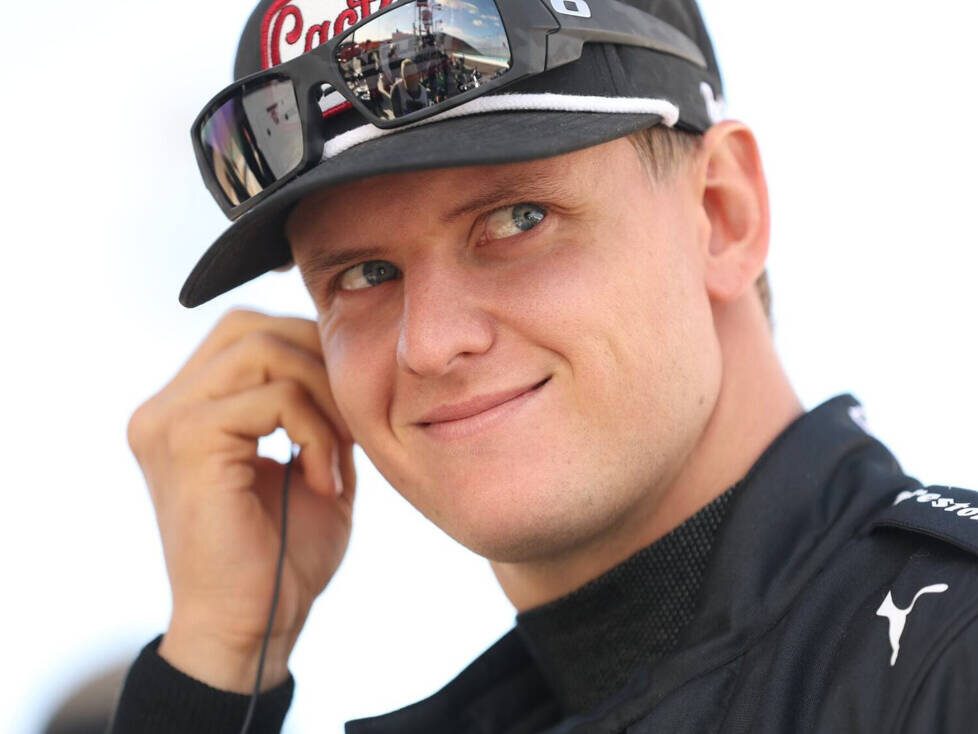
From the short track to the Brickyard: Mick Schumacher analyzes his debut in Phoenix and explains the major differences to the big highlight – the Indy 500
A racing driver never forgets the first oval race of his career. For Mick Schumacher, the Phoenix Raceway was his baptism of fire on a short oval, and even if the bare result does not fully reflect the learning curve, the German is optimistic about the big IndyCar highlight in May 2026: the Indianapolis 500.
Expectations were high when Schumacher started his first IndyCar weekend on an oval in the Arizona desert. The 25-year-old’s potential shone through, especially in qualifying, as he held his own in the individual time trials. With a consistent performance, he secured fourth place on the grid, which was by no means a matter of course for a rookie on this special terrain.
However, the dynamics of an oval race are unpredictable, as Schumacher had to painfully learn. “Qualifying went pretty well. I think we’re pretty happy with that. As a team, we managed to put ourselves in a good position,” said Schumacher, summing up his first few meters in the left-hand corners. However, the tide quickly turned against him and his team in the race.
Lots of bad luck in Phoenix
“Unfortunately, the race was pretty hectic, surprising in many ways,” he says, describing the start phase. “Unfortunately, the pit stops weren’t ideal, so we ended up one or even two laps behind and had very few opportunities to get back to the front.” Bad luck stayed with him: “Every time we pitted under green, the yellow phase came straight afterwards, which was not ideal.”
Despite the setbacks, the race was an invaluable experience for Schumacher. A short oval like Phoenix is a physical and mental challenge: at just 1.609 kilometers (one mile) in length with a banking of nine degrees in turns 1 and 2 and eleven degrees in turns 3 and 4, there is hardly any time to breathe.
In comparison, the Indianapolis Motor Speedway is a completely different world. The “Brickyard” is significantly longer at 4.023 kilometers (2.5 miles), but has a slightly flatter banking of exactly 9.2 degrees in all four corners. While Phoenix is characterized by aggressive manoeuvres and constant steering, aerodynamic efficiency dominates at Indianapolis.
Gigantic oval: Indianapolis and its pitfalls
The dynamics are fundamentally different: in Phoenix, drivers often struggle with dirty air and tire management in the tightest of spaces. In Indianapolis, on the other hand, huge slipstream battles develop at speeds of over 370 kilometers per hour, in which the timing of the overtaking maneuver determines victory or defeat. Schumacher is aware that Phoenix was just the warm-up program.
“It was an experience. I think we learned a lot, and now it’s about processing what we’ve experienced and understanding what we’ve taken away from this event so that we can do better next time,” he says. When asked what he can take away for the month of May, he replies: “A lot. I mean, obviously it’s just going to be bigger, and the cars will obviously be a bit faster on the straights than what we had in Phoenix.“
However, he sees the parallels that will help him in May: ”Nevertheless, I think the whole processes and some of the approaches we had to take to the corners are similar. Fortunately, we will have a whole series of days to drive beforehand at the Indy 500.” For Schumacher, Phoenix was the theory – Indianapolis will be the masterclass.