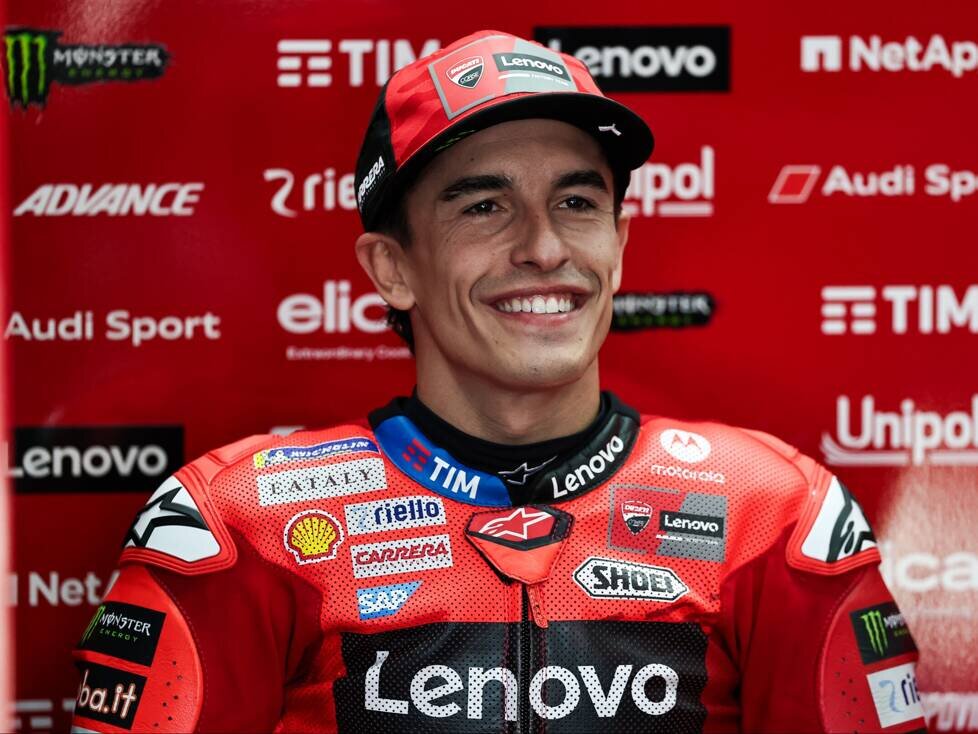
Kevin Schwantz sees many parallels between Marc Marquez and his own career – what connects the two exceptional riders in his view
Kevin Schwantz, 500cc world champion in 1993, sees clear parallels between his own career and that of MotoGP star Marc Marquez. “Yes, I see myself in him,” said the American in an interview with GPOne.com.
“When he left [Honda], everyone understood how badly the brand was doing and how much he compensated for that with his talent. It was similar for me with Suzuki: some riders were competitive, but no one could win right away.”
Both riders have earned a reputation for getting more out of their bikes than the technology actually allowed. Schwantz became a legend on the 500cc Suzuki, even though it wasn’t consistently the strongest bike on the grid.
Schwantz: Anything else would be boring
It was similar for Marquez for a long time, who for years was the only rider capable of pushing the difficult Honda in MotoGP to its limits and beyond.
Looking back on his own career, Schwantz makes it clear that a technical disadvantage does not have to be a bad thing – quite the contrary. “Riding the fastest bike would have been boring!” he says. “I liked having to think about strategy and find places to overtake.”
“My Suzuki wasn’t always the fastest, but it was competitive. In 1989, it was strong but prone to failure. In 1993, everything finally came together: reliability, consistency, performance. You didn’t need top speed, you needed intelligence and courage.”
Marquez was not afraid of a fresh start
Another point of contact: injuries. Marquez’s latest world championship title, which he secured five races before the end of the season in Japan, is considered a sporting triumph over massive setbacks. For four years, the Spaniard struggled with the aftermath of his crash in Jerez in 2020 and also with the Honda.
For the 2024 season, he finally drew the consequences and changed manufacturers. The move to Ducati proved to be spot on and resulted in his first world championship title since 2019. Schwantz goes on to explain that saying goodbye to the manufacturer you grew up with is anything but easy.
“It’s difficult to leave the team you started with. I’ve never done that, but I understand his decision. After everything that happened with the injury, it would have been easy to quit. Instead, he kept going, and that says everything about his character,” he emphasizes.
Here, too, he sees a commonality: “Pushing hard is in our DNA: sometimes it works, sometimes you crash because of it. But that’s who we are.”
Alex Marquez as an important support for Marc
Schwantz attributes an important role in Marquez’s return to the top to his younger brother Alex Marquez. In Marc’s first Ducati season, both rode for Gresini before the older of the brothers moved to the factory team. “I think his brother Alex helped him a lot and gave him an important point of reference during his rehabilitation. Now he has proven his worth himself and made this season look almost ‘easy’,” he sums up in 2025.
In sporting terms, the year was almost perfect for the Marquez family: Marc and Alex took first and second place in the world championship. Things didn’t go so well for Francesco Bagnaia, Marc’s teammate in the Ducati factory team, who, despite occasional race wins, mostly stood in the shadow of the new star.
Even Schwantz finds it difficult to explain: “Bagnaia had a difficult season, even though he won races. From the outside, it’s hard to understand today, with all the electronics, tires, and aerodynamics. If you ride too slowly, the tires cool down and you crash. It’s a different world.”
Nevertheless, he remains fascinated by speed, as well as the memories of the feeling of racing. “I still love that feeling of pushing, like when you’re at Misano with the GSX-8 at full throttle and you can feel your heart beating like it used to,” says Schwantz.
“Racing was a necessity—the desire to compete. Winning was great, but the best part was coming back to the pits and seeing the team’s joy. I loved winning for them. All the risk was worth it for that shared happiness.”