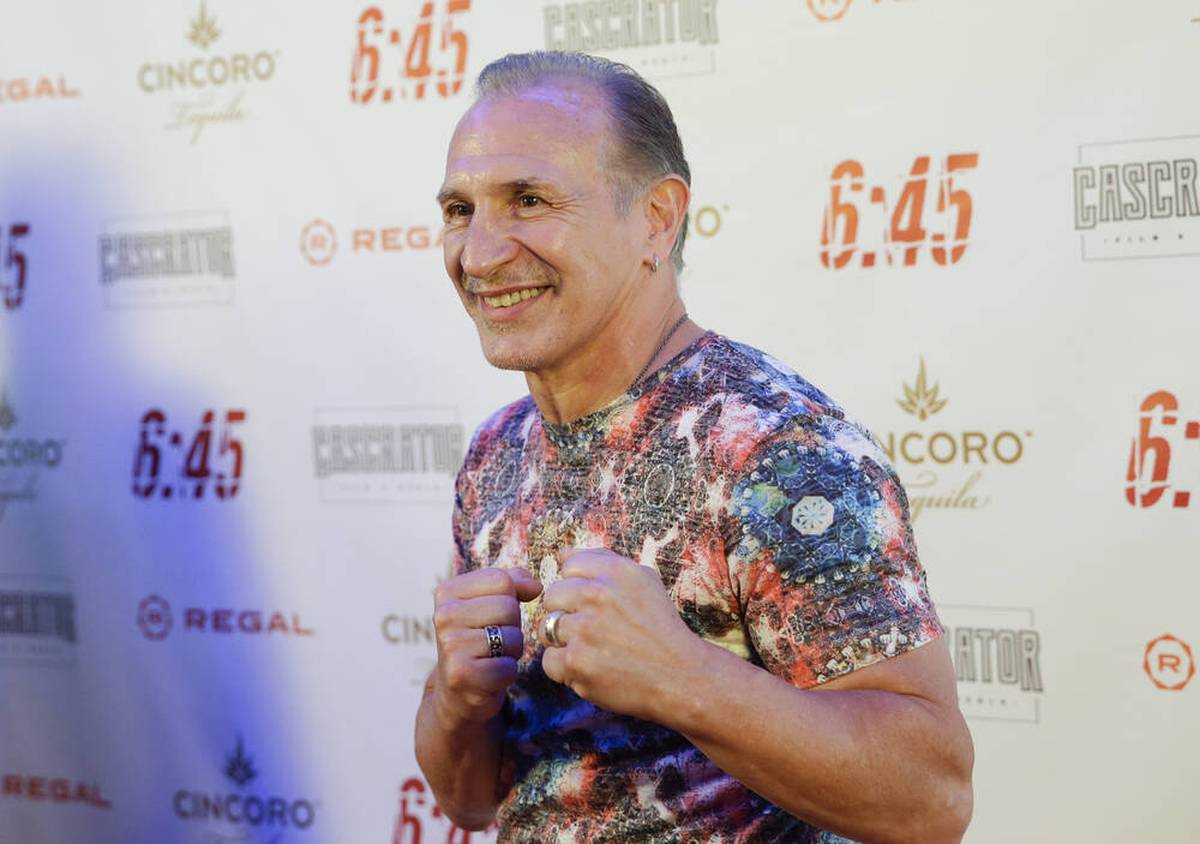
Forty-three years ago, a brutal world championship fight against US favorite Ray Mancini ended in the death of Duk-koo Kim and two other tragedies. They changed the sport forever.
This boxing match was almost unparalleled in its tragedy: on November 13, 1982, Ray “Boom Boom” Mancini defeated Korean Duk-koo Kim in Las Vegas in the fight for the lightweight world title. Kim died four days after the fight as a result of the match, and the drama led to two further tragedies, changing the world of boxing forever.
The Korean was not the first boxer to lose his life in the ring. Nevertheless, the way in which he had pushed himself beyond his personal limits during the fight sparked heated debate in the weeks and months following the bout. He had fought Mancini for a full 14 rounds and was barely able to put up any resistance in the final rounds.
Boxers battle it out over 14 rounds
The fight between Kim and Ray Mancini, who was extremely popular in the USA and was defending his WBA belt against the Korean for the second time, developed from the first round into a brutal battle in which both fighters tried to knock each other down with hard punches without much defense.
Both fighters landed hard punches, both to the body and to the head of their opponent. The fighters staggered several times after the hard blows. The 10,000 spectators in front of Caesar’s Palace in Las Vegas and the millions of people watching on TV—CBS broadcast the spectacle live on national TV—were on the edge of their seats during the brutal contest.
Gil Clancy, who was working as a boxing analyst for CBS at the time, already sensed something bad was going to happen in the sixth round: “Something is going to happen in this fight. Either one of the fighters is going to get cut by a punch or send the other one to the canvas.”
And that’s exactly what happened: in the 14th of 15 rounds, it became clear that Kim had never had to box over such a distance before. The Korean was just staggering around the ring. After a combination of punches, Mancini sent his opponent to the floor with a crashing right hand.
Although Kim tried to pull himself back up against the ropes, referee Richard Green ended the fight.
The victorious Mancini celebrated his victory, unaware of the tragic consequences of the fight, but just a few minutes after the end, the sporting outcome was completely overshadowed.
Kim Deuk-Koo, late 1970s and early 80s South Korean lightweight who tragically died following his 1982 title bout against Ray “Boom Boom” Mancini boxing history pic.twitter.com/9a8lOmIwi0
— Boxing History (@BoxingHistory) June 11, 2021
Kim collapses and dies in hospital
Kim collapsed shortly after the fight and had to be carried out of the ring on a stretcher. According to Sports Illustrated, the Korean was breathing only four times per minute on the way to the hospital. Upon arrival at Desert Springs Hospital, Kim underwent emergency surgery. In a two-and-a-half-hour operation, a blood clot measuring almost 100 cubic centimeters was removed from the right side of his brain. According to the doctor, this clot was caused by one of the hard blows to the head during the fight. Despite the successful operation, Kim died four days later as a result of the clot. He had previously fallen into a coma from which he never woke up.
Macabre: The Korean had caused a stir before the fight with his martial rhetoric. “Either he dies or I do,” he told a reporter before the fight. In his hotel room in Las Vegas, shortly before the fight, he wrote “Live or die” on a lamp.
Fight leads to further tragic consequences
As if the death of the Korean boxer wasn’t tragic enough, it led to numerous other tragedies in the months following the fight.
Kim’s mother, who according to the New York Times had traveled from South Korea to Las Vegas and was at her son’s side until his death, committed suicide just three months after her son’s death.
Just under seven months after the fight, the next tragedy struck: referee Richard Green also committed suicide. Green felt partly responsible for the Korean boxer’s death.
Mancini struggled with depression
Kim’s opponent Ray Mancini also blamed himself for his opponent’s death and became depressed.
Mancini continued boxing and successfully defended his title several times, but he was never really successful again.
After losing his title in 1984, he fought sporadically until the end of his career in 1992, but according to boxing promoter Bob Arum, he was “never the same again.”
Tragic incident leads to numerous rule changes
The fight also had a profound impact on the sport of boxing, leading to numerous rule changes. The Nevada State Athletic Commission introduced the standing “eight-count.” This allowed the ring judges to count a knockdown even if the fighter had not actually been knocked down but was close to being knocked down. In addition, it was decreed that boxers were not allowed to fight for at least 45 days after a knockout defeat.
However, the biggest rule change was introduced by the WBC boxing association: from 1982, the number of rounds in title fights was reduced from a maximum of 15 to a maximum of 12. The WBA and IBF followed suit in 1987, and the WBO also started with a maximum of 12 rounds when it was founded in 1988.
Either way, November 13, 1982, became a day that changed the way many boxing fans and observers viewed the sport. From that day on, boxing was never the same again.