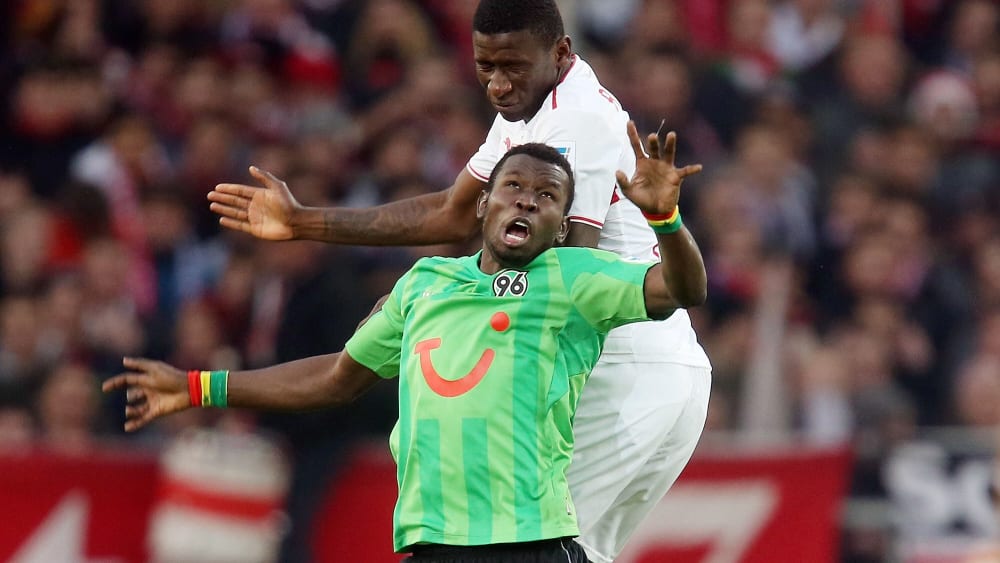
Taxes and soccer players are a tricky combination, as we have known since the sensational revelations of Football Leaks. Former Hannover striker Mame Biram Diouf was also asked to pay up by the Turkish tax authorities—but he is now getting the money back from his former club.
In Turkey, it is not uncommon for contracts with foreign professionals to stipulate that the respective club is responsible for paying the tax. This was also agreed in the working paper signed by Mame Biram Diouf and Konyaspor at the end of August 2022.
Konyaspor was to pay the income tax due
The striker was to receive a signing fee equivalent to €50,000, plus an annual salary of €592,000 – net, mind you. This is because all income tax due in Turkey was to be paid by the Süper Lig club. This is not unusual there – see the case of Mario Balotelli and Adana Demirspor, which ended in a million-dollar payment for the Italian.
However, the national tax authorities asked Diouf, who had once been a fairly successful goal scorer for Hannover 96 before moving to Stoke City, to pay up and later demanded a good €51,000 in taxes. On April 22, 2024—at which point the Senegalese had long been under contract with Göztepe—Diouf sent a letter to Konyaspor demanding that they reimburse him this sum. The 37-year-old also sent the deferral document issued by the Turkish Ministry of Economy and Finance.
No entitlement to default interest under Turkish law
His former employer apparently ignored this, because on October 30, 2024, Diouf filed a complaint with the FIFA Dispute Resolution Chamber for the repayment of his tax of €51,000 plus approximately €13,000 in interest. The FIFA judges did not award him the €13,000 because, according to Turkish law, Diouf is not entitled to interest on arrears. In addition, the club questioned the specific tax evidence.
However, from the perspective of the world governing body, the club’s contractual obligation to pay the taxes is undisputed, so it awarded the striker, who now plays for Ankara Keciörengücü in the Turkish second division, around €50,000. In this case, even with 5 percent interest, which, however, will only be calculated from December 2024 due to insufficient evidence.