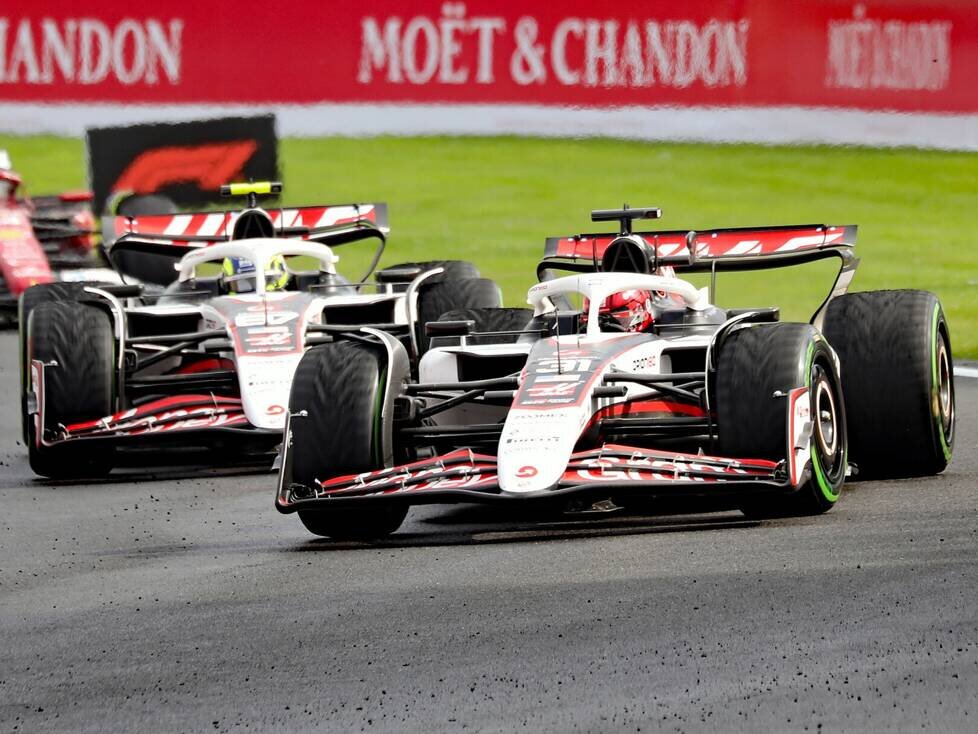
According to Ayao Komatsu, Haas has a disadvantage in the development of its new car for 2026 – but that doesn’t necessarily mean it will be at the back of the grid
With the new Formula 1 regulations coming into force in 2026, all teams will start from scratch in developing their cars. In theory, this means equal opportunities for all teams. However, according to Haas team boss Ayao Komatsu, the reality is somewhat different.
“I think we need to be a little cautious about major rule changes,” said the Japanese, dampening expectations and explaining that the larger racing teams should actually have “an advantage” with completely new regulations on paper.
The team boss justifies this by saying “because they have established processes and methods.” So, while everyone starts with a blank sheet of paper when designing a new car, Komatsu believes that the top Formula 1 teams have many more options when it comes to development.
One example is the simulator, which will play “a much bigger role” in the future than it does now. However, Haas does not even have its own simulator at the moment and has to go to the Ferrari factory team in Maranello instead.
In addition, as a customer team, it does not have control over the development of the new engine for next year, and under the new regulations, managing the power unit will be a “major challenge,” according to Komatsu.
Komatsu: Factors “that cannot be measured objectively”
“If you look at it really objectively, we have a big disadvantage,” says the Haas team boss about 2026. “But if that were really the case, we would have to finish in 10th place every year,” the Haas team boss also notes.
That’s because the US team, which only started competing in Formula 1 in 2016, is the youngest and currently the smallest racing team on the grid. “We don’t even have 400 people. The other teams have so many more people and much better hardware and so on,” Komatsu emphasizes.
Nevertheless, the team finished last season in seventh place in the world championship and is well positioned for 2025. “We are fighting in the midfield and qualifying for Q3,” Komatsu reminds us. So there are some factors “that cannot be measured objectively.”
This means that despite the limited possibilities, 2026 could well be “an opportunity” for Haas, according to the team boss, “but at the same time, we have to be modest when it comes to where we stand in comparison to others. Other people aren’t stupid either.”
The truth probably lies somewhere in between. One should be “neither too pessimistic nor too optimistic,” according to the team boss. Even if, on paper, they have a disadvantage compared to the top teams.