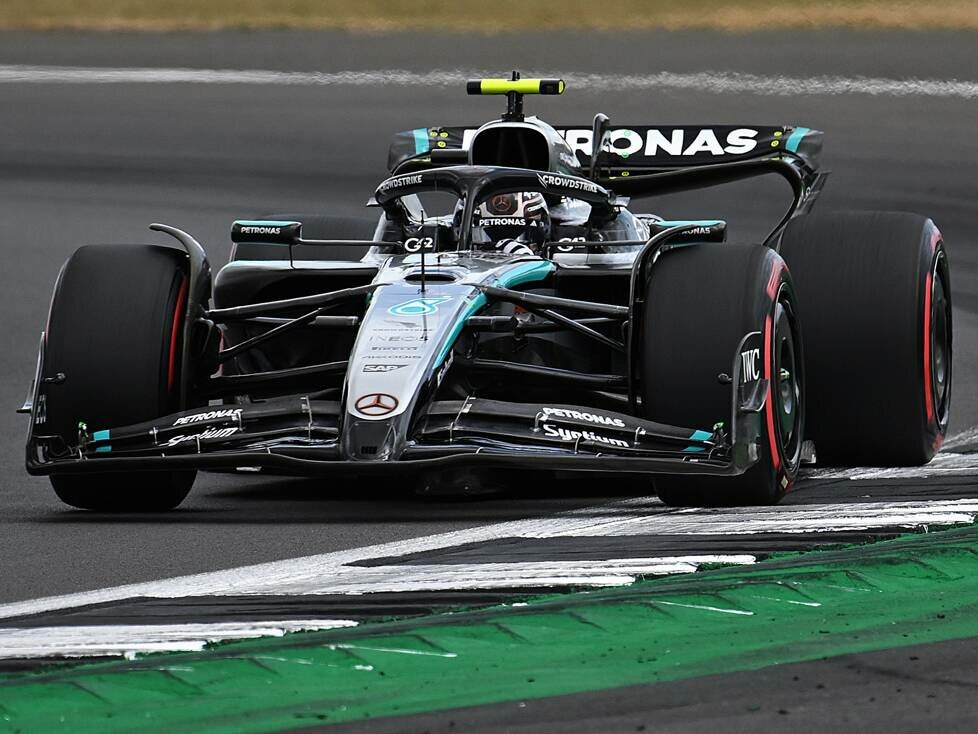
Whether the traditional weight limit has become superfluous in modern Formula 1 and how the teams will deal with the changed rules for 2026
Simone Resta believes that the weight limit in Formula 1 has actually had its day. The deputy technical director at Mercedes argues that the teams are already sufficiently restricted in their development.
“The fact is that we all have to stick to the budget cap anyway, and that limits how much effort everyone can put in. And I think the current regulations are designed to work,” says Resta.
“It’s challenging, but it’s the same for everyone. Because we are given a reference for the development goals – and that’s helpful.”
Will all teams achieve the new minimum weight?
But in 2026, the technical specifications will change: Formula 1 is lowering the weight limit from 800 to 768 kilograms. This means that Formula 1 cars will be significantly lighter for the first time in years – provided the teams actually manage to build their vehicles that light.
Resta is skeptical on this point: “I think weight could be a bigger issue this time than in the past because everything is changing and the new weight limit is much more challenging for everyone. Compared to previous rule changes, I think this is a bigger deal.”
This is because, unlike in recent Formula 1 history, teams have to adjust to less weight rather than more – “and that’s in combination with lots of new features on the car – mechanics, suspension, tires, brakes, rims, safety regulations for the chassis and nose, the power unit. Everything is new, even the gearbox,” explains Resta.
First the weight, then the performance
In his view, the new Formula 1 rules are therefore a “fairly major intervention in the overall structure” of the car. This needs to be taken into account in technical development.
That is why weight could become the main issue in the preparations for 2026: “It is particularly important to have a good basis right from the start when it comes to the main structures such as the chassis, drive and transmission,” says Resta. Because if improvements have to be made in these areas, “it is an enormous effort and very expensive during the season.”
However, once the basic framework cited by Resta is in place, everything else can be adapted to it: “It’s much easier to develop the fairing, the underbody or a new front wheel.”