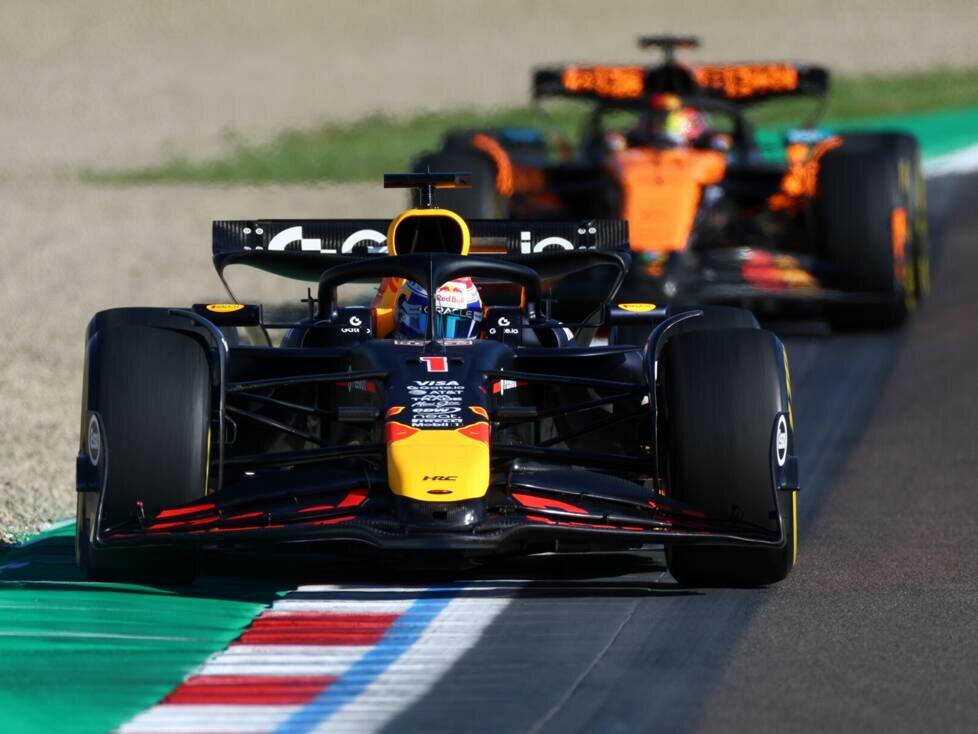
The FIA made further changes to the technical regulations ahead of the Formula 1 race in Imola – but did this really have an impact on the result?
Shortly before the Formula 1 race in Imola, the International Automobile Federation (FIA) published two technical directives that caused quite a stir in the paddock. But did these clarifications actually have an impact on the balance of power?
As reported by Motorsport.com, these were not rule changes, but technical clarifications – i.e., guidance on how to understand and implement existing rules.
Focus on skid blocks and tire management
The first directive concerned the materials used for the skid blocks and their attachment. In the current ground effect era, vehicle height is crucial for performance. Teams try to set the cars as low as possible without exceeding the prescribed wear limits on the underbody.
The second directive related to methods of cooling the tires. At the request of one team, the FIA clarified which procedures are permitted and which are not.
Red Bull sets its sights on McLaren
Red Bull had particularly targeted McLaren in the run-up to the race. Max Verstappen told Dutch media at the Miami race: “When you look at what McLaren is doing with the rear tires, we’re all doing something wrong.” Team boss Christian Horner seemed rather surprised by McLaren’s lack of strength in Imola.
Red Bull’s technical director Pierre Wache explained that the top team’s update package was not as big as it had looked, but rather that McLaren had fallen short of expectations in Imola.
But McLaren is taking it in stride. Team boss Andrea Stella said at Friday’s press conference: “I hope there will be more stories like this in the future – it means our competitors are focusing on the wrong things. That only helps us.” The team emphasizes that nothing has changed in their approach – the FIA also confirmed that Oscar Piastri’s car was compliant with the rules after the race in Miami.
Red Bull: Imola not a benchmark?
Verstappen himself also dampened the euphoria after his victory in Imola. In his opinion, the strong performance was primarily due to the track layout: “I think it’s very track-specific. Whenever we’ve been really competitive, it’s been on high-speed tracks with fast corners.” Although the new update worked well, Monaco is a completely different case.
In fact, this analysis fits with the season so far: Red Bull was very strong in Suzuka and Jeddah, which are also tracks with many fast corners. In Bahrain and Miami, on the other hand, with more slow corners, the team struggled. Monaco will not be a real yardstick due to its special characteristics, but the upcoming race in Barcelona will be. There, the FIA is also cracking down harder on flexible wings, especially at the front.
The Spanish Grand Prix could therefore be an exciting test for all teams, not only from a sporting point of view, but also in terms of technical development.