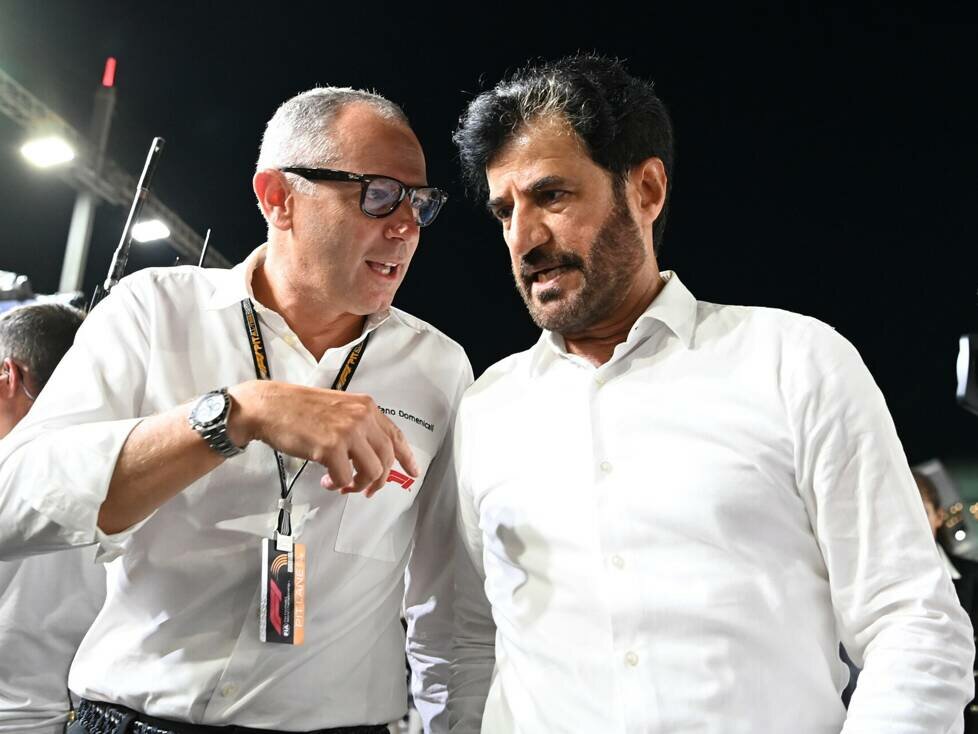
Carlos Sainz Sr. wants to challenge Mohammed bin Sulayem in the FIA presidential election: But how, when, and where will it take place? All the info here:
While the conclave has been meeting in Rome since Wednesday, there is also fresh movement at the FIA in the election of its next leader: rally legend Carlos Sainz Sr. is seriously considering running as a candidate against incumbent Mohammed bin Sulayem.
However, it will be some time before white smoke rises above the world motorsport governing body, as the FIA presidential election will not take place until December 12 in Tashkent, Uzbekistan, where Bin Sulayem is reportedly seeking a second term. This raises the question: How does the FIA election process actually work?
One thing is clear: presidential elections are held every four years at the FIA General Assembly. The General Assembly is the highest decision-making body of the FIA and usually meets once a year. It is composed of the national motorsport authorities and automobile clubs, representing a total of 245 member organizations in 149 countries.
The General Assembly primarily deals with agenda items submitted by the two FIA World Councils (World Motor Sport Council and World Council for Automobile Mobility and Tourism) and the Senate. It also elects all senior FIA officials, including the president. The next election will therefore take place in mid-December.
Who can run for office?
Similar to political elections, a candidate for the presidency does not run alone. Presidential candidates put together an entire team covering key positions in the fields of sport and mobility. For example, a candidate runs together with a designated president of the Senate.
In addition, they must appoint a deputy president and seven vice presidents for the area of sports, as well as a deputy president and seven vice presidents for the area of automotive, mobility, and tourism. The number of vice presidents ensures that all regions of the world are adequately represented: two representatives for Europe, one each for the Middle East, Africa, North America, South America, and the Asia-Pacific region.
Candidates for the presidency and the vice presidents must be under 70 years of age on election day—previously, the age limit was 75, but lowering it took Bin Sulayem’s potential opponent Dave Richards out of the running, which caused some controversy.
An FIA president can serve a maximum of three four-year terms, meaning they can remain in office for a maximum of twelve years. In order to be eligible for election, the proposed list must be supported by a specified number of member organizations from the sports and mobility sectors.
How are the elections held?
Each member country can cast up to 24 votes – twelve for sport and twelve for mobility. Countries that only have a recognized member organization in one of the two areas have only twelve votes.
The election is held by secret ballot. The votes are counted by the FIA’s legal department under the supervision of observers appointed by the General Assembly. Members can either vote for one candidate or abstain. The candidate who receives an absolute majority in the first ballot or a simple majority in the second ballot is elected.
In the last election in 2021, Bin Sulayem prevailed over Graham Stoker and succeeded Jean Todt. Bin Sulayem received 61.62% of the votes, Stoker 36.62%, and 1.76% of the members abstained. Incumbent Bin Sulayem, a 14-time Middle East rally champion, had already held several leadership positions within the FIA prior to his election.
Recently, however, the man from the United Arab Emirates came under pressure, partly due to concerns about the FIA’s leadership structure. Several high-ranking officials recently left the organization, including Bin Sulayem’s elected vice president for sport, Robert Reid.