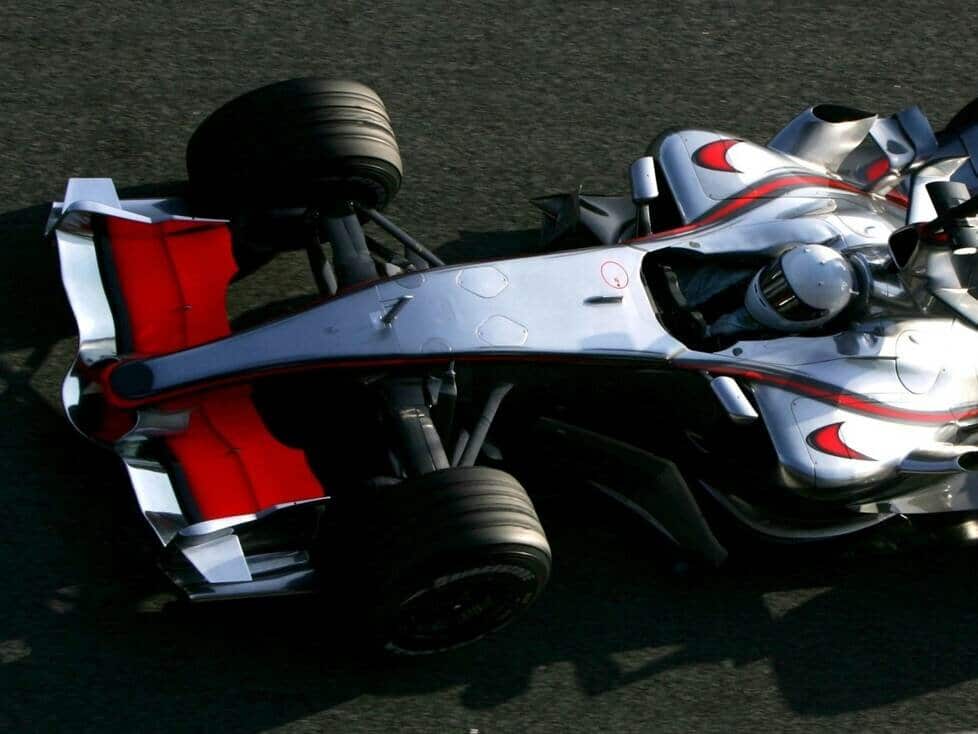
Famous color designs of test cars in Formula 1 history: what some cars looked like before their first race and why
The first outing of a new Formula One car sometimes gives a false impression. This is because teams sometimes deliberately run conventional wings and underbodies, for example, so as not to immediately show their true innovations. Occasionally, the cars are even painted in special colors during testing: we call these “test designs” because they are not used in races.
And, of course, we provide the relevant information. There are many different reasons why teams redesign their vehicles after testing and before the Grand Prix.
McLaren, for example, has done this several times in the recent Formula 1 past: During the first test drives, the team sent its cars out on the track in the traditional McLaren color, only to return to the then-current color scheme shortly thereafter.
In addition, McLaren showed its now reintroduced traditional color orange at Pirelli tire tests before the start of the 2025 season, but did not use any sponsor stickers during the test drives. Other racing teams have done the same before McLaren.
Or BMW: When the engine manufacturer from Munich prepared to enter Formula One with Williams at the end of the 1990s and tested with Williams cars, BMW did so with eye-catching BMW color designs that were not adopted later. Classic test designs, in other words.
There have also been completely “naked” cars during Formula One test drives, when the cars roll out of the factory and onto the track practically straight away, still in their unfoiled carbon fiber look. The result is a completely black race car, like the one driven by Michael Schumacher.
Red Bull, on the other hand, has used a camouflage design several times. This is a camouflage pattern, such as that used by car manufacturers for their test mule vehicles: lines, stripes and shapes are intended to conceal the true aerodynamics and not immediately reveal to observers what is really there.
And then, of course, there were the test designs that didn’t make it to the starting line for obvious reasons: because they were cars from tire manufacturers that only wanted to test and further develop their tires with these cars. Participation in the race was out of the question.