


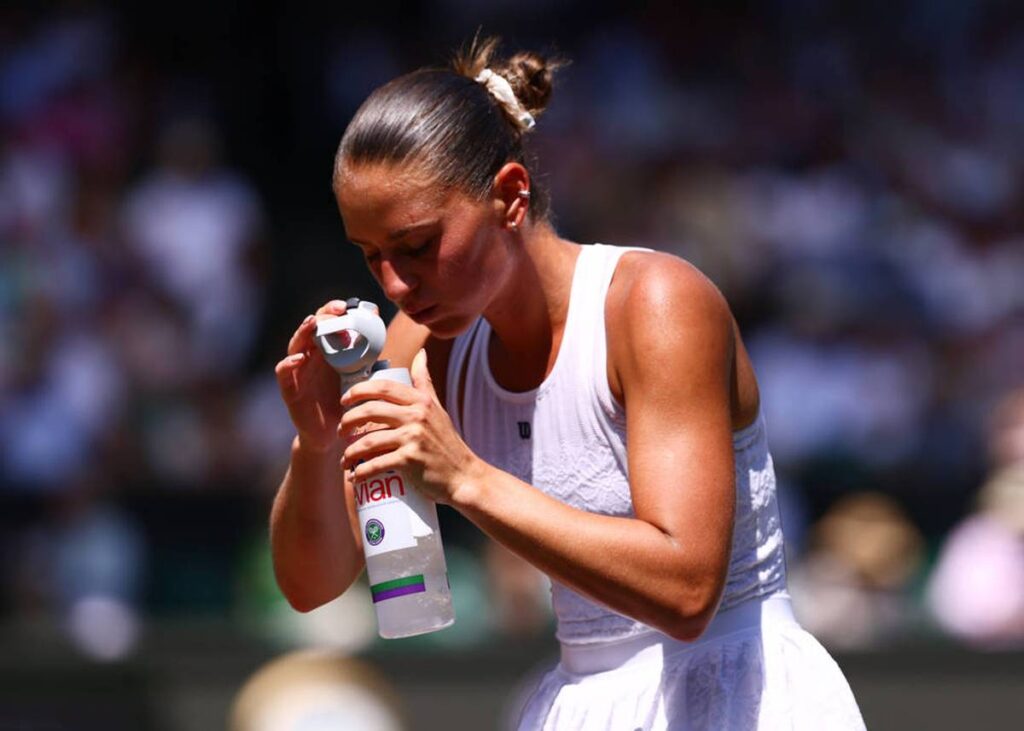
Marta Kostjuk repeatedly uses the tennis stage to draw attention to the situation in her home country. The Ukrainian sharply criticizes an IOC decision.
Ukrainian tennis player Marta Kostjuk has sharply criticized the International Olympic Committee’s (IOC) decision to reinstate Russia.
“This is terrible. I think this is very, very far from fair play for all the countries involved here, not just for Ukraine,” Kostyuk said. “I just want to go out there and hopefully beat every single Russian woman I play against at the Olympics. That’s it.”
IOC decision? “100% disagree”
On Tuesday, following a meeting of its Executive Board, the IOC announced that sanctions against the Russian Olympic Committee (ROC) had been provisionally lifted, thereby rendering the recommendations to the sports federations null and void.
For the time being, however, Russian athletes and teams are not allowed to compete under their own flag and national anthem, at least at the Olympic Games.
“I disagree 100 percent with this decision. But I get the feeling that many people have spoken out on this issue. They obviously don’t agree with it either,” Kostyuk said after reaching the Wimbledon semifinals for the first time: “I don’t think anything will change.”
Wimbledon: Kostyuk Reveals Personal Details About the War
The Ukrainian player repeatedly uses the tennis stage to draw attention to the impact of Russia’s war of aggression on her homeland.
“On Monday, they destroyed four streets with residential buildings. That was about five kilometers from where my parents live,” Kostyuk said: “Another difficult night and many dead—innocent people, children. It’s not easy. I’m trying to stay up to date on everything that’s happening right now.”
She said she was “certain” that the Ukrainian players would voice their concerns to the International Tennis Federation (ITF). However, she would “definitely not do that” ahead of her semifinal on Thursday against Linda Noskova of the Czech Republic.
Perhaps during the hard-court season in the U.S. “or wherever else, I can talk more about it whenever I have time to speak with the team, the girls, and also the government to see what we’re going to do about it.”