


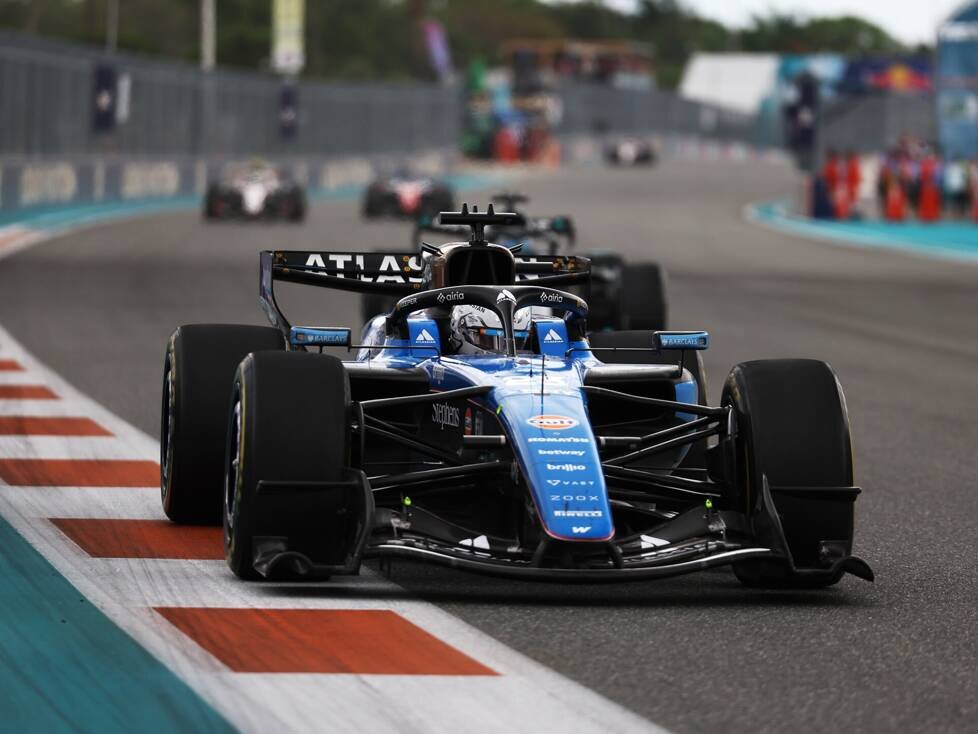
Williams is making progress, but Alex Albon and Carlos Sainz are tempering expectations. The car is still too heavy; major updates are expected to follow
Alex Albon is being realistic after the first races of the season. The Williams driver confirms what has long been known internally: the FW48 is still significantly too heavy.
The car is reportedly about 28 kilograms over the prescribed minimum weight of 768 kilograms. That costs valuable time per lap and pushes Williams down to ninth place in the Constructors’ Championship.
“We have an aggressive program to get the weight off the car,” says Albon, but at the same time warns against excessive expectations. The step forward from Japan to Miami was smaller than hoped for. According to the Briton, larger update packages are still to come, but they won’t happen overnight.
Implementing the improvements is difficult
Miami is traditionally considered a strong track for Williams. “Last year we finished fifth here,” Albon recalls. Nevertheless, he remains grounded: “Baby step by baby step. Let’s see if Canada goes similarly.” The driver says he doesn’t expect Williams to really find its rhythm until mid-season.
Team principal James Vowles explains why the weight reduction is taking so long. While the engineers have completed the development work, he says, turning it into production-ready components is a complex process. “You have to combine this with aerodynamic updates, and that’s the most efficient way to do it within the budget cap,” says Vowles.
A particularly important step is set to follow this summer. Williams plans to introduce a new “B-chassis,” which must pass another FIA homologation crash test. The development phase is expected to extend through the Italian Grand Prix in Monza in early September.
Missed shakedown weighs heavily
The goal is ambitious: The team wants to get below the minimum weight to achieve better balance and less tire wear through targeted ballast. Albon himself has openly identified the structural causes of the difficult start to the season. The missed shakedown in Barcelona at the end of January, four failed crash test attempts with the FW48, and internal bottlenecks at the factory all compounded the issues.
“One thing led to another, and suddenly we were significantly behind,” he says. Important aero tests, which are normally conducted during the shakedown, had to be moved to the season schedule, where they eat up valuable FP1 and FP2 time.
Carlos Sainz also speaks plainly. The Spaniard emphasizes that positive interim steps must not be an excuse for a drop in effort. “We know we’re far behind our own expectations. We have to dig deep and work hard.” Sainz sees every improved result as an important internal signal showing the team that consistent work pays off.
Is the upper midfield a realistic goal?
“Williams is a team capable of much more than what we’re currently showing,” says Sainz. He expects to see the full potential only in the final third of the season. After finishing fifth in the 2025 Constructors’ Championship and securing two podium finishes for Sainz in Azerbaijan and Qatar, the internal goals are clearly defined.
Vowles, too, has recently been under no illusions. With the current FW48, no major successes are expected by the end of the season. However, the development curve is pointing upward, and with the planned B-chassis and consistent weight reduction, Williams should be able to rejoin the top of the midfield by Monza.