


Updates that are not immediately used in races: McLaren’s unique technical strategy and why it is successful
McLaren has brought technical updates to several Formula 1 weekends without immediately using them in races. There is more to this strategy than just technical calculation: it underlines the comfortable position the team currently finds itself in – especially compared to its competitors.
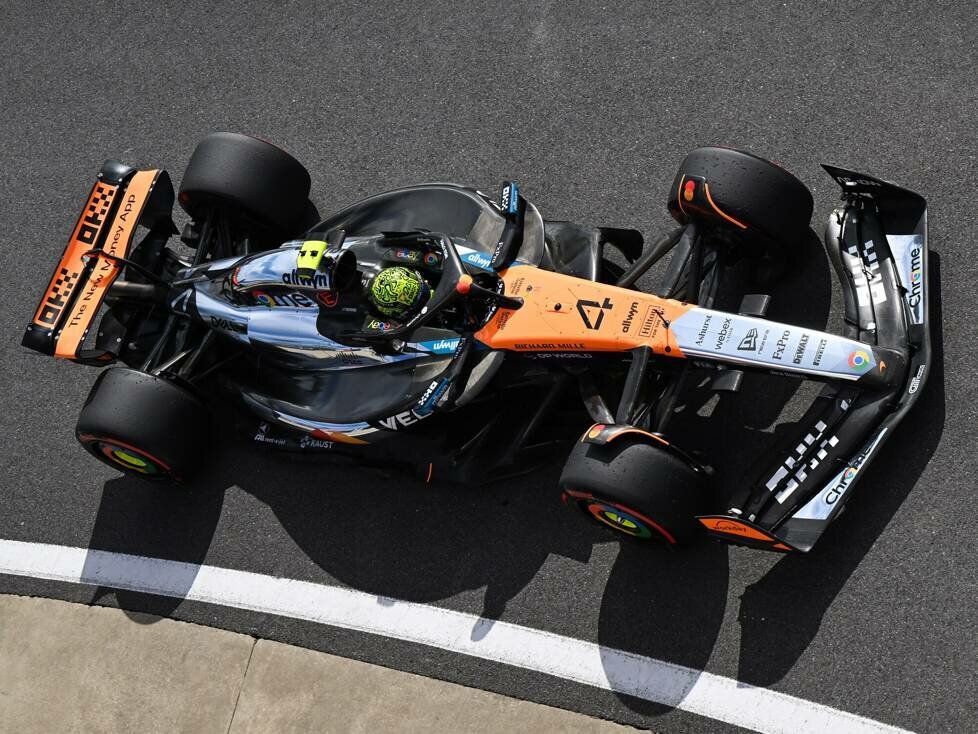
Take Silverstone, for example: according to technical documentation from the International Automobile Federation (FIA), McLaren brought a completely new underbody to the track. Although this was used in the first free practice session, team boss Andrea Stella emphasized that it had been planned from the outset to remove the new part again afterwards.
Stella explained: “The plan was always that the underbody was just a test part to gain early insights into this new specification.”
In the second practice session, McLaren reverted to the older version, which ultimately secured another one-two finish for Lando Norris and Oscar Piastri in the race.
However, this did not mean that the new underbody was disappointing – it was simply part of a long-term plan. The new underbody is set to be used in qualifying and in the race at the next event in Spa-Francorchamps.
“We are very happy with what we saw in free practice at Silverstone. All signs indicate that we will use this new part in the upcoming races.”
McLaren in a luxury position – unlike Red Bull
This approach is no exception at McLaren: In Canada, the team also brought a new front wing specification with them initially just for testing before using it in the race in Austria.
The situation was similar with the front wing for Barcelona, which Norris had already tested in Imola – a step taken to ensure that the new FIA directive against so-called flexi wings had no negative effects.
In all these cases, McLaren was not trying to hide weaknesses in the new parts, but rather to carry out targeted validation: the correlation between simulation and real track performance had to be verified. This prevents problems such as those experienced by Ferrari in 2023 after introducing a new underbody in Barcelona, or those regularly encountered by Red Bull due to its outdated wind tunnel.
This also demonstrates the team’s strategic sophistication: Norris tested the new wing specification early on in order to be prepared for possible rule changes – an approach that can only be afforded with a certain amount of leeway. Nevertheless, it is evidence of clever planning, significantly influenced by technical director Rob Marshall.
Spa is the next upgrade target – competitors follow suit
The tested underbody is set to make its final appearance in Spa. “The part worked well. We are very happy with the data and will fit it to both cars,” says McLaren boss Zak Brown. He also adds: “There’s more to come.”
At the same time, other teams are also working on upgrades for Spa: Ferrari is bringing a new rear suspension, and Red Bull is bringing further updates, according to Helmut Marko. Many of these developments are among the last major measures of the season before the focus shifts to the new 2026 regulations.
Conclusion: Controlled strength as a formula for success
McLaren’s well-thought-out update strategy minimizes the risk of failure – an advantage that few teams currently enjoy. This methodology, combined with technical expertise and a strong car, gives the Woking-based team a clear edge and highlights how much the balance of power in Formula 1 has shifted.