


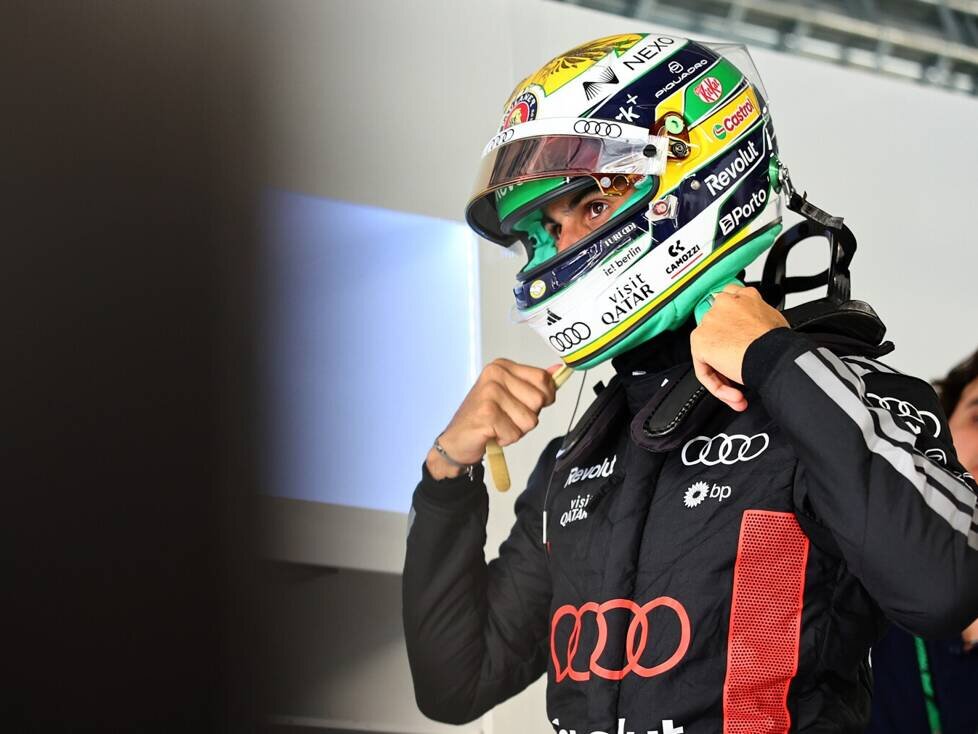
Audi driver Gabriel Bortoleto has defended the new Formula 1 rules against criticism from his colleagues and believes that the best drivers simply have to adapt
Gabriel Bortoleto has emphatically argued that Formula 1 drivers “should be able to adapt to any car.” In doing so, he rejects the notion that the 2026-generation cars will clash with the drivers’ driving styles.
The new generation of Formula 1 cars, with their significantly higher proportion of electric power, has drawn a great deal of criticism this year and led to a completely different driving style among the drivers. At times, the criticism of “Formula E on steroids,” as Max Verstappen called it, has been quite harsh: Oscar Piastri even described it as “a pretty shitty way to race.”
This opinion is shared by the majority of drivers, who have so far rejected the new regulations—which has led to revisions already being approved for 2027.
Audi driver Gabriel Bortoleto, however, takes a stand in defense of the regulations: “Motorsports shouldn’t be about just one style of driving,” he says, referring to the traditional karting school of “slow in, fast out” of corners.
“I don’t think I’ve changed my driving style that much,” says the Brazilian. “But I don’t like the term ‘driving style’ because I don’t think a Formula 1 driver should ever say something like that.”
Formula 1 drivers should be able to adapt
“We should be able to adapt—even if it might not look natural. But we have to be able to adjust to every type of car and the driving style each one requires,” he says. “That’s exactly why we do what we do, and why we’re among the 22 drivers worldwide who race in Formula 1.”
“I think it’s simply a matter of what car you have and how you need to drive it. Compared to last year, I haven’t changed my driving style much, but of course you fine-tune things here and there.”
“You know how energy is released coming out of certain corners—so you know whether you can push harder going into the corner and worry less about the exit, because no energy is released there anyway. Or whether you have to be a bit more cautious going in, because a long straight follows where a lot of energy is released,” says Bortoleto.
“So you have to adapt. Last year, everything was still consistent, so you didn’t have to do that.”
His comments come amid the debate that the new cars give drivers less control—with Piastri being a prime example of this, as is Lando Norris’s “forced pass” on Lewis Hamilton in Japan.
Nevertheless, these world-class drivers remain near the top of the championship and are getting the most out of what they have available—Norris and Hamilton have both already celebrated victories this year.
Verstappen isn’t driving slowly either!
Bortoleto therefore emphasizes that, as in every Formula 1 era, the elite have prevailed—completely regardless of which car might suit a particular driving style.
“Do you see Verstappen driving slowly, for example? Do you see a seven-time world champion driving slowly this year? Do you see Leclerc driving slowly? I don’t see them driving slowly,” argues the Audi driver.
“I still see them as extremely competitive. So I wouldn’t say that fast drivers have suddenly become slow. In fact, Lewis is performing slightly better than last year, Max is still driving like a man possessed and pushing the car right to the front, and Lando—the reigning world champion—is still fast,” he emphasizes.
“That’s the truth. So I don’t think we’ve seen last year’s slow drivers suddenly become fast and the fast guys become slow. I think it’s still real racing.”