


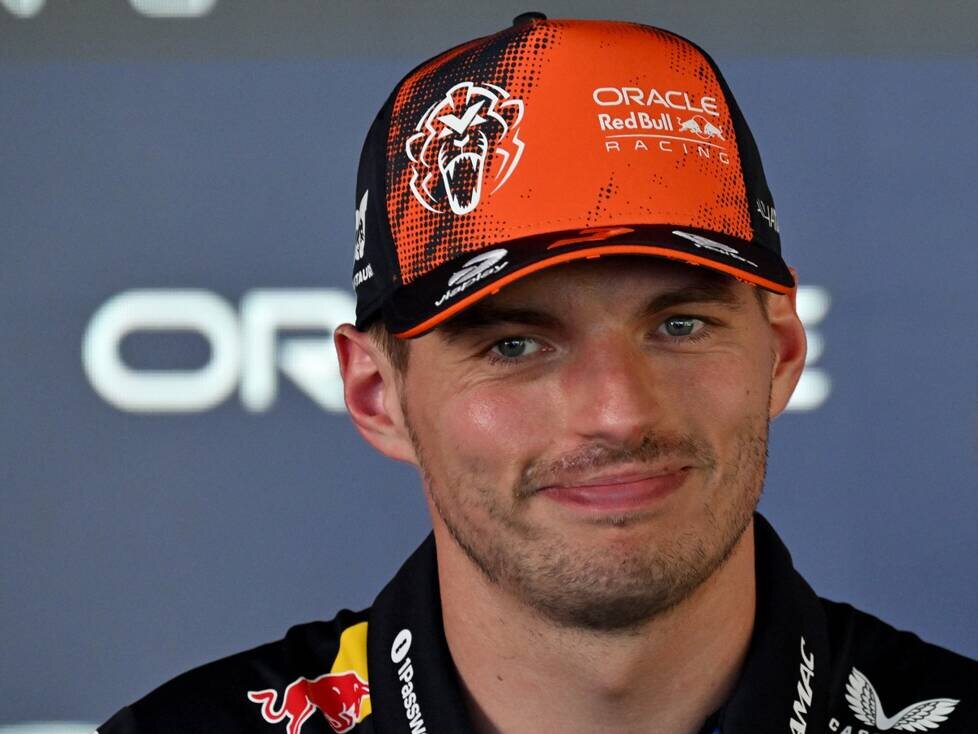
Max Verstappen is looking ahead to the Silverstone weekend with concern—in the simulator, the Red Bull driver couldn’t help but laugh at the extreme energy management
After several European Formula 1 weekends where energy management felt a bit more natural for the drivers, Max Verstappen expects a completely different story for the British Grand Prix.
Monaco offered the most natural experience so far, as the drivers were able to go full throttle in qualifying thanks to the many slow corners and braking zones. According to Verstappen, the Red Bull Ring was also relatively straightforward, as the track in the Styrian Alps features several hard braking zones where energy can be recovered.
Silverstone lacks these due to its fast and flowing layout, which is why the four-time world champion expects a completely different experience for the drivers there—more like it was at the start of the season. Verstappen says this became clear to him during simulator sessions in Milton Keynes in preparation for the British Grand Prix.
A “Different” Silverstone Awaits
“Silverstone—I love the track, but I drove a few laps in the simulator and just started laughing,” says Verstappen after securing his second podium finish of the season in Spielberg. “To be honest, it felt like a different track.”
For the drivers, this means a weekend with more energy management, which changes the experience in Silverstone’s many high-speed corners compared to, for example, the ground-effect era. While Verstappen describes those cars as “boats” in slow corners, they were known for their performance in fast sections.
This year, there have been some changes to the chassis, which many fans actually view positively because the drivers have to work harder behind the wheel and the cars don’t feel as if they’re on rails. Energy management, however, is a different story, especially when drivers lose speed before the braking zones due to superclipping.
Similar to Japan?
“You barely have any battery left over the lap. It’s just constantly fully digital. So yes, because of the track layout, it’s going to feel completely different from what we’re used to at Silverstone.”
Suzuka provided a similar example with the famous 130R. Although this corner has been taken at full throttle for years, drivers lost about 50 kilometers per hour due to energy restrictions, which, according to Fernando Alonso and Lando Norris, made the challenge in 2026 very different from before.
Verstappen expects parallels at Silverstone, where the run through Copse, Maggots, and Becketts is particularly demanding, as it’s driven at full throttle and offers no braking zones for energy recovery.
Not the “natural” gear choice
“Here [in Austria], you have long straights and large braking zones, so you can recharge the battery,” explains Verstappen. “There, you do have long straights, but they’re followed by a fast corner, for example, so you can’t really recharge the batteries, and then on the next straight you don’t have much power left to use. That’s going to be a tough nut to crack.”
Ground-effect cars had to be driven extremely stiff and low to the ground, which is why the new rules represent an improvement from a chassis perspective. According to Verstappen, however, these improvements are still overshadowed by energy management requirements on tracks like Silverstone.
“I think it’s less natural, but that goes hand in hand with energy management, right? Because half the time you can’t use the gears that would be natural. So it’s less natural than it used to be, or than what real racing used to be.”
Solutions for the future are on the horizon
Verstappen is pleased, however, with how Formula 1 and the FIA have listened to his feedback, which has helped set the stage for the regulation changes for 2027 and 2028.
The internal combustion engine will gradually take center stage again in two phases, with a 58:42 split next year before reaching the target 60:40 ratio in 2028. That seems to be enough to keep Verstappen in Formula 1 longer.
However, he says: “This year, everything was incredibly complicated with so many different issues. You pull out of the pits and the car just stops—things like that. Most of the time, I just have to count to 10—or actually, more like 100.”