


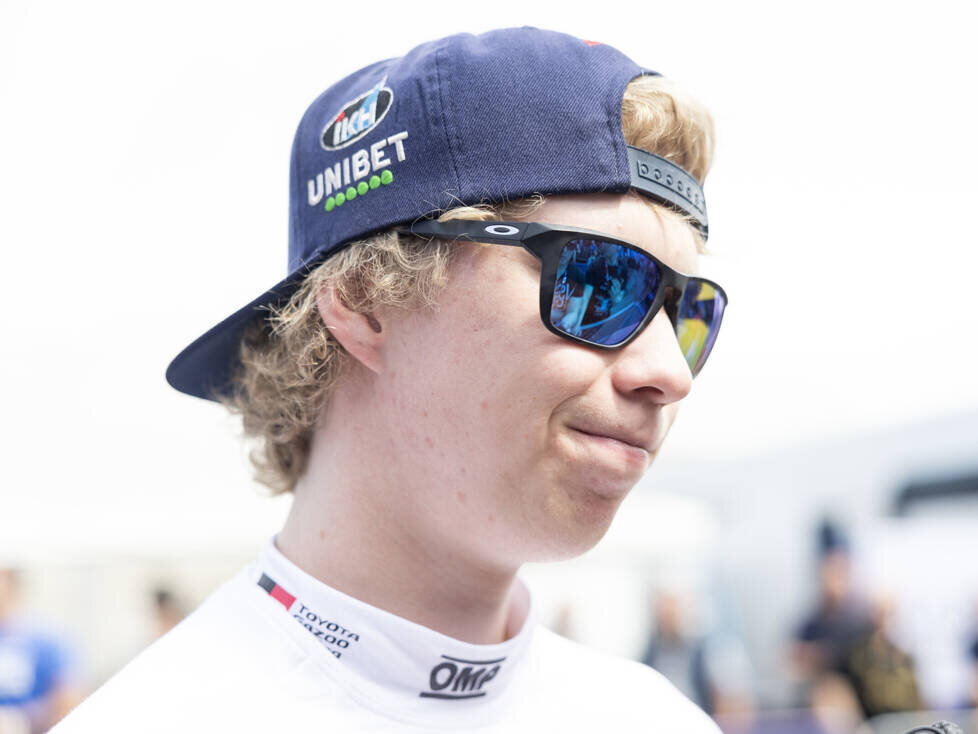
The move by WRC star Kalle Rovanperä to formula racing is the subject of heated debate—Formula 1 drivers will also be watching the switch closely.
The fact that two-time World Rally Champion Kalle Rovanperä is turning his back on the World Rally Championship (WRC) – for the time being – to pursue a full-time career in circuit racing is also causing a stir in the Formula 1 paddock. The 25-year-old Finn is considered an exceptional talent, but the switch from loose surfaces to a formula car is a huge step.
Esteban Ocon, himself an admirer of the Finn, can understand the move, but sees a huge hurdle ahead for Rovanperä.
“First of all, I think it’s great. It’s going to be a story that I’ll be following very closely,“ says the Haas driver. ”I was already following him when he was racing in a few Porsche Cup races. If I were him, had won two WRC titles, was so young and had the support of Toyota, I would definitely want to try something different.”
Changeover fraught with hurdles
But Ocon warns of the difficulty of the task: “I think Kalle will have a much more difficult job learning this, because it’s a completely different sport.”
Although Rovanperä has already done a lot of motor racing through his experience in drift championships and track days, formula racing is a different world. “He will have to learn how things work in order to perform immediately. Even with all the driving experience in the world, you have to adapt to these things,” emphasizes Ocon.
Rovanperä’s choice of entry series in particular commands the Frenchman’s respect. The Finn is set to start in the Japanese Super Formula in 2025 – one of the closest formula championships in the world.
These are the hurdles
“It will be interesting to follow, especially because he is starting in one of the toughest championships,” Ocon analyzes. “I’m not saying that Formula 2 is easier, but you go there [to Japan] and all these guys have been driving there for years. They are professionals on the Japanese tracks and have a different philosophy.“
Ocon also raises practical hurdles: ”I don’t think all the engineers normally speak English and so on. So that will be quite interesting to follow.”
But what about the other way around?
There have been several Formula 1 drivers who have switched to rallying—Kimi Räikkönen, Robert Kubica, and Heikki Kovalainen are prominent examples. Ocon himself has tested rally cars and sees the fundamental difference in the mental approach.
Difference: Formula racing vs. rallying
“I think for us circuit drivers, it’s more about consistency [in comparison]. The memory aspect is a huge, huge difference,” explains Ocon. “I did a day of rallying a year or two ago. I didn’t do the recce, but it was difficult enough to drive the same stage again and remember everything, just like they do.”
“For them, memorization is more important than the setup of the car or that everything feels good. That’s the biggest difference,” Ocon notes. “Once they get on the circuit, it’s more about the details, more about the feel, more about optimizing the car and less about memory.”
The Alpine driver’s conclusion: “We’ve seen circuit drivers who were fast [in rally cars] but often crashed. On the other hand, Sebastien Ogier also performed well in the LMP2 car. It’s going to be an interesting story, I’ll be following it.”
Alonso knows about switching disciplines
One driver who has made the switch to almost every discipline is Fernando Alonso. The Spaniard has competed at Le Mans, in the Indy 500 and in the Dakar Rally. He, too, is “curious to see how he does.”
“He’s an incredibly talented driver who will definitely face some challenges,” says the Aston Martin driver about Rovanperä. “It’s less common to see people go from rallying to formula racing than the other way around. So it will be a good test.“
However, Alonso assumes that Toyota will prepare Rovanperä meticulously: ”It won’t be his first time in Super Formula. I think he will spend a lot of time in the simulator and prepare himself in junior series before he actually makes his debut in Super Formula.”
These are the differences
When Alonso himself changed disciplines, he had to acquire specific skills each time. The biggest change? “The most difficult was rallying,” admits the two-time Formula 1 world champion, who was involved in cross-country racing.
“But endurance racing was also different, and oval racing was extremely different. In rallying, you’re playing with both feet, the brake and the accelerator, all the time,” he explains. “The limits of the car and what you can do are shockingly different.”
Alonso sees a crucial difference in the learning process: “I was lucky back then because after the first tests, I was able to ride along with Giniel de Villiers or Nasser [Al-Attiyah] as a co-driver and discover a new world of limits. They showed me how to drive the car because I was way below that limit when I was driving alone.”
“In formula racing, you don’t have this ‘coach approach’ where you can ride with another driver and see what a Super Formula car can do. That’s a bit trickier,” says Alonso. “On the other hand, formula teams have a lot of data. In rallying or Dakar, you don’t have that data.”