


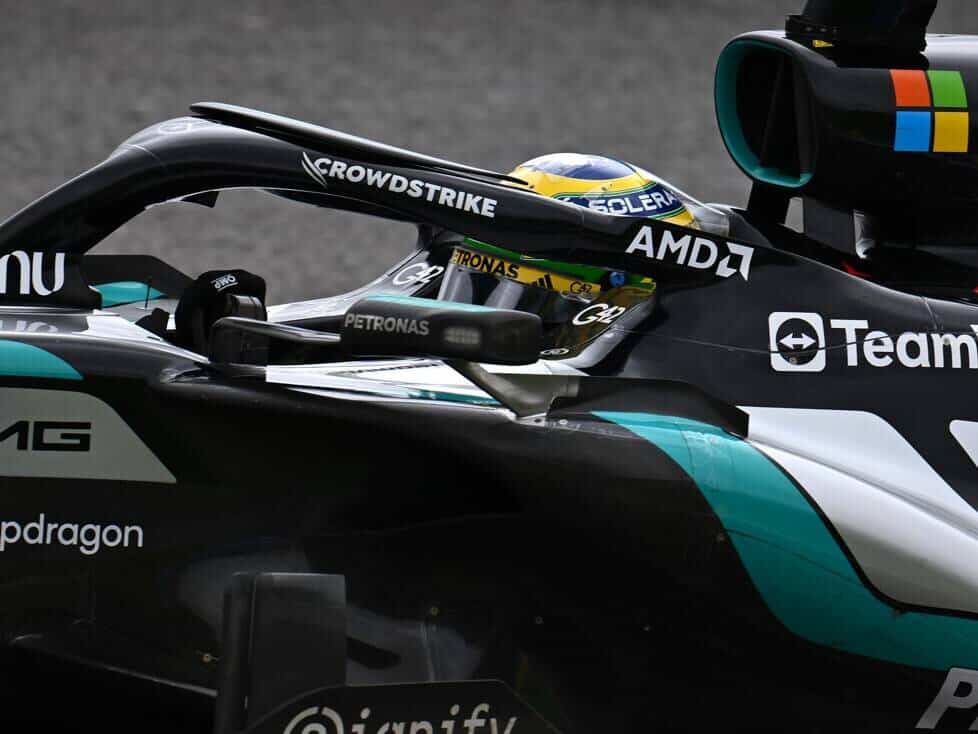
The Mercedes team explains the causes of Kimi Antonelli’s handling issues at the São Paulo Grand Prix in Brazil
In his first race following his early victory in his first World Championship title in Mexico, Kimi Antonelli initially appeared to be well on his way to capitalising on pole-setter Lando Norris’s poor start and taking the lead. During the first 15 laps of the race, which was characterised by changing conditions between rain and dry, the Italian managed to build up a comfortable lead.
However, after Antonelli switched from worn intermediates to slicks on lap 18 in response to Norris’s pit stop a lap earlier, he suddenly reported puzzling problems with the chassis. He felt that his W17 was pulling to one side.
Two laps later, Antonelli went off the track at Turn 1 when the rear of his Mercedes suddenly broke away whilst braking, sending the Italian into the run-off area. Although Antonelli was able to continue the race, he lost the lead to Norris and fell further behind as the race progressed. In the end, he finished fifth, 41 seconds behind the winner.
The spin was not an isolated incident: Antonelli had previously gone off the track in the slippery Turn 12. Meanwhile, his team-mate George Russell was lucky when he spun at the narrow pit exit without causing any major damage. Russell subsequently fought his way back and finished the race in fourth place, ahead of Antonelli.
“I’ll have to take a closer look at that spin, because I don’t even know myself why I lost the rear end so suddenly,” explained Antonelli after the race.
His initial frustration at the disappointing race had since faded somewhat following Mercedes’ victory in the Constructors’ Championship: “There was absolutely no warning, nothing at all. But even when I’d put the soft tyres on, something about the car felt strange. So we need to investigate what happened there. On the other hand, it’s a shame, of course, because that’s where we lost the race.”
Mercedes has since investigated the handling issues reported by both drivers. According to the team’s assessment, the cars’ unusual behaviour was mainly due to the fact that, in Sunday’s cool conditions, it was difficult to get the tyres into the optimum temperature range.
“Kimi, of course, spun, which caused brake fade on all four tyres. This hampered his pace somewhat,” explains Bradley Lord, who took on the role of team principal at Mercedes this weekend, in the team’s debrief on social media.
World Champions for the ninth time! 🏆
Bradley takes us through a memorable São Paulo GP in our latest @akkodis_global debrief 🇧🇷 https://t.co/QwZFNMS8N9
— Mercedes-AMG PETRONAS F1 Team (@MercedesAMGF1) 10 November 2026
“We really struggled when we switched to the soft-compound slicks, and later on during the final stint on the intermediates as well. The car was extremely difficult to drive, had a strong tendency to oversteer, and, particularly during the stint on the soft tyres, the tyre temperatures were very low.”
The problems were apparently so pronounced that the drivers at times suspected a technical fault. “This led both drivers – and indeed other drivers in the field – to believe that something was broken on the car,” explains Lord.
“If you look at the data, however, it appears that we were simply operating below the tyres’ optimal temperature range. Sometimes we briefly entered it, but then dropped out again in the damp conditions. That is precisely what caused this very strange and unusual handling.”
In light of the numerous incidents, Lord drew a remarkable conclusion about the race weekend: “It was a truly turbulent race. It’s not often that you spin out on the formation lap and nearly crash into the track barriers, that the other car spins in the pit lane, and that there are also several other incidents on the track – and yet you still finish in fourth and fifth place.”
Yet Mercedes was certainly competitive for long stretches, as Lord emphasises: “There were phases of the race in Brazil where we actually had the fastest car on the track. That was the case for the first stint on intermediates at the start and subsequently also for a large part of the stint on the soft slicks.”