


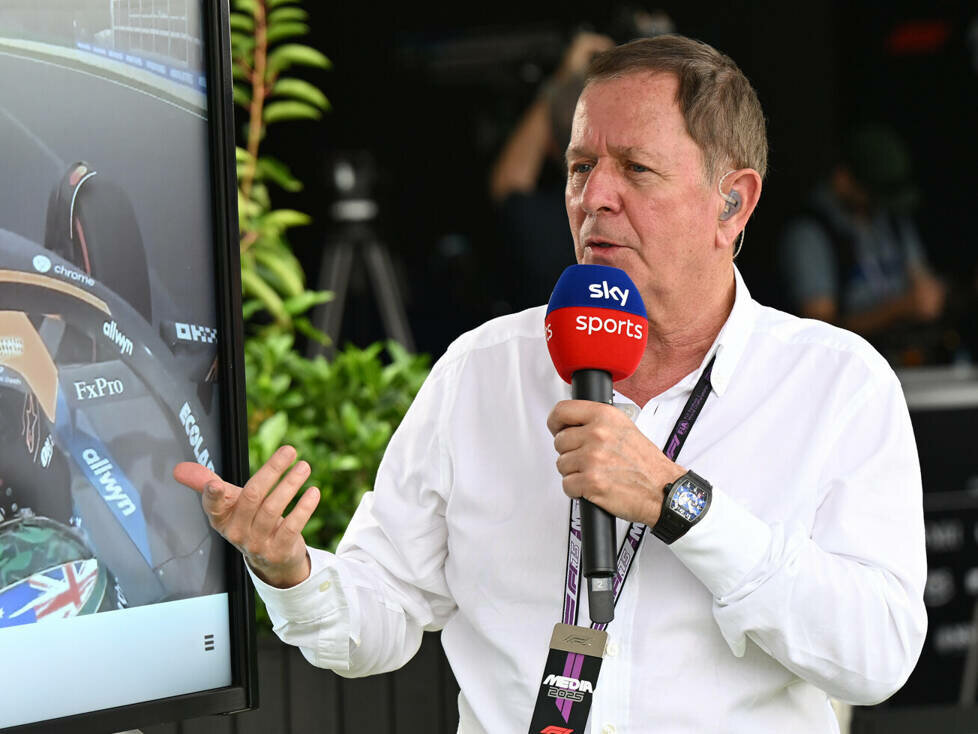
There has been a lot of criticism of the new Formula 1 regulations, but former driver Martin Brundle counters this: Why the Briton “enjoys” the new cars and what his hopes are
There has been a lot of criticism of the new Formula 1 rules so far, especially from the drivers. But there are also supporters, including former Formula 1 driver Martin Brundle. “I’m really enjoying seeing the 2026 Formula 1 cars in action,” the Briton writes on social media.
“It makes me appreciate the drivers even more, because they can’t just rely on massive downforce and stability,” adds the Sky Sports F1 expert, reminding us that the new cars are no longer classic ground-effect cars.
“There are still a few teething problems that need to be ironed out, but that will happen over the next few months,” Brundle is convinced, offering hope: “Maybe we’ll even get great corners like Copse and Eau Rouge ‘back’.”
These passages were once considered the most demanding sections of the premier class racing calendar. However, with the cars of recent years, they hardly posed a real challenge for the drivers. With the new cars featuring reduced downforce, that could now change again.
Brundle: “Significantly better positioned than in 2014”
And Brundle had already made it clear a few days ago that energy management was not a serious problem, as Max Verstappen in particular had claimed. The 66-year-old even went so far as to say that the new regulations were tailor-made for greats such as Michael Schumacher and Ayrton Senna.
“I actually believe that Ayrton and Michael would love these cars because they have the ability to use all the tools,” said Brundle during a McLaren media event. “And those who know how to use the tools best and get the most out of the cars would be successful.”
The former Formula 1 driver is currently hoping for a balanced starting field. “The top four seem very close together,” says Brundle. “Of course, as is usual with new regulations, the field will be spread out at first, but I have no doubt that we are in a much better position than in 2014.”