


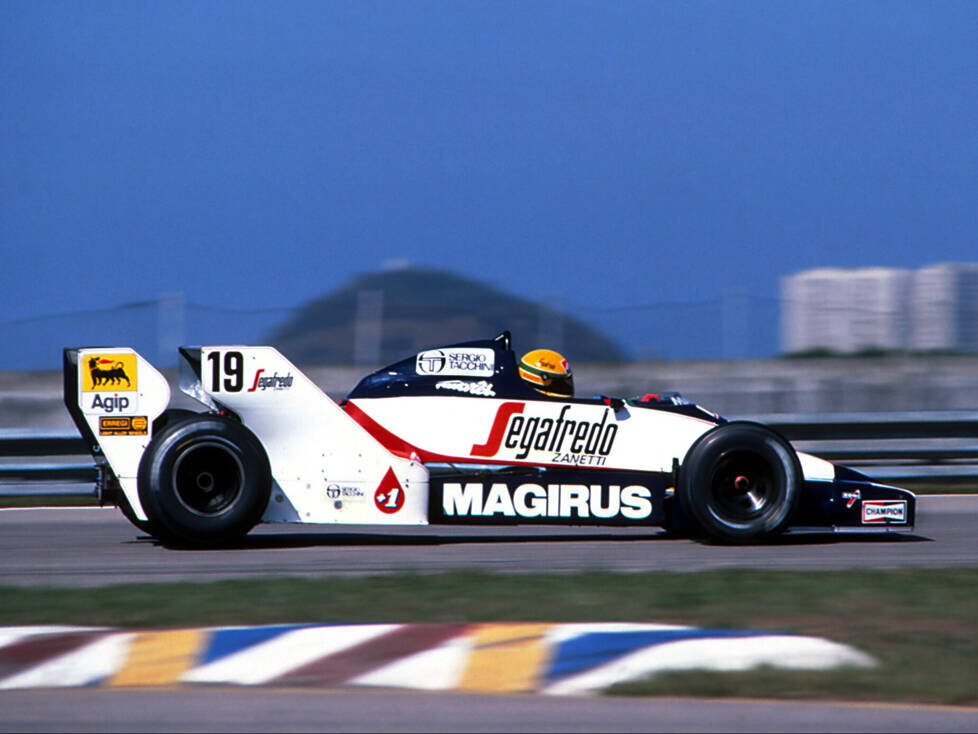
On March 25, 1984, Ayrton Senna made his Formula 1 debut in Brazil: it was not a good start due to a retirement, but the first signs of his talent were evident
On March 25, 1984, a Formula 1 career began on the Jacarepagua circuit in Rio de Janeiro that would develop into one of the most iconic and unforgettable biographies in history: 24-year-old Ayrton Senna started his first Grand Prix at the wheel of the modest Toleman team.
What began as a special moment for the Brazilian fans – a home driver making his debut in front of a home crowd – ended in disappointment. The newcomer had already caused a stir beforehand, as Senna had made a name for himself in the junior classes, particularly with strong performances in British Formula 3.
There was a lot of interest in the young talent. Several teams had him on their radar and he was considered a “prodigy”. A cockpit at Brabham seemed the most likely option, but ultimately the seat went to the brothers Corrado and Teo Fabi, who shared the car after sponsor Parmalat insisted on an Italian driver.
According to Bernie Ecclestone, Nelson Piquet, the leading Brazilian driver at the time, also played a role. He is said to have spoken out against signing his compatriot. However, those close to Senna gave a more nuanced account, stating that Piquet simply did not actively support the move.
Ayrton Senna opts for Toleman
Instead, Ecclestone offered Senna an interim position at ATS in 1984, with the prospect of bringing him to Brabham a year later. However, Senna deliberately opted for Toleman because he was convinced that he would have a better basis there to build his career and prove himself at his own pace.
In retrospect, this decision proved to be the right one, even if the start was unspectacular: On his debut, Senna qualified 17th on the grid, a solid result considering the limited competitiveness of his Toleman TG183B.
At a track known for its high failure rate, a surprise was in the air, but it didn’t happen: Senna had to park his car after just eight laps. A defect in the turbo of the Hart engine meant an early retirement, making it the first retirement of the season. In the end, only eight drivers even saw the chequered flag.
Ayrton Senna proves his potential
Alain Prost secured victory at the Brazilian Grand Prix ahead of Keke Rosberg and Elio de Angelis. Strategy and reliability played a key role, also due to the strict fuel limits and high temperatures in Rio. The race was long over for Senna at this point, but his name was still present in Formula 1 for the first time.
No points were scored on his debut, but Senna left no doubt about his potential in the races that followed. In South Africa and Belgium, he scored his first world championship points with two sixth places, despite physical complaints and a technically inferior car. These were the first signs of what he was capable of.
What was not yet visible on that day in March 1984 became apparent a little later: Senna drove to a spectacular second place in the rain race in Monaco and was suddenly thrust into the limelight. His Formula 1 debut on March 25, 1984 was just the beginning of an extraordinary career that would have a lasting impact on the premier class.