


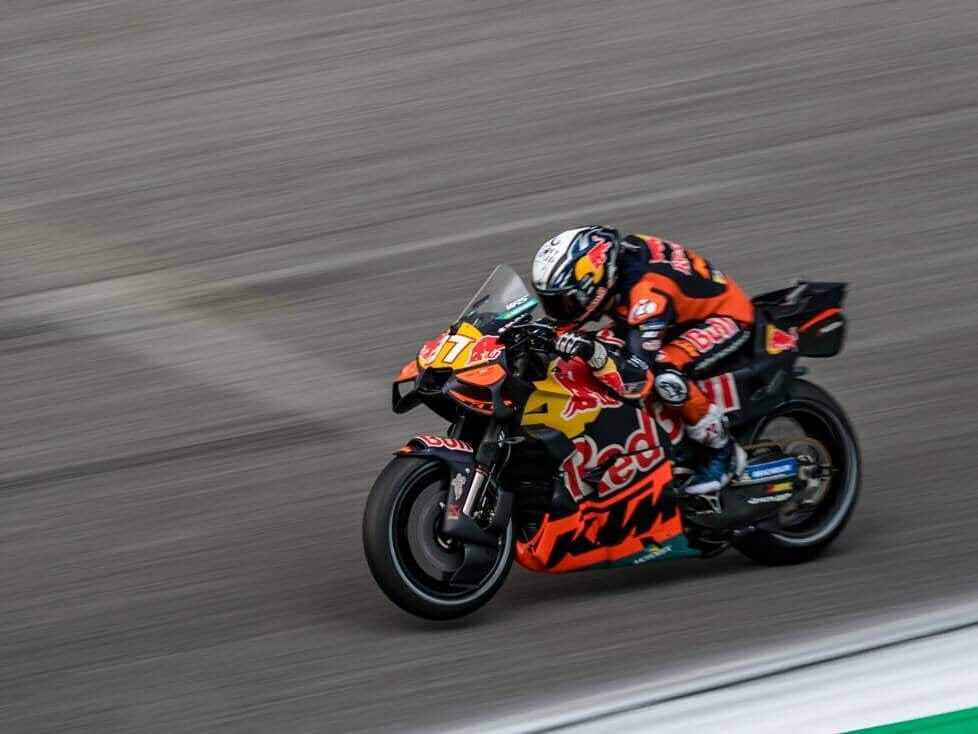
MotoGP bikes are set to become slower in 2027, but KTM takes a more nuanced view – technical director Sebastian Risse expects lap times to remain similar in some cases
The major technical rule changes in MotoGP from 2027 are intended to make the prototypes slower. However, after initial tests, KTM does not believe that the drop in performance will be so extreme and noticeable everywhere.
According to technical director Sebastian Risse, the new machines could even achieve similar lap times to the current bikes on around half of the tracks.
Risse led the first test of the new 850cc bike at the Circuito de Jerez in Spain in December. Based on what he has seen so far, the German engineer believes that the impact of the new rules will depend heavily on the track in question – provided that the performance of the tires remains similar to today.
Smaller engine, new tires for MotoGP 2027
When asked how much slower the 2027 bikes could be, Risse told Motorsport.com, “It really depends. I think it’s still too early to say anything about the tires.”
“But if you just look at engine power, there are some tracks where you almost never go full throttle with the current 1000cc engines. So if you look at Misano or Jerez, I don’t think lap times will be slower. But on some tracks they will be slower, that’s clear.”
From 2027, the current 1000cc engines will be replaced by smaller 850cc units. At the same time, aerodynamics will be reduced and ride height devices will disappear completely. There will also be another significant change: Michelin will be replaced by Pirelli as the official tire supplier.
“If there are several long straights, you’ll suffer from the loss of the ride height device and the lower power,” says Risse. “But I think it’s a pretty healthy way to slow the bikes down because it doesn’t hurt the show.”
Slower on some tracks, not on others
From the perspective of KTM’s technical director, this could result in a mixed picture: on some tracks, the times will remain similar, while on others, the difference will be more noticeable.
“Looking at everything we’ve learned and how positive we are with our new bike at the moment, I think that on half of the tracks we may not be any slower than we are today in terms of lap times.”
How much slower we will be on the other half remains to be seen. “But the difference in top speed will be a significant step, as intended in the rules. I’m talking about 15 to 20 km/h.”
“If development continues, you have to take that into account, of course. Then it might not be so much,” the engineer interjects. ” Perhaps it will only be around 15 km/h on a high-speed track. But from this perspective, the effect on lap times will not be so dramatic.”
Development likely to partially offset performance deficit
Even if the new MotoGP bikes are slower at the beginning, Risse expects manufacturers to find more performance over the course of the rule era. The development potential is particularly high at the beginning, especially with new engine concepts. “Looking back at the average of our engine development, we find about 5 to 6 hp per year,” he says. “This will probably also apply to this smaller engine – perhaps even more so because the project is new and there is more room for improvement at the beginning before it levels off.”
In the long term, the initial performance difference is therefore likely to shrink. “But from this perspective: if you have 30 hp less now, this 30 hp deficit will not remain constant over the next five years. That’s clear.”